
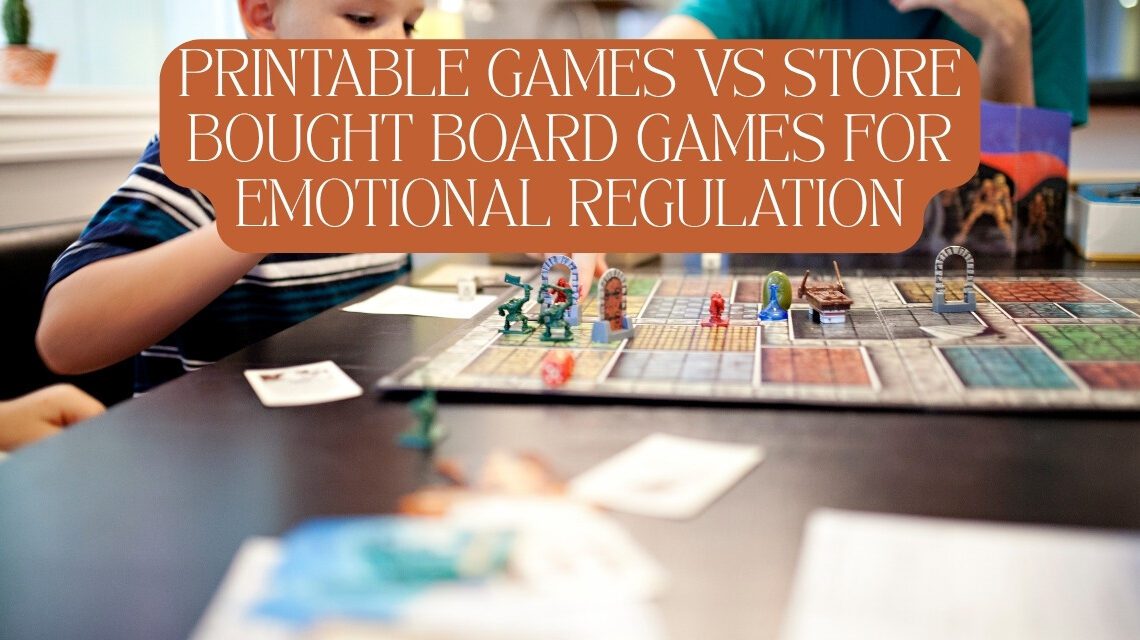
If you are stuck on printable games vs store bought board games for emotional regulation, here is the blunt answer: printable games win for speed, price and one very specific skill but store bought board games win for repeat play, family buy in and real practice with frustration, waiting and turn taking. For most busy homes, that means a good board game usually gives you more actual use, while a printable helps most when you need a fast tool for one hard moment.
And now for the rude little truth nobody puts on the sales page. A lot of printables are just worksheets wearing party clothes and a lot of feelings board games come in shiny boxes and still feel like detention.
READ: 27 Board Games for Kids of every age (Fast to learn, family …
Play matters here for a real reason, not just because every parenting brand likes to throw the word around. The American Academy of Pediatrics says play supports brain development, mental health and social emotional growth and Child Mind notes that self regulation is a skill kids can learn with practice and adult support.
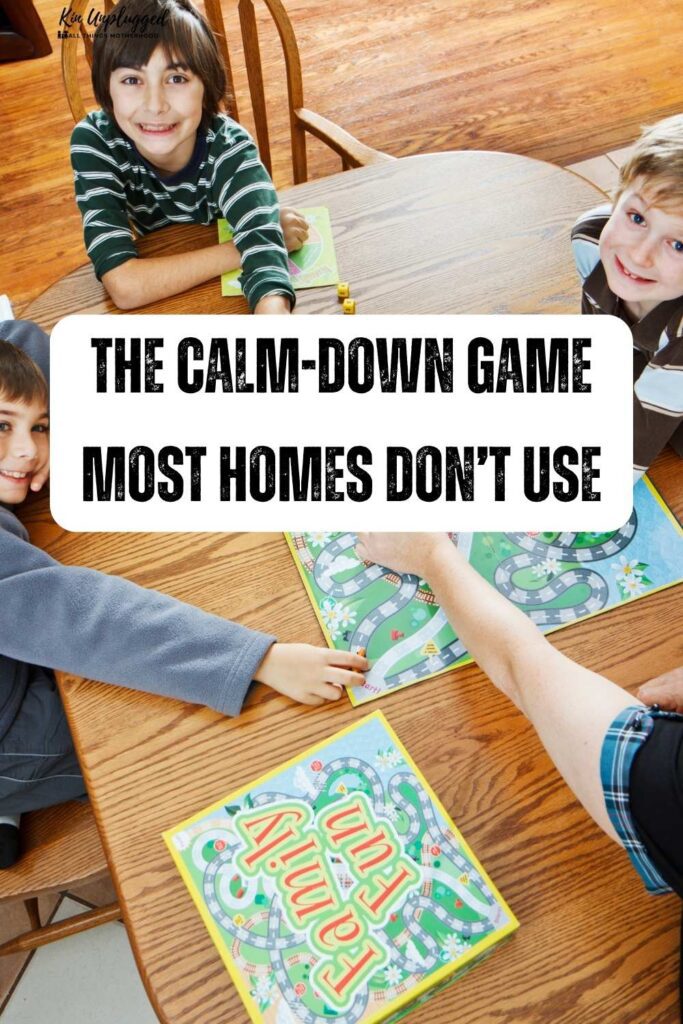
The short answer busy moms need
If the goal is a fast reset, a visual cue or one targeted skill, pick printable.
If the goal is practice that holds up over time, pick store bought.
| Situation | Better fit | Why |
| After school and everyone is fried | Printable | Fast, simple, low prep once it is set up |
| Sibling time or family game night | Store bought | Better buy in and more repeat play |
| You need help with naming feelings | Printable | Easy to keep visual and direct |
| You need help with losing, waiting or taking turns | Store bought | Practice happens live, not in theory |
| Travel, waiting rooms, restaurants | Printable | Portable and short |
| You are tired of printing things nobody uses twice | Store bought | More durable and less admin |
| A child is already fully upset | Neither, at first | Calm first, talk and play later |
That last row matters most. Child Mind says it is not effective to reason with a child who is already dysregulated, so this is not the moment to whip out feelings bingo and act like you are a tiny cruise director with a clipboard.
Here is where most families waste money
They buy the format they like looking at, not the one their child will actually use. That is how you end up with a beautiful printable pack living in a binder under a pile of art projects or a giant board game box shoved in a cupboard because the rules are long enough to qualify as light fiction.
Kids do not stick with tools that feel like school when they are home and tired. That sounds obvious, yet people keep acting shocked when a six year old does not want to sort laminated emotions cards at 4:37 p.m. while holding half a banana and a grudge.
So before spending another pound, ask one honest question. Do I need a short support tool or do I need a habit that gets repeated?
That is the whole game.
What printable games are good at
Printable games are excellent at doing one job cleanly. That is their whole appeal.
A simple feelings match, coping choice wheel, body clues chart or calm down path can help a child name what is happening before the feeling gets huge. Child Mind points out that kids can learn better control by noticing and labeling feelings earlier, before the wave gets too big and visual aids can help with that.
That makes printables especially useful for younger kids, kids who like visuals and kids who need repetition around one narrow skill. Think What does anger feel like in my body, What can I try when I feel stuck or What happens first, next, then last when I need to calm down.
They also work well in tiny pockets of time. Waiting rooms, car rides, restaurant tables, transitions before bed and those weird ten minutes after school when one child is taking off socks in the hallway like they were personally offensive.
And yes, they are budget friendly. If money is tight, printable games can give you a decent starting point fast without a big upfront spend.
Now the bad news.
The annoying truth about printable games
Most printable games look better on Etsy than they work in a kitchen. There, I said it.
They can be visually busy, flimsy and weirdly dependent on adult energy. Someone still has to print them, cut them, maybe laminate them, store them, remember them and then introduce them before a child wanders off because a crisp packet made a louder noise in the next room.
That is a lot of admin for something a child may use twice.
Some printables also pretend to be games when they are really just therapy homework in clip art. Kids know. They may not say it in those words but they know.
If a printable does not feel playful in under thirty seconds, it is probably not going to earn repeat use at home. That is the difference between a smart tool and a pile of laminated guilt.
This is why I would rather see one small ring of excellent visuals than forty pages of printable busyness. A feelings thermometer, a two step calm choice card and a simple breathing prompt will beat a giant printable bundle nine times out of ten.
For more practical ideas in this lane, send people next to emotional regulation activities for kids, calm corner ideas and after school routine ideas. One question should lead neatly to the next.
What store bought board games are good at
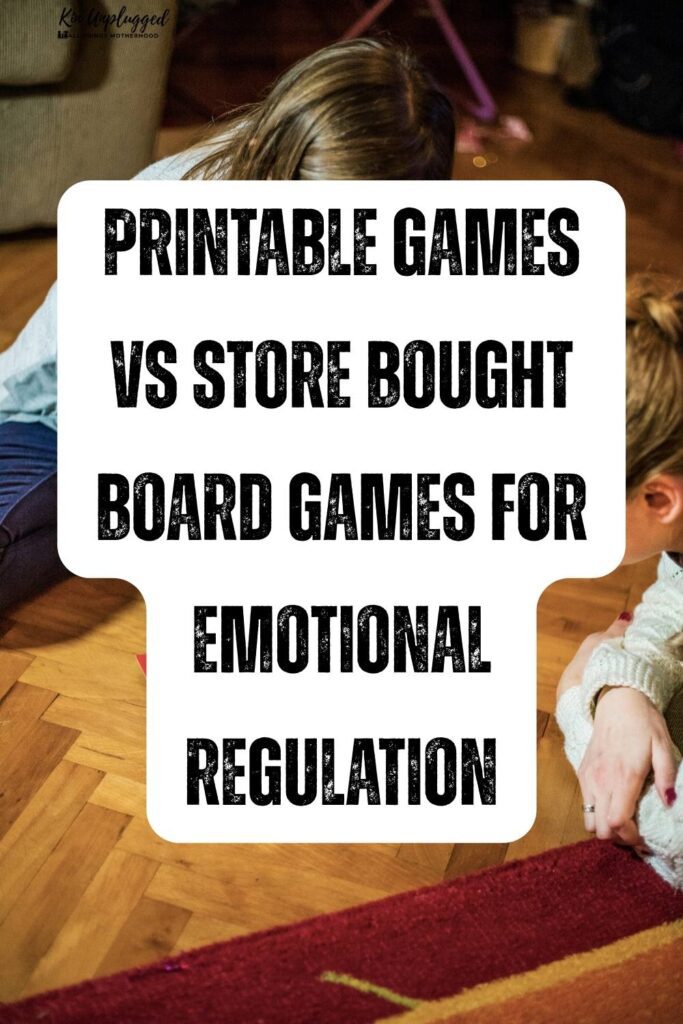
Store bought board games do something printables usually cannot. They get kids to come back.
That matters because emotional regulation is not a one time lesson. Child Mind describes self regulation as the ability to manage emotions and behavior in response to the situation and notes it is a skill that can be taught. Skills like that need reps, not one meaningful Tuesday.
A good board game naturally gives you reps in waiting, turn taking, staying engaged, handling disappointment, asking for help, following rules and trying again after a setback. The CDC says that by age 5, most children can follow rules or take turns when playing games with other children, which tells you game play is not just cute family fluff. It is part of normal social emotional growth.
A strong board game also has a built in advantage no printable can fake. It feels like leisure, not treatment.
That matters more than people admit. Kids are much more likely to practice something hard if it feels like they are playing, not being fixed.
The part nobody likes to admit about store bought games
Some store bought emotional regulation games are boring. Not a little boring. Funeral sandwich boring.
They are so eager to teach feelings that they forget to be fun. So the child learns one valuable lesson, which is apparently that talking about feelings comes in a cardboard box and takes forever.
And then there are games that are fun but absolutely terrible for a child who is easily overwhelmed. Long rule explanations, too much waiting, too much reading, too many tiny pieces, random gotcha moments, humiliating losses, loud timers, flashing nonsense. Hard pass.
A board game is only good for emotional regulation if the mechanics fit the child. The wrong game can make a rough evening rougher.
This is why the best board games for this goal are usually simple, short, tactile and easy to replay. Clear turn structure helps. Short rounds help. Cooperative play helps some kids early on, especially when competition sends them straight into orbit.
There is some research support for that wider idea. A 2020 study of 177 children ages 8 to 12 found that board games built around emotional competences were experienced as positive and playable at levels comparable to off the shelf games, which is useful because it means emotional skill practice does not have to feel like punishment to work.
So which one is better?
For most families at home, store bought board games are better.
Not because printables are bad. Because what gets replayed gets learned and store bought games are simply more likely to get replayed.
That is the brutally honest answer.
If you are a busy mom with more than one child or with a child who already resists anything that smells remotely educational, a solid board game usually gives you better value over time. It sits on a shelf, comes out fast, survives juice and does not require a printer to be in a good mood.
But do not throw printables out completely. Printable games are the better move when you need one precise support tool.
That might be:
A quick feelings check in before school.
A visual calm plan in a bedroom or kitchen.
A short car activity.
A low pressure prompt before a tricky event.
A way to help one child spot body clues before anger or worry spikes.
That is why the smartest homes usually do not pick one side and swear lifelong loyalty like it is a football club. They use both but for different jobs.
Pick the format by the moment
This is where it gets useful.
| What is happening right now | Best move | Why |
| A child is already crying, yelling or slamming | No game yet | Calm first, then talk later |
| A child is a bit wobbly but still listening | Printable | Short visual support works fast |
| A child is calm and social | Store bought | Great time for live practice |
| Siblings keep sniping at each other | Cooperative board game | Shared goal lowers friction |
| You have five minutes only | Printable | No setup drag |
| You want a weekly habit that lasts | Store bought | Easier to repeat without adult prep |
That first row is not negotiable. Child Mind says reasoning with a dysregulated child is not effective until calm comes back online, so no format wins when the body is already over the edge.
Now we are getting somewhere.
The best use for printables in daily life
Use printables as support tools around the game, not always as the game itself. That is where they shine.
A printable feelings scale before family game night is smart. A one page calm plan sitting next to the game shelf is smart.
A simple visual card that says pause, breathe, ask for help can be brilliant. Forty pages of seasonal emotion mazes because the graphics are adorable is how you end up spending your Sunday night cutting paper while muttering things nobody would put on a mug.
Anna Freud highlights the role of adult led play in supporting self regulation and that lines up with what actually works at home. The adult still matters. The printable is support. Not magic.
Good printable choices include:
A feelings thermometer
A body clues page
A coping strategy spinner
A short turn taking card set
A before and after routine strip
That is enough. You do not need a printable empire.
For extra paths inside the site, add screen free activities for kids, quiet time ideas for kids and visual routine ideas. Families rarely need one isolated fix. They need the next sensible step.
The best use for board games in life
Use store bought games for practice when everyone is calm enough to succeed. That is the whole secret.
Family game night is not just for fun. It is one of the easiest ways to practice disappointment in small doses, wait for a turn, recover from a mistake, stay in the room and keep going.
That kind of repeated play matters. The AAP says play supports developmental milestones and mental health and HealthyChildren adds that play gives children space to explore emotions and gives older kids and families a chance to strengthen relationships.
Here is the catch. Do not choose games based on what sounds noble. Choose them based on what your child can handle.
Look for:
Short turns
Low reading demand
Clear visual rules
Simple scoring
A finish line that arrives before everyone turns feral
Cooperative options for kids who cannot yet lose without detonating
Skip:
Long setup
Tiny fiddly pieces everywhere
Big luck swings if your child hates unfairness
Games with public humiliation built into the fun
Anything you already dread teaching
Some kids need the feeling of being on the same team first. Other kids can handle light competition and actually benefit from it. But no child needs a game that turns Friday night into a hostage situation.
For more strong next steps, point toward family game night ideas, sibling activities that lower fights and easy routines for kids.
What I would do first in a house with kids
I would buy one good board game and keep three tiny printable supports. That is it.
Not ten games. Not a six inch binder. One game that is easy to pull out and three visual tools that live where the hard moments happen.
That gives you a system without making your home look like an underfunded therapy centre that accidentally married a stationery aisle.
A very workable setup is this:
Keep one board game in the kitchen or living room.
Keep one feelings scale on the fridge.
Keep one calm choice card where after school meltdowns tend to happen.
Keep one short routine strip for bedtime or homework.
That setup is realistic. And realistic beats elaborate almost every time.
The expensive mistake people keep making
They buy emotional regulation products before they look at the actual friction point. That is backwards.
If the hard part is transitions, a printable visual sequence may help more than a game. If the hard part is losing, waiting or sibling friction, a board game gives you much better practice.
If the hard part is that everyone is exhausted and hungry at 5 p.m., no product is fixing that until you handle food, routine and timing. HealthyChildren notes that consistent rules, calm adult modeling and regular play all support emotional development, which is a polite clinical way of saying the game is not the whole story.
This is the bit people hate because it is less fun than shopping. But it is useful.
The version that stands out
Most pages on this topic will tell you both are wonderful and valid and lovely and all roads lead to personal growth. That is adorable.
Here is the sharper take: if you want something that actually earns its place in a busy family home, buy one excellent board game first. Then use printables like seasoning, not the main meal.
That is the balance that tends to work best for busy moms. Less prep, more replay, more actual practice.
And if a child is already struggling hard in this area, keep the expectations low and the adult presence high. Child Mind says kids learn these skills through practice and support and Anna Freud points to the role of adult led play. That means the grown up is not background scenery here.
A note for big kids who roll their eyes at feelings stuff
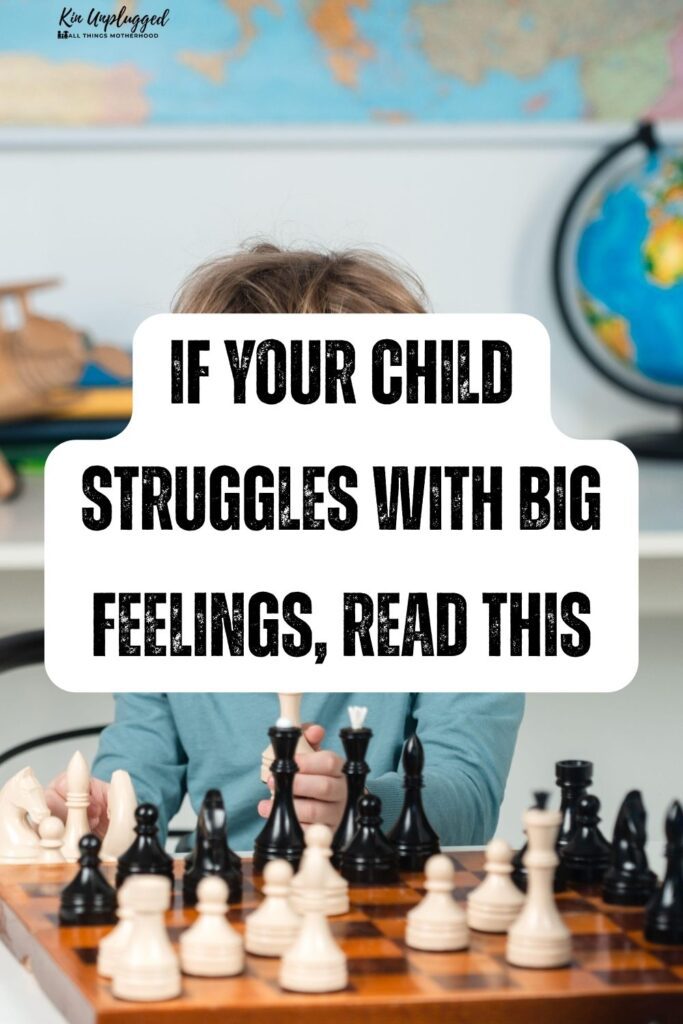
Older kids can smell fake from three rooms away. So stop buying things that look babyish and then wondering why they refuse them.
For older kids, store bought games often work better because they let you practice patience, impulse control, flexibility and frustration without announcing that today’s family fun is emotional processing in a cardigan. A little dignity goes a long way.
Printable supports can still help but they need to be cleaner and less cutesy. Think quick rating scales, strategy cards, short check in prompts and visual plans that do not look like they were designed for a cartoon squirrel.
That one shift alone can save you money and spare you the special pain of hearing a ten year old say this is cringe with total accuracy.
Join my email list if you like this kind of plain talk
If you like smart family ideas without glittery nonsense, join my email list below. That is where I send practical notes on kids, routines, activities and home life that make sense on an ordinary Tuesday.
It is for people who want better ideas, quicker decisions and a little more honesty in the middle of family life.
FAQs
Are board games good for emotional regulation?
Yes, if the game fits the child and the moment. Board games can give repeated practice with waiting, turn taking, coping with disappointment and staying engaged and by age 5 most children are expected to follow rules or take turns in games with other children.
They are not magic, though. A bad fit can make things worse.
Do printable games help kids with emotions?
Yes, especially for naming feelings, spotting body clues and choosing a coping step. Child Mind notes that kids gain more control when they can notice and label feelings earlier and visual aids can help with that.
They just work best when they are short, clear and actually playful.
What is better for emotional regulation at home?
For most homes, store bought board games are better for long term use and printables are better for quick targeted support. That is the cleanest answer.
One gets replayed more. The other is better for one precise job.
What should I use when a child is already very upset?
Neither at first. Calm comes before teaching. Child Mind says it is not effective to reason with a child who is dysregulated until calm returns.
That means regulate first, then talk, then practice later.
At what age do kids start learning self regulation?
It starts early and keeps developing over time. Child Mind describes self regulation as a developmental skill and the CDC includes rule following and turn taking in games among typical social emotional milestones for many 5 year olds.
So yes, games can be part of the practice. Just not the whole answer.
The bottom line
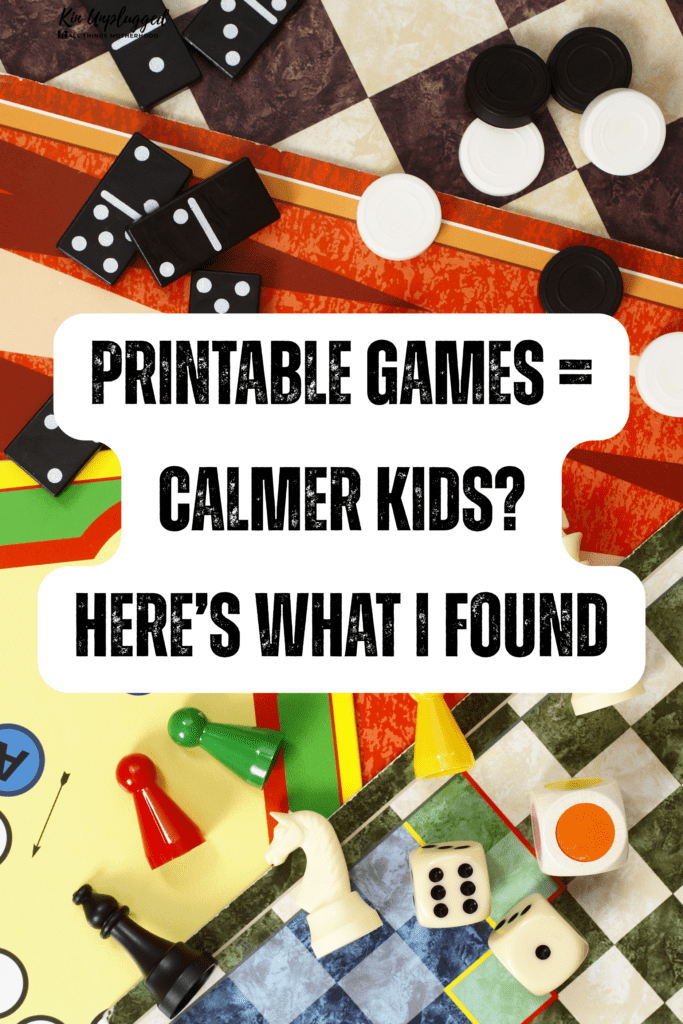
If you want the brutally honest version, buy the board game first. It is more likely to get used, more likely to be repeated and more likely to help with the real life pieces of emotional regulation that happen between siblings, around turn taking and in the sting of not winning.
Then keep printables small and strategic. One page here, one prompt there, one visual support in the exact place life keeps going sideways and suddenly the whole thing starts making a lot more sense.
 0
0

 278
278

1 Comment
Wow, love this list of printable board game ideas plus the store bought. Making you won gives them understanding as well feeling of achievement. I remember, when I made my own snake and ladder game at back of my exercise book- it was a big thing for me. I used to play with my friends at lunch time.