

If you’re here to learn how to play the head shoulder knee cup game, here’s the whole thing in plain English. You pair people up, put one cup between them, call out body parts (head, shoulders, knees) and when you shout cup they race to grab it.
That’s the game. The rest of this post is how to run it so it’s fun, safe and doesn’t turn into a mess when you’ve got more than two kids.
SHOP: Reusable plastic cups for party games
It saves you so much hassle.
READ: Table games for Kids: 30+ Easy ideas work (Ages 2–12)
The 30-second version (so you can start right now)
You need: 1 cup for every 2 players and a caller.
You do: players face each other with a cup between them, hands off the cup. Caller shouts “head,” “shoulders,” “knees,” then “cup.” Players touch the body part with both hands and on “cup” they grab.
Winner: first to grab the cup wins the round. You can keep score or do winners vs winners.
Now let’s make it run smoothly with kids.
Quick setup table (pick your version fast)
| If you’re playing with… | Best format | Why it works |
| 2 kids | Best-of-5 rounds | Fast, fair, lots of rematches |
| 3–8 kids | Winner moves up | Keeps it moving, no long waiting |
| Whole class / party | Scoreboard rounds | Everyone plays at once, less standing around |
| Younger kids (4–6) | Seated version | Less bumping, easier control |
| Competitive kids | “Hands on knees” rule | Stops hovering and cheating |
What you need (and what you really don’t)
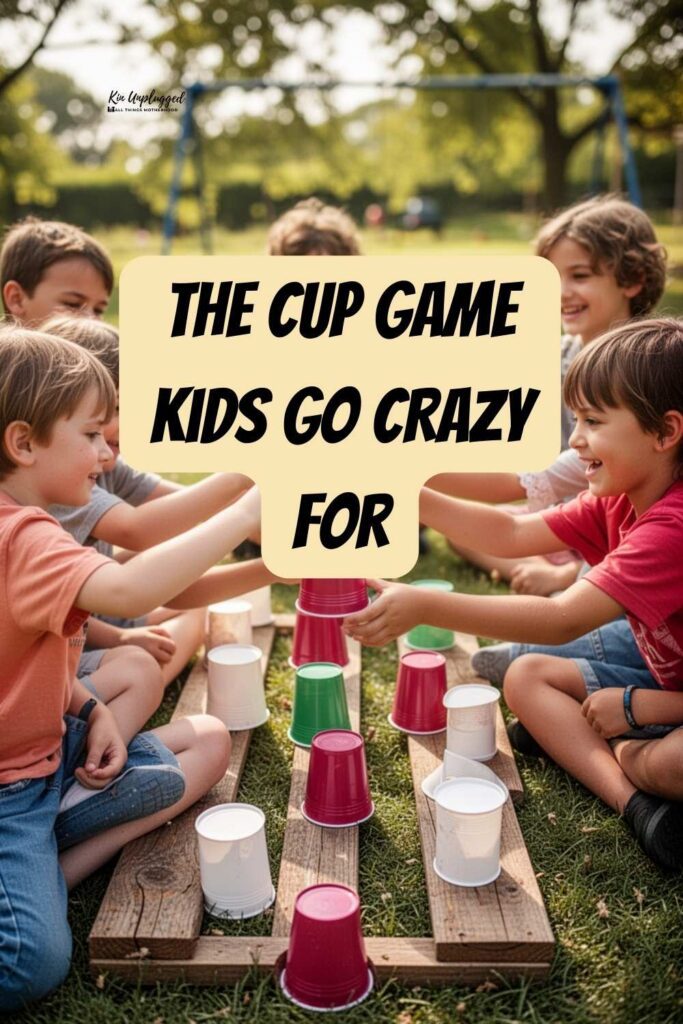
You don’t need fancy equipment.
You need:
- 1 paper or plastic cup per pair
- enough space for pairs to face each other
- one caller (you, older sibling, teacher, dad, anyone with a loud voice)
You do not need:
- music
- prizes
- a big group
- extra rules at the start
The more rules you add upfront, the more kids forget them.
The exact rules (the simple, standard version)
Step 1: Pair up
Everyone finds a partner and stands facing them.
If you have an odd number, the spare player can:
- be the caller for one round
- sit out and rotate in next round
This is a common way group leaders handle it.
Step 2: Place the cup
Put one cup on the floor or table, equal distance between both players.
Step 3: Hands rule
Start with hands behind backs or at sides. Then every time you call a body part, they touch it with both hands.
Step 4: Call the body parts
Call out, in any order:
Head
Shoulders
Knees
Players must move both hands to that body part each time.
Step 5: Call Cup
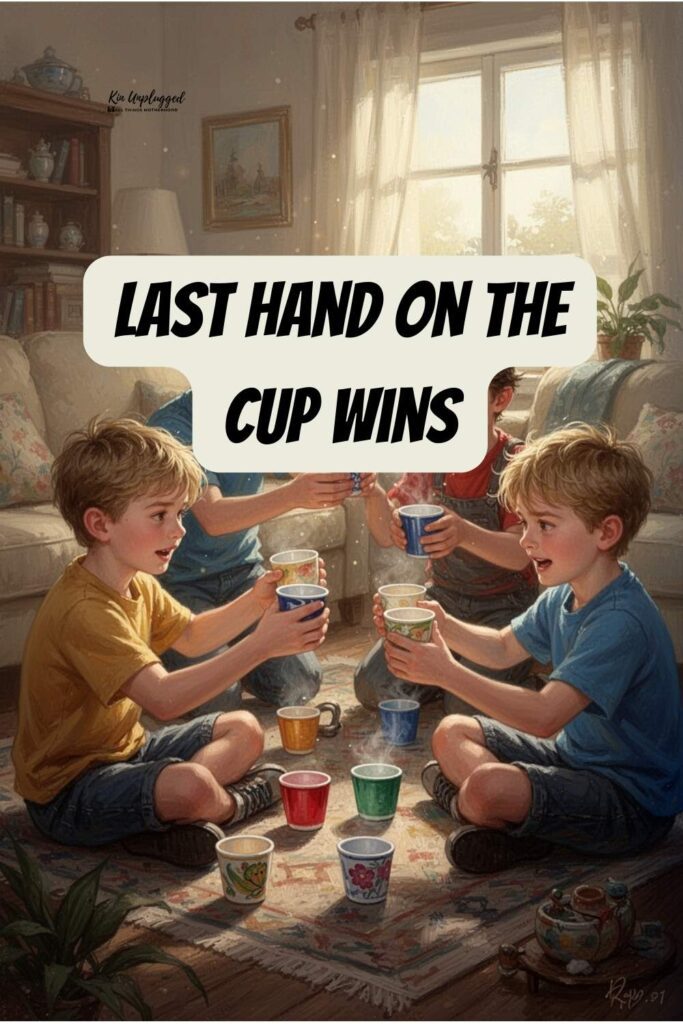
At any time, you shout “Cup!” and both players race to grab it. First one to touch and lift it wins.
That’s it.
Bold truth: The fun comes from the pause before “cup.”
You control the tension. Drag it out a tiny bit and kids lose their minds (in a good way).
The caller script (what to say, word-for-word)
If you want it to sound confident even if you’re winging it, use this.
“Find a partner and face each other. One cup between you.”
“When I say head, shoulders or knees, touch that body part with both hands.”
“When I say cup, grab the cup. Fastest wins.”
“No hovering. Hands go exactly where I say.”
“Ready?”
Then go.
The one rule that stops 90% of arguments
Kids will try to hover their hands near the cup. They will “accidentally” slide it closer. They will claim you said “cup” when you didn’t.
So here’s the fix.
Use the “hands on knees” reset.
Any time you see hovering or arguing, you say:
“Reset. Hands on knees.”
It’s clear, quick and it keeps you out of a debate.
Best way to run it at home (2 kids, siblings, cousins)
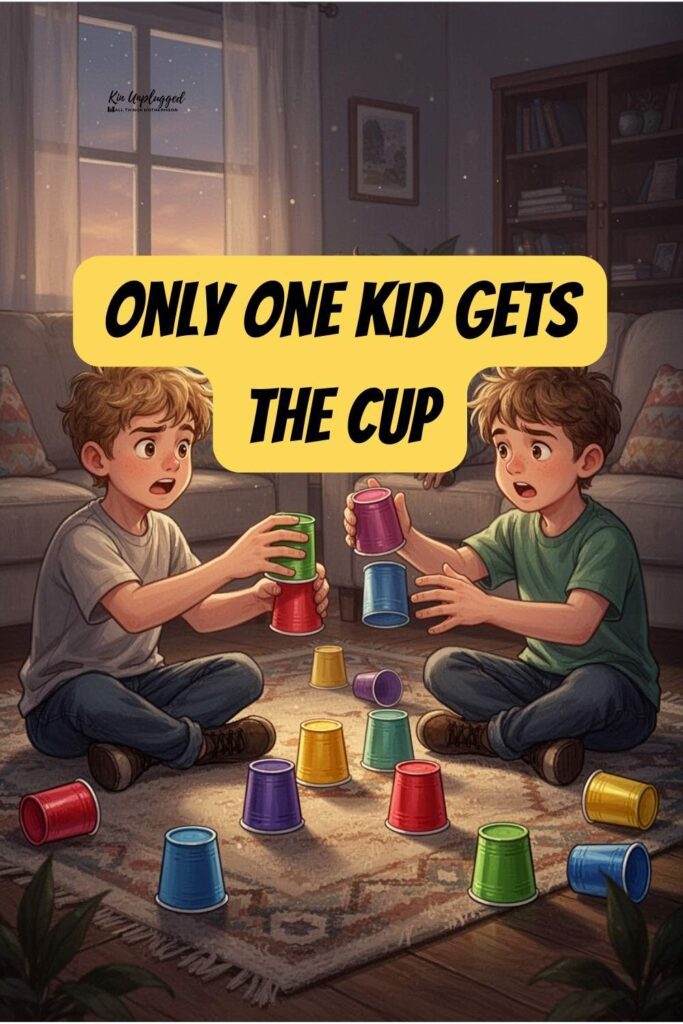
If you’ve got two kids, don’t do elimination. Elimination turns into sulking.
Do this instead:
Best-of-5 rounds
- First to 3 wins takes the match.
- Then swap partners or take a snack break.
Mum tip: Keep the scoreboard visible. A piece of paper, a whiteboard, even tallies on a napkin. It stops “That was my point!” arguments.
Make it kinder without making it babyish
After each round, they have to say one sentence:
- “Good grab.”
- “Nice reaction.”
- “That was fast.”
Yes, it sounds simple. It also changes the tone fast.
Best way to run it for a party or classroom (so nobody is waiting forever)
Large groups fall apart when kids are standing around.
So pick one of these formats.
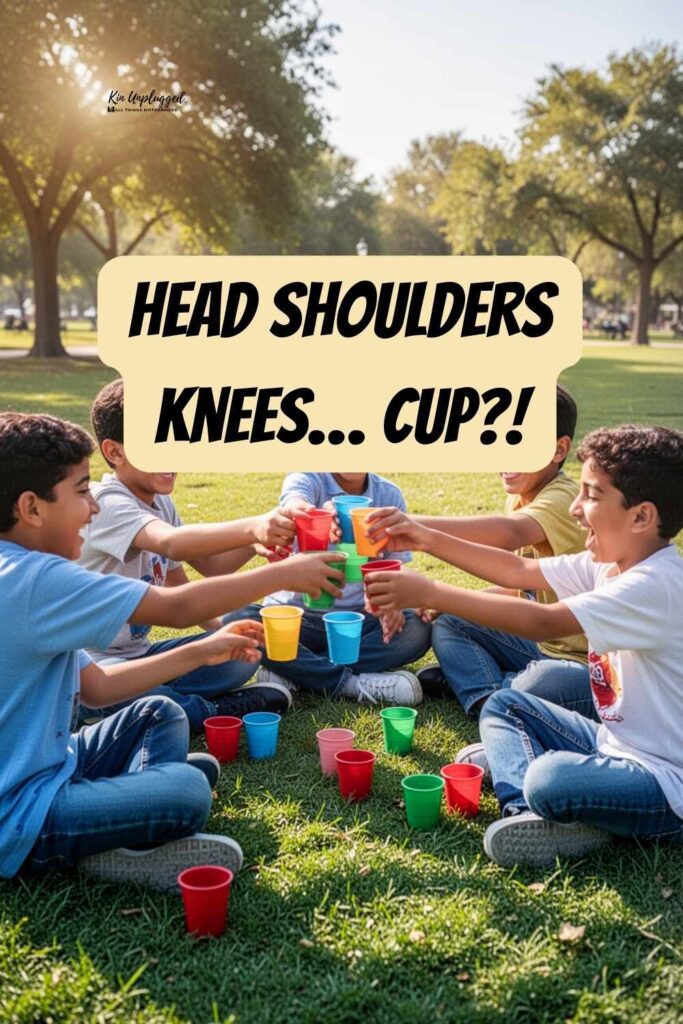
Format A: Everyone plays at once (best for parties)
- Set pairs up in rows.
- Run 30-second rounds.
- Everyone stays with the same partner for 3 rounds.
- Then rotate partners.
This is basically what many group game leaders recommend: rotate so people aren’t stuck with the same opponent.
Format B: Winner moves up (best for confident kids)
- Winners find winners.
- Non-winners find non-winners.
This “mixer ladder” style shows up in classic instructions.
Format C: Tournament bracket (best for older kids)
- Put names in a quick bracket.
- Best-of-3 per match.
- Final match is best-of-5.
This turns it into an event without needing extra stuff.
Age adjustments that make the game actually work
Ages 4–6: Play seated
Standing versions can get bumpy with little ones.
Seat kids at a table:
- cup in the middle
- hands on lap
- caller stands behind
Use fewer calls:
- head
- knees
- cup
Keep rounds short. Little kids do best with quick wins.
Ages 7–10: Add one extra body part
This is the sweet spot for the standard game.
Add:
elbows
or
toes
Some versions explicitly say “really anything will work,” which is true but stick to body parts kids can find quickly.
Ages 11+: Add a “fake out” word
This is where it gets hilarious.
Add a word that means “freeze,” like:
- “cloud” (hands on head, freeze)
- “statue” (hands on shoulders, freeze)
Only do this once they’ve mastered the normal version or it becomes confusing.
Safety and sanity rules
This game is fast. Kids get excited. Someone will lean too far.
So keep it safe without killing the fun.
Use these rules:
- One hand only if playing at a crowded table.
- No diving. Hands grab, bodies stay upright.
- Cup stays in the centre. No sliding it closer.
- Play on a table if the floor gets slippery.
- Take off socks on hard floors.
Also, if anyone has coordination difficulties, switch to the seated version. It keeps it fair and less stressful.
The secret sauce
You can make this game feel flat or feel amazing just by how you call it.
The pacing formula
Call 3–6 body parts before “cup.” Mix it up.
Example round:
Head.
Knees.
Shoulders.
Head.
Knees.
Cup!
Then do a fast round:
Head.
Cup!
Then do a slow round with pauses:
Head…
Shoulders…
Knees…
Head…
Cup!
Kids love the unpredictability.
Variations to keep kids hooked
1) “Quiet Cup” (for indoor voices)
Instead of shouting “cup,” you whisper it.
The rule: they can only grab when they hear it.
This forces focus and stops the room getting too loud.
2) Reverse Cup (for kids who always grab early)
Tell them this before a round:
“This round, if you grab on cup, you lose. You grab on knees.”
Then call:
Head.
Shoulders.
Cup.
Knees!
It’s funny, it’s a brain switch and it teaches listening properly.
Do it sparingly. Once every few rounds is plenty.
3) “Family Roles Cup” (great for siblings)
Instead of head, shoulders, knees, you call:
“Mum”
“Dad”
“Kid”
“Cup”
Rule:
Mum = hands on hips
Dad = arms crossed
Kid = hands on head
This gets laughs and makes younger kids remember faster.
4) “Silly Object Cup” (party winner)
Swap the cup for something safe:
plush toy
rubber duck
big foam ball
Laughtercise suggests swapping the cup for treats like chocolate for an extra hook in group settings.
If you do that at home, set a clear rule: winners don’t eat it mid-game.
5) “Seated Spoons” crossover
Put a spoon in the middle instead of a cup.
Call:
Head, shoulders, knees, spoon.
It feels new even if they’ve played the cup version.
Troubleshooting: what to do when it goes wrong
Problem: Kids keep grabbing early
Fix: Add a penalty:
grab early = automatic loss of that round
Then move on. No lecture.
Problem: One child always wins and the other gives up
Fix: Use handicap rounds:
stronger player starts with hands on shoulders
other player starts with hands on knees
Or do “best of 5” and switch partners more often.
Problem: Lots of arguing about who grabbed first
Fix: Make a “ref” rule:
caller decides, no replays
Or record the final round on your phone if it’s a big family event.
Problem: Younger kids get overwhelmed
Fix: Reduce commands.
Head.
Knees.
Cup.
Keep it simple until they’re smiling again.
The real reason kids love this game
It’s not the cup.
It’s the moment right before the cup.
Their brains are scanning, waiting, trying to predict you. That’s why it works in schools, youth groups and family gatherings with almost no prep.
And it’s one of the few games where even a shy kid can suddenly win and feel powerful.
Make it part of a 5 minute games rotation on busy days
This is how it becomes a go-to, not a one-time thing.
A simple rotation:
- Day 1: Head Shoulder Knee Cup game
- Day 2: Freeze dance
- Day 3: Balloon keep-up
- Day 4: Would you rather (kids edition)
- Day 5: Minute scavenger hunt
The busy mum hosting version (my favourite)
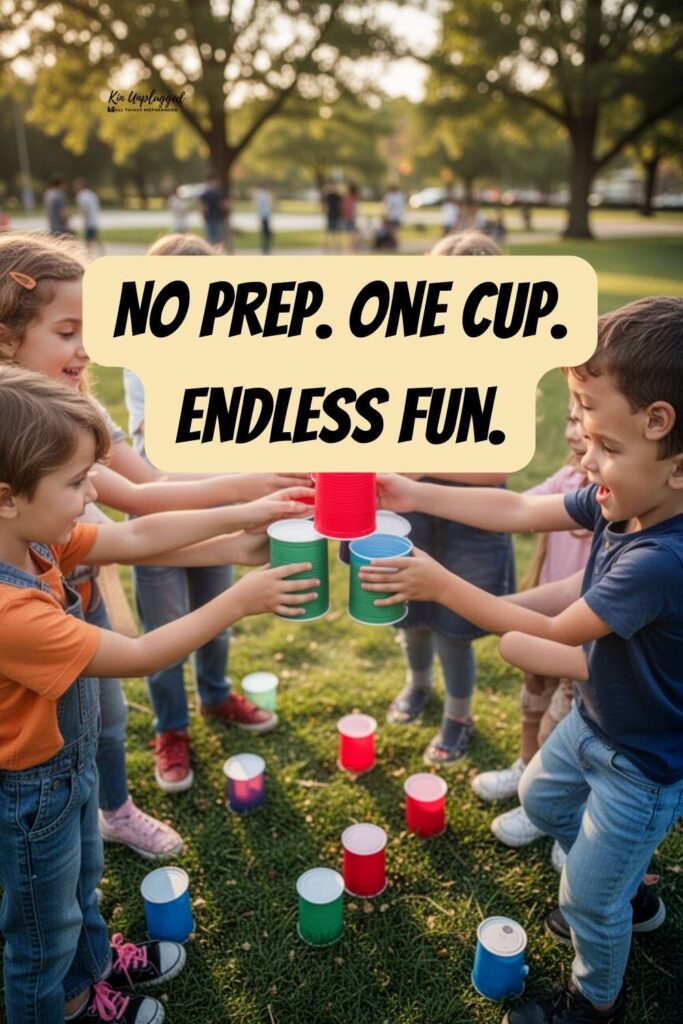
If you’re doing this at a birthday party, you don’t want a long rules talk.
Do this:
- Pair kids.
- Put cups down.
- Say: “Touch what I say. Grab on cup.”
- Run a 20-second practice round.
- Start the real rounds and keep moving.
A practice round prevents most whining.
Why this is more than just a silly game
Fast reaction games like this build skills kids use all day: listening, impulse control and coordination.
The American Academy of Pediatrics highlights that play supports development and skills like self-regulation and problem-solving.
I’m keeping this simple on purpose. You don’t need a lecture. You just need games that help your day go better.
FAQs
What do you need for the Head Shoulder Knee Cup game?
You need one cup for every two players and a caller.
How many people can play Head Shoulder Knee Cup?
As many as you want, as long as you can make pairs and give each pair a cup. For big groups, run everyone at once and rotate partners.
Is the Head Shoulder Knee Cup game good for parties and classrooms?
Yes. It’s commonly used in youth groups and group settings because it needs almost no setup and keeps people engaged.
What age can kids play the Head Shoulder Knee Cup game?
Many kids can play a simplified seated version from around 4+ and the standard version works well for 7+. (Adjust the number of commands and keep rounds short.)
How do you stop kids from grabbing the cup early?
Make “grabbing early = you lose the round” and reset quickly. Kids learn the boundary fast when it’s consistent.
 0
0

 278
278