
Planning a first birthday menu means feeding two completely different audiences at the same table. You need food that a one-year-old can safely pick up and enjoy, food that an adult will want to eat and not just politely nibble and a spread that looks pulled together without requiring you to spend the weekend before the party in the kitchen. This guide gives you a workable plan for both sides of the table, with ideas that overlap more than you’d expect.
READ: 20 of the Cutest First Birthday party themes ever!
Why a Dual Menu Is Simpler Than It Sounds
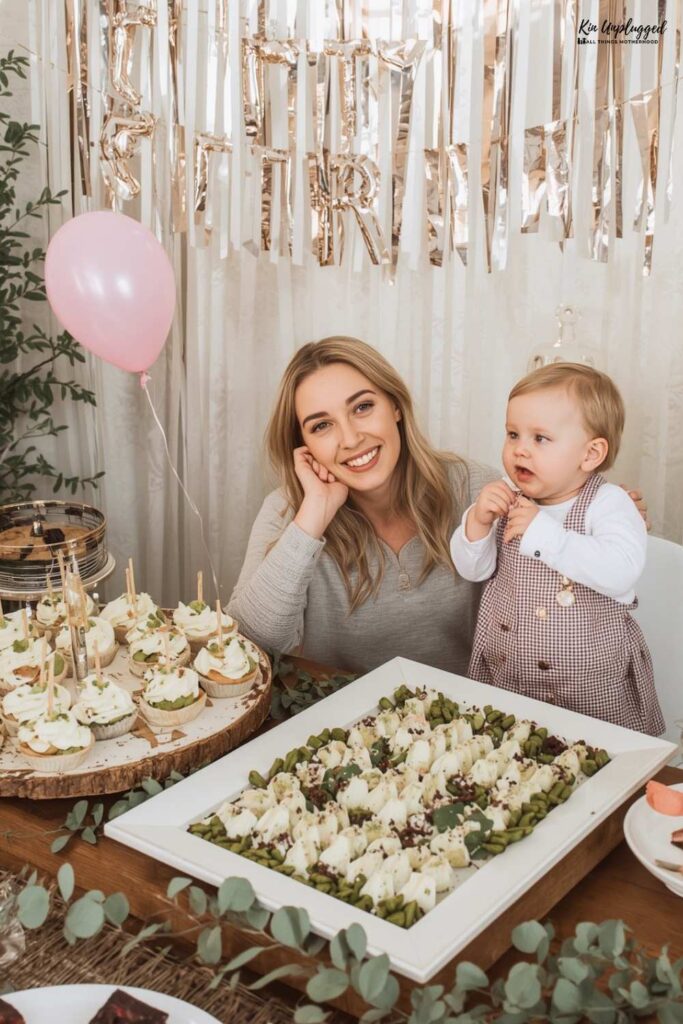
The instinct is to treat this like two separate catering jobs. Baby food over here, grown-up food over there. In practice, the menus share a lot of DNA and the trick is leaning into that rather than fighting it.
Most finger foods that work well for a one-year-old, soft textures, easy to grip, not too salty, are also the kind of grazing food that adults are happy to pick at during a relaxed party. Think mini sandwiches, fruit skewers with the sharp ends removed, roasted vegetables cut into batons. The difference is mostly in seasoning and portion size, not in the fundamental building blocks.
There is also a practical reason to keep the two menus close: you prep once. A batch of mini meatballs can be left plain for the baby and served with a dipping sauce alongside for the adults. A platter of chopped fruit is on the table for everyone. A tray of small sandwiches on soft bread requires almost no extra effort to make age-appropriate.
The one area where you genuinely need two separate things is cake. A smash cake for the baby, lower in sugar and made without honey if they are under twelve months, and a proper celebration cake for everyone else is the standard approach and it works well. Everything else on the menu can be shared territory.
Baby-Friendly First Birthday Food That Doubles as Party Food
These ideas are built around foods that are safe for a one-year-old following typical baby-led weaning or puree-plus-finger-food guidance. If your child has any allergies or your paediatrician has given specific advice, follow that first. For most babies around twelve months, soft finger foods that can be mashed between the gums are the right call.
1. Mini Sandwiches on Soft Bread
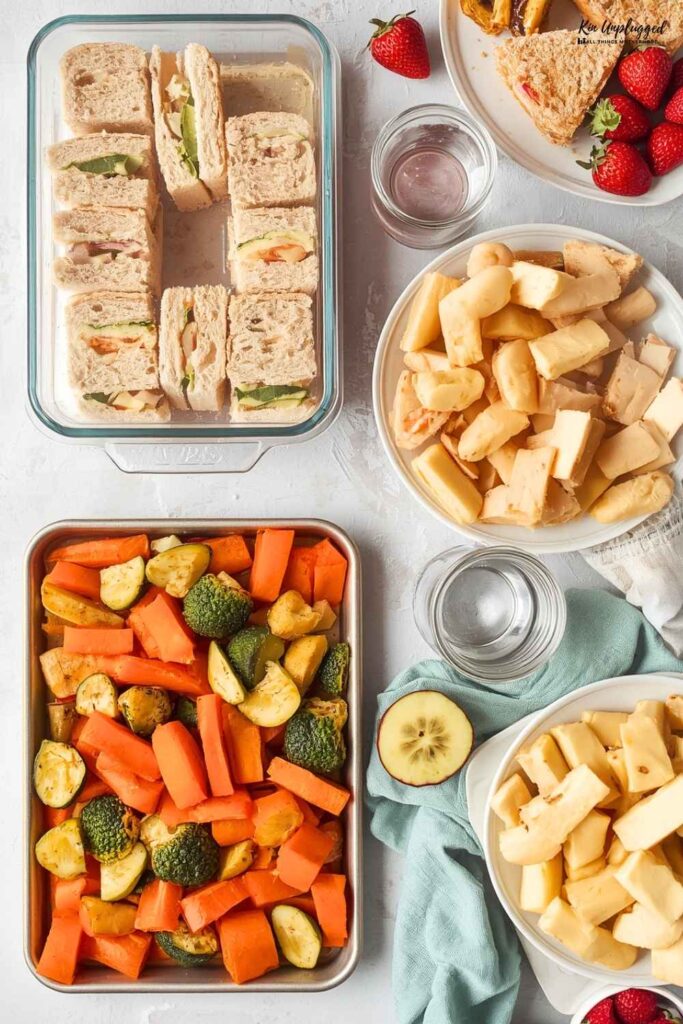
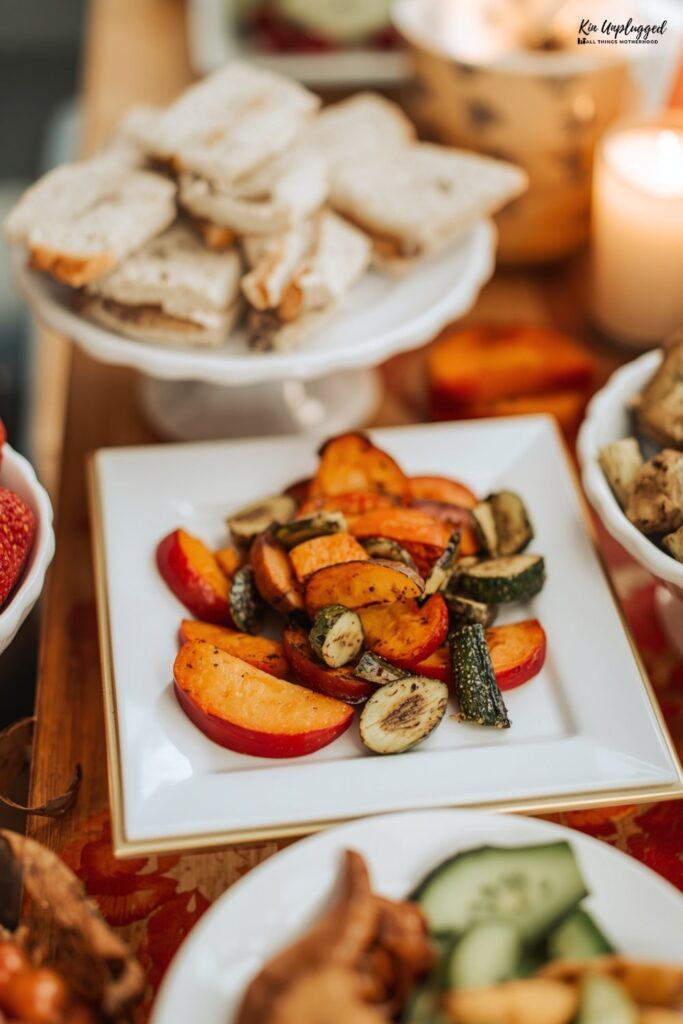
Cut them into quarters rather than triangles and you get pieces that are both baby-manageable and bite-sized for adults. Fillings that work across both audiences: mashed avocado, cream cheese and cucumber or a thin layer of hummus with grated carrot. Skip the salt in the baby portions if you are making separately but honestly these fillings are mild enough to work for everyone without heavy seasoning.
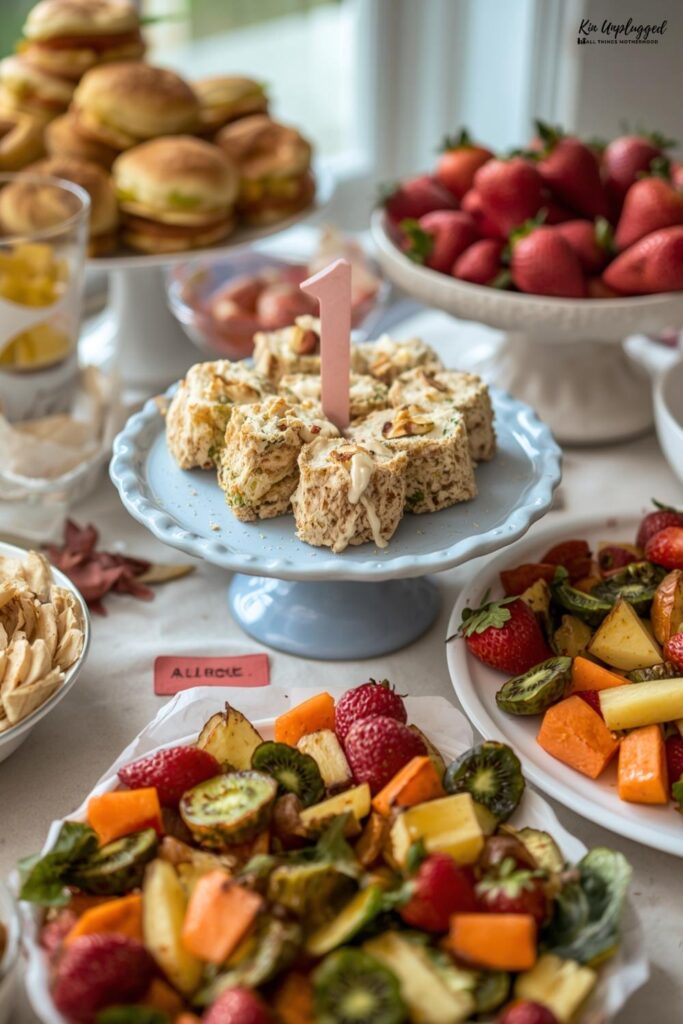
Stack them on a tiered serving platter and they look like a proper spread rather than an afterthought. Presentation does a lot of the heavy lifting at a first birthday party and good tableware is genuinely worth it here. A ceramic platter or a wooden serving board makes a pile of simple sandwiches look intentional.
2. Soft Roasted Vegetables
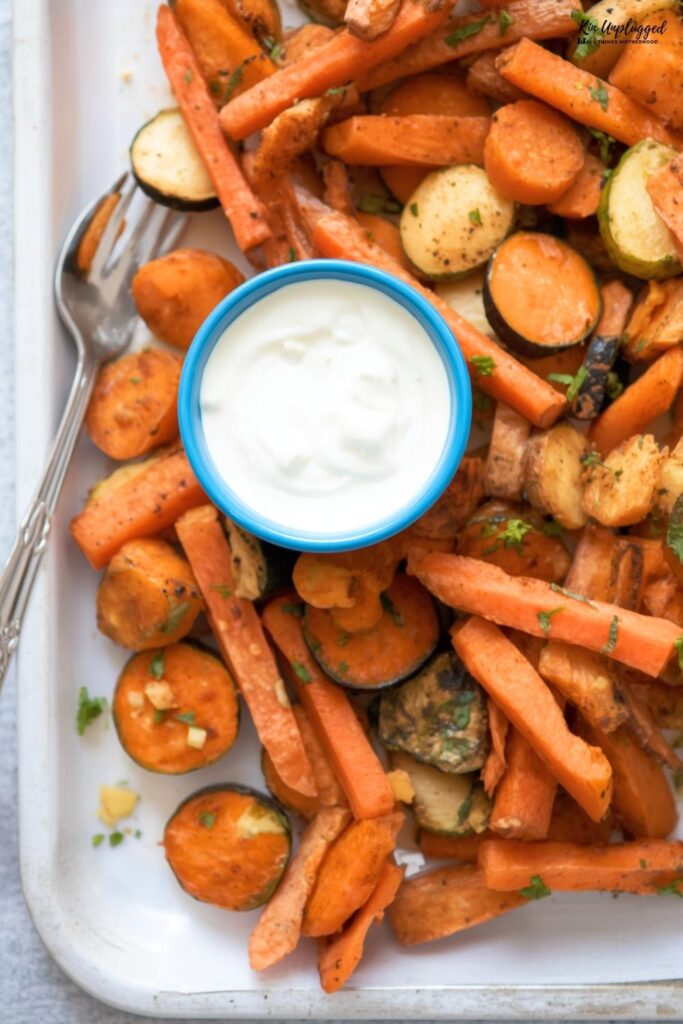
Roast until genuinely soft, not just cooked. For a one-year-old, the vegetable should give easily when you press it between two fingers. Sweet potato wedges, courgette rounds and carrot batons all roast well and go from mushy enough for the baby to appealing enough for adults to dip into something.
For the adult side of the table, set out a small bowl of yoghurt dip or a shop-bought tzatziki alongside the same tray of vegetables. One prep job, two presentations.
3. Small Meatballs or Fishcakes
These are a first birthday party staple for good reason. Make them small enough for little hands, bake rather than fry so the texture stays manageable and season lightly. For the adults, serve with a sauce on the side: a sweet chilli dip, a herby yoghurt or a simple tomato dipping sauce all work without requiring extra cooking.
Fishcakes made with salmon and mashed potato are worth considering specifically because salmon is a good source of omega-3s and most babies take well to the mild flavour. Health authorities including the NHS recommend oily fish as part of a varied diet for babies from six months, so it fits neatly into a first birthday menu.
4. Fruit Skewers (Minus the Skewer for the Baby)
Thread strawberries, melon chunks, grapes halved lengthways and blueberries onto small skewers for the adult side of the table. For the baby, serve the same fruit cut to appropriate sizes on a small plate or in a suction bowl. Grapes should always be halved lengthways for under-fives, not just cut in half across the middle.
A large round platter or a flat wooden board works well for fruit displays. Arranging the fruit in loose colour blocks takes about three minutes and looks far more considered than it deserves to.
5. Cheese Cubes and Soft Crackers
Full-fat hard cheese cut into small cubes is fine for babies from around six months. At a first birthday, a small cheese selection on the table covers the baby, covers the adults who want something savoury to graze on and requires zero cooking. Pair with soft crackers or breadsticks rather than anything too hard or crumbly for the younger guests.
The Cake Situation: Smash Cake Plus a Grown-Up Option
You need two cakes. This is non-negotiable if you want the moment to work and you want adults to actually enjoy a slice.
The smash cake for the baby should be small, one tier is plenty and made without honey, which is not safe for babies under twelve months. Reduced sugar or naturally sweetened versions using mashed banana or unsweetened apple puree are widely available as recipes online and most supermarkets now stock ready-made options in the free-from aisle. The baby does not care about the flavour profile. They care about being allowed to put their hands directly into something.
The celebration cake for everyone else can be whatever you actually want. A layer cake from a bakery, a sheet cake that is easier to slice and serve or a simple Victoria sponge made the week before and frozen until the day. If you are buying rather than baking, most supermarkets carry celebration cakes that are more than adequate and significantly cheaper than a custom order.
One thing worth investing in for the cake moment: a proper cake stand or serving board. It photographs well, it makes a supermarket cake look like more of an occasion and you will use it again.
Making the Spread Look Good Without Extra Effort
Food presentation at a first birthday does not require a catering background. It requires decent serving pieces and a loose plan for what goes where.
A few principles that make a difference:
- Vary the heights. A tiered platter or cake stand next to flat boards creates visual interest without any extra food.
- Keep colours grouped loosely. A fruit display with the reds together and the yellows together looks intentional even when it took five minutes.
- Use small bowls for dips and sauces rather than leaving bottles on the table. Decanting a shop-bought dip into a ceramic bowl takes thirty seconds and looks completely different.
- Label anything with a common allergen if your guest list includes people you don’t know well. Small chalkboard labels or folded card tents do the job.
Investing in a small set of coordinated serving pieces, a couple of platters, a few small bowls and a cake stand, means you are not scrambling to borrow mismatched items the morning of the party. These are also pieces you will use at every birthday, Christmas table and casual gathering for years. They are worth the one-time spend.
A Realistic Budget Breakdown
A first birthday food spread does not have to be expensive. The cost creep usually comes from overestimating how much food you need and underestimating how far simple food goes when it is presented well.
A rough guide for a party of around fifteen to twenty guests:
- Finger food and savoury items: Focus on three or four options rather than six. A full tray of sandwiches, a platter of roasted vegetables, a bowl of meatballs or fishcakes and a cheese board covers everyone without waste.
- Fruit display: Seasonal fruit is significantly cheaper. In summer, strawberries and melon go further per pound than out-of-season berries.
- Cake: A supermarket celebration cake costs a fraction of a custom cake and tastes fine. Reserve the budget for the smash cake experience, which is really about the moment and the photos, not the cake itself.
- Tableware and serving pieces: Buy once, use repeatedly. A set of white ceramic platters and a wooden board are neutral enough to work for any occasion and
do not date the way themed disposable tableware does.
- Drinks: Juice boxes for older children, a simple soft drink option and one or two bottles of prosecco for the adults covers most guest lists without a full bar setup.
What the Research Says About Baby Food at Parties
First birthdays sit at an interesting point in a baby’s eating journey. Most one-year-olds are well into solid foods but still developing the fine motor skills and chewing confidence that make certain textures safe. Health authorities including the NHS and the American Academy of Pediatrics recommend that by twelve months, babies can eat most family foods with some modifications: low salt, no honey, no whole nuts and chopped or softened as needed.
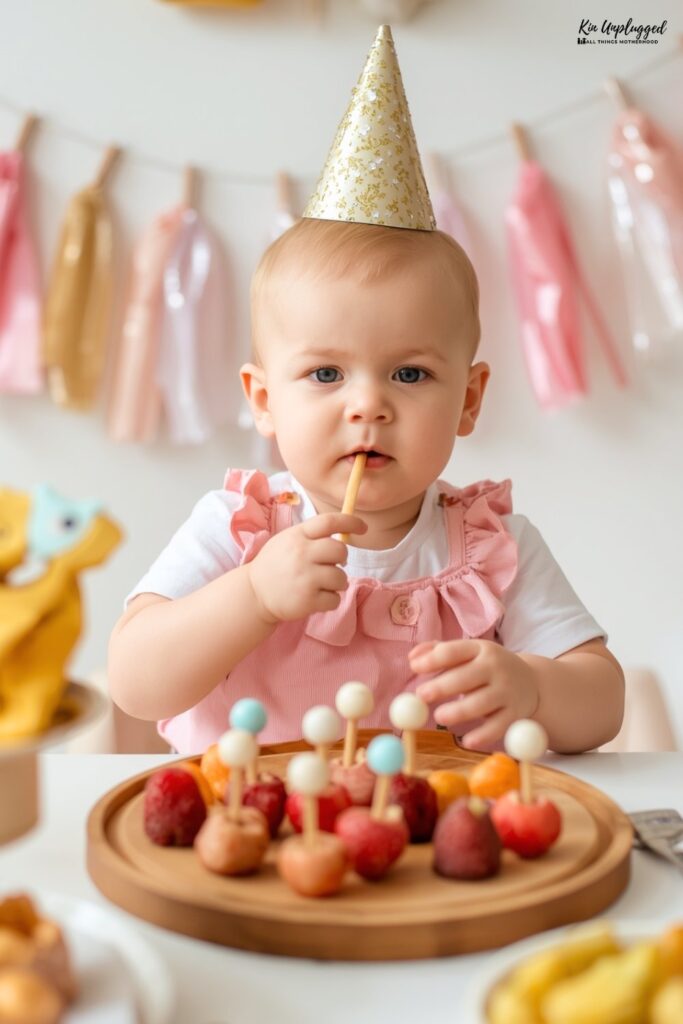
The finger food approach, sometimes called baby-led weaning, has solid backing from feeding researchers and paediatric dietitians. A study published in the journal Appetite found that babies introduced to finger foods alongside or instead of purees showed no greater risk of choking and developed food acceptance more broadly. The key is texture, not necessarily a specific list of approved foods.
For a party context, this means you do not need a separate menu of special baby food. You need the same food you are already serving, adjusted for salt content and cut to safe sizes. That is genuinely less work than it sounds.
One thing worth flagging if this is your first time navigating a larger group meal with a baby: have a small plate of pre-portioned food ready for the birthday child before the party starts. When the room gets loud and busy, babies often find it harder to focus on eating. A quiet moment with their food before guests arrive, or a designated calm spot at the table, helps the actual eating happen even when the celebration around them is at full volume.
A Simple Party-Day Timeline
Getting the food right on the day is mostly about sequencing. Cook and prep the right things in the right order and you are not doing everything at once.
2 to 3 weeks before
- Order or plan the celebration cake. If baking, choose a recipe that can be frozen and defrosted the day before.
- Order any serving pieces or tableware you need so they arrive with time to spare.
3 to 5 days before
- Confirm your guest count and adjust quantities accordingly.
- Buy any non-perishable items: crackers, shelf-stable dips, drinks.
- Make and freeze the smash cake if baking from scratch.
The day before
- Defrost the smash cake if frozen.
- Make the meatballs or fishcakes and refrigerate. They reheat well in the oven.
- Prep the sandwich fillings and store separately from the bread.
- Decant any shop-bought dips into serving bowls and cover with film.
Morning of the party
- Assemble sandwiches and cover tightly until serving.
- Roast the vegetables. These can sit at room temperature for an hour before serving without any issue.
- Arrange the fruit platter and refrigerate.
- Set out the serving pieces and label anything with allergens.
30 minutes before guests arrive
- Bring refrigerated platters out to come to room temperature.
- Reheat meatballs or fishcakes if needed.
- Put the smash cake in its spot. Keep the celebration cake covered until after the smash cake moment.
Frequently Asked Questions
What food is safe for a one-year-old at a birthday party?
Most soft family foods are fine at twelve months with a few adjustments. Avoid honey, whole nuts, added salt and anything with a hard or crumbly texture that could be a choking risk. Soft fruit, cooked vegetables, small pieces of meat or fish, cheese and bread are all good options. When in doubt, the rule of thumb is that food should squash easily between two fingers.
How much food do I need for a first birthday party?
For a two-hour party with around fifteen to twenty guests, three to four savoury options and a fruit display is plenty alongside cake. People eat less than you think at daytime parties, especially when there is a lot going on. It is better to have one or two options that run out than six options with most of the food left over.
Can the baby eat the same food as the guests?
Largely yes, which is the whole point of planning the menu this way. The main differences are salt levels and portion size. Make the savoury food with minimal salt and
 0
0

 278
278