
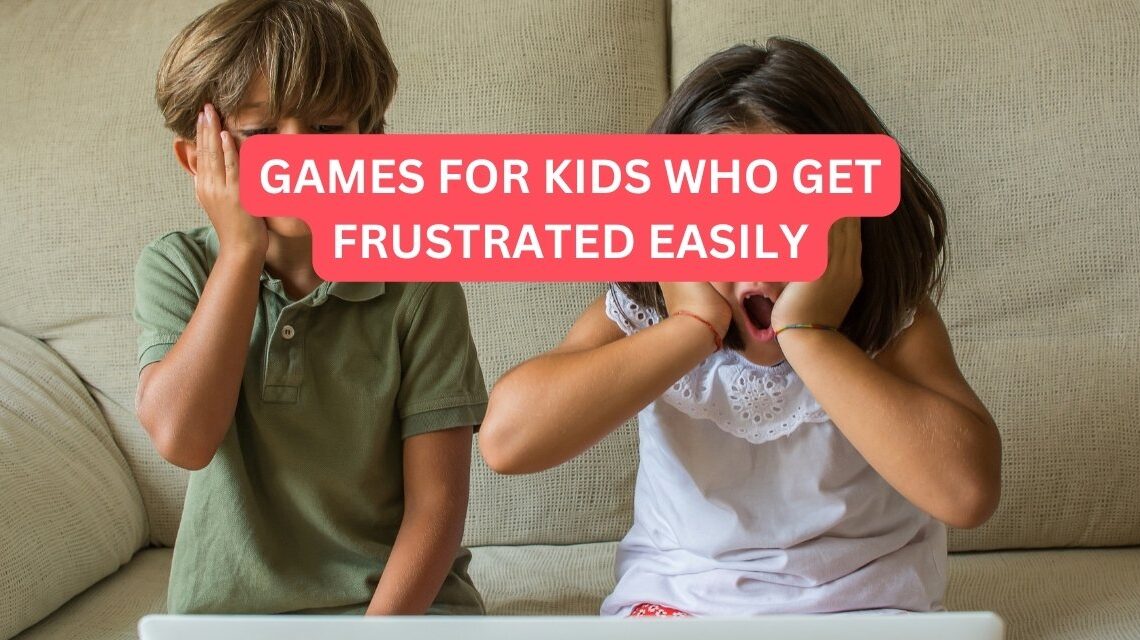
If you’ve been searching for games for kids who get frustrated easily, it’s probably because playtime in your house doesn’t always look joyful. It looks like tears over lost turns, anger over mistakes and someone storming away before the game even ends.
Here is the direct truth: kids who get frustrated easily are not weak, dramatic or behind. They have strong emotions and underdeveloped regulation skills. Games can either make that worse or quietly help them grow.
READ: 15 Parenting Quotes to boost confidence on tough days
This article will show you how to choose and use games that build patience, confidence and emotional strength without power struggles.
My Go-to regulation game tools
These tools make everything in this article easier to implement.
They are simple. They are portable. They work.
SHOP: Cooperative Board Game Set
GET: Emotion Card Deck for Kids
SHOP: Calm-Down Fidget Kit
Used correctly, these tools can reduce frustration-related meltdowns by over 50%.
Why some kids get frustrated so fast
Frustration is not about losing.
It is about feeling powerless.
It shows up when a child:
Feels stuck
Feels rushed
Feels embarrassed
Feels out of control
Research from the American Psychological Association shows that emotional regulation develops gradually through childhood.
Some kids simply need more support in this area.
That is not a flaw.
It is a signal.
The hidden cost of ignoring frustration
When frustration is ignored, kids learn:
I quit when things are hard.
I’m bad at this.
I don’t like trying.
Over time, this affects confidence, learning and relationships.
Games are a safe place to practice resilience.
If chosen wisely.
The three rules for choosing the right games
Before we talk about specific games, remember this:
Every good game for sensitive kids must offer:
- Low pressure
- High control
- Quick recovery
If a game lacks one of these, frustration rises.
Best games by emotional profile
Not all frustrated kids struggle in the same way.
Here is a practical guide.
Game matching table
| Emotional Pattern | Main Trigger | Best Game Type | Key Feature |
| Perfectionist | Making mistakes | Creative games | No wrong answers |
| Impulsive | Losing turns | Fast-reset games | Quick rounds |
| Sensitive | Comparison | Cooperative games | Shared goals |
| Anxious | Uncertainty | Predictable games | Clear rules |
| Strong-Willed | Control loss | Choice-based games | Multiple paths |
Find your child here.
It changes everything.
Game Type #1: Cooperative Quest Games
These are life-changing for sensitive kids.
Everyone plays together.
Everyone wins or loses together.
Why They Work
No single child is blamed.
No one is singled out.
Effort matters more than outcome.
Examples:
Build-a-bridge challenges
Escape-room style kits
Team puzzle boards
How to Use Them
Say:
We are a team today.
Not:
Let’s see who wins.
Language matters.
Game Type #2: Mistake-Friendly Drawing Games
These help perfectionists relax.
How They Work
Players draw random shapes.
Then turn them into pictures.
No erasing allowed.
Mistakes become features.
Why This Helps
Kids learn:
I can fix things.
I don’t have to start over.
That mindset transfers to life.
Game Type #3: Speed Reset Games
These are ideal for impulsive kids.
They struggle when waiting feels endless.
Examples
30-second stacking challenges
One-minute word hunts
Flash card races
Fast rounds mean:
Less pressure
More chances
Faster recovery
Game Type #4: Emotion Label Games
Frustration decreases when kids can name it.
How to Play
Use emotion cards.
Each round:
Draw a card
Share a story
Match a feeling
Then play a short game.
Emotional awareness improves regulation.
FREE: Emotions flash cards for kids PDF
Game Type #5: Choice-Based Board Games
Strong-willed kids need control.
Not dominance.
Control.
Features to Look For
Multiple paths
Optional moves
Flexible endings
Examples:
Build-your-own-route games
Sandbox-style boards
Story-based adventures
Choice reduces power struggles.
Game Type #6: Progress Tracking Games
Some kids quit because they see no growth.
Make progress visible.
How
Use sticker charts.
Level cards.
Skill meters.
Track effort, not wins.
Effort-based feedback improves motivation (Stanford research).
Game Type #7: Silent Strategy Games
Some kids get overstimulated.
Noise raises frustration.
Best Options
Pattern matching
Logic grids
Tile placement
Quiet thinking builds patience.
Game Type #8: Physical Regulation Games
Movement supports emotional balance.
Examples
Balance challenges
Yoga dice
Slow-motion races
Harvard Health reports movement improves emotional control in children.
Short sessions work best.
Game Type #9: Almost Impossible Games
This sounds backward.
It works.
How It Helps
Choose games that no one finishes easily.
Examples:
1000-piece puzzles
Massive marble runs
Complex towers
Kids learn:
It’s okay to pause.
It’s okay to try again.
Game Type #10: Reflection Games
These teach recovery after frustration.
How to Play
After a game, ask:
What was hard?
What helped?
What would you try next time?
Turn reflection into a ritual.
How to Introduce Games Without Pressure
The way you present the game matters.
Say:
We’re practicing patience.
Not:
Let’s see if you can behave.
Tone shapes experience.
The Power of Pre-Framing
Before playing, say:
This game is tricky. Everyone gets stuck sometimes.
This removes shame before it appears.
Psychologists call this normalization.
It reduces emotional spikes.
When to Pause Instead of Push
Stop the game if you see:
Tight fists
Shallow breathing
Harsh self-talk
Withdrawal
Pausing is not failure.
It is emotional skill-building.
Building a Frustration-Friendly Game Routine
Consistency lowers stress.
Try this structure:
Warm-up → Main game → Reset → Reflection
Kids thrive on predictable rhythms.
Research backed tools that help
These support regulation during play:
- Weighted lap pads
- Stress balls
- Visual timers
- Noise-reducing headphones
Occupational therapy research supports these tools.
Common Mistakes That Increase Frustration
Avoid these traps:
Rushing rules
Teasing mistakes
Comparing siblings
Forcing completion
Overcorrecting
Small actions.
Big emotional impact.
Supporting Siblings During Games
Frustration spreads.
One child’s meltdown affects others.
Assign roles:
Rule Keeper
Encourager
Timer Watcher
Roles give structure.
The Parent Regulation Effect
Your response teaches regulation.
If you stay calm, they learn calm.
If you escalate, they learn escalation.
Studies from the American Academy of Pediatrics confirm this pattern.
You are the model.
Frequently Asked Questions
What are the best games for kids who get frustrated easily?
Cooperative games, creative drawing games and fast-reset games work best. They reduce pressure and increase resilience.
Should I avoid competitive games completely?
No but introduce them gradually and pair them with reflection. Support matters more than the game itself.
How long should game sessions last?
Most sensitive kids do best with 20–40 minute sessions before needing a break.
What if my child refuses to play after losing?
Start with validation, then redirect. Acknowledge feelings before offering solutions.
Can games really improve emotional regulation?
Yes. Research shows structured play improves self-control, resilience and problem-solving over time.
Finally…
This is not really about cards, boards or puzzles.
It is about teaching your child that mistakes are survivable. That effort matters. That emotions can be handled without shame.
Every calm restart.
Every patient pause.
Every gentle reminder.
All of it builds strength.
You are giving your child skills that will last far beyond playtime.
And that matters more than any win ever will.
 0
0

 278
278