

If you need waiting games for kids that work in the car, in a queue, at the doctor or during the we’re still waiting for the food stage of family life, you’re in the right place. Here’s the fast answer: pick a game based on (1) how loud it can be and (2) how long you need it to last, then run it like a tiny routine. It takes less energy than negotiating just one more video, and it’s way easier to repeat.
You need a short list that you can remember while holding a snack, a bag and your last nerve.
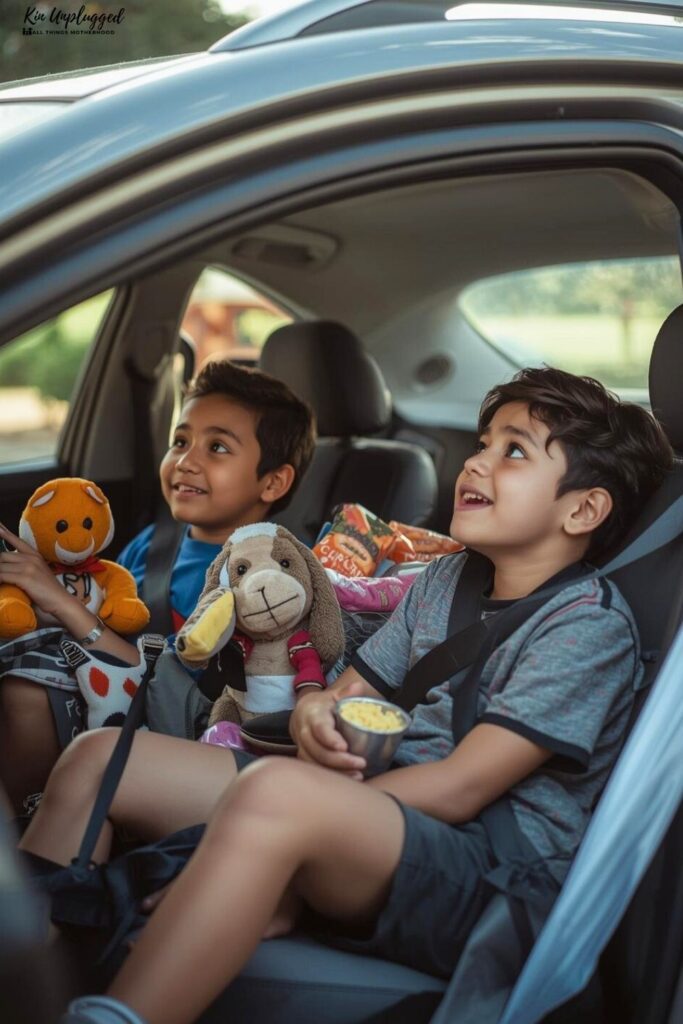
Two easy helpers if you like having a backup plan:
SHOP: Pocket Conversation Cards for Kids
SHOP: Reusable Travel Activity Pad (mess-free)
Now let’s get you through the next wait like you have a secret superpower.
The part nobody says out loud
Kids aren’t bad at waiting.
Their brains just don’t feel time the way ours do.
And sometimes the wait hits at the worst possible moment: hungry, tired or trapped in a line that is not moving.
We’re aiming for smooth minutes.
In 60 seconds, you’ll have a grab-and-go menu of games sorted by time, volume and setting.
The rule that makes waiting games work
A waiting game fails for two reasons. It’s too complicated or it asks you to perform like a cruise-ship entertainer.
So here’s your new rule: the game must start in one sentence.
If you can’t explain it while walking, it’s not a waiting game, it’s an activity.
Second rule: you run it in rounds.
Kids don’t need one game that lasts 30 minutes.
They need three games that last 7 minutes each.
If your child melts down in public a lot, this helps → My Calm-Exit Plan for Public Tantrums
Quick chooser table (pick a game in 5 seconds)
Use this like a menu. Point, pick, start.
| Situation | Time you need | Volume level | Best game type | Start line |
| Queue / checkout | 2–5 min | Quiet | Spot count | Find 3 things that are blue. |
| Restaurant waiting | 5–15 min | Medium | Story guess | I’m thinking of an animal… |
| Doctor / dentist | 5–20 min | Quiet | Finger brain | Trace a letter on my hand. |
| Car / traffic | 10–30 min | Medium | Memory category | Let’s do: ‘I’m packing a suitcase…’ |
| Siblings arguing | 3–10 min | Quiet | Team mission | You two are detectives. Case starts now. |
| You have zero energy | 2–8 min | Any | Parent-lite prompts | I’ll ask, you answer fast. |
Next, I’m giving you my Wait Kit system so you don’t have to think on the spot.
The Wait Kit system
I keep a note on my phone called WAIT GAMES.
That’s it. No fancy app.
Inside it, I keep three categories:
Quiet games (waiting rooms, church, appointments)
Medium games (restaurants, sidewalks, long lines)
Car games (traffic, school pickup, road trips)
When I need one, I choose the shortest option that fits the moment.
Then I run it for one round and stop while it’s still fun.
That last part is the magic.
Quiet waiting games (doctor, dentist, library, anywhere you get The Look)
1) Invisible Ink
You write a letter or simple word on their palm with your finger.
They guess it.
Best for: ages 3–10.
Why it works: touch guessing is a full brain distraction.
This is also listed as Invisible Ink on a primary school waiting games handout, which made me feel very validated.
2) Finger Breathing
Trace around their hand slowly with your finger.
They breathe in going up a finger and out going down.
It’s simple and it settles the room without you giving a lecture.
The same school handout includes Finger Breathing, which is a nice reminder that simple is enough.
3) What Changed?
Tell them to look at you for five seconds.
Then you change one small thing (watch to other wrist, hair behind ear) and they guess.
Do 3 rounds, then let them be the one who changes something.
That flips them from restless to in charge.
4) Silent Charades
No acting like a maniac required.
Think tiny charades.
Themes: animals, sports, jobs, things in this room.
Charades is also included in the school waiting-games list, so you’re officially not making this up.
5) Rainbow Hunt
Find something red orange, yellow…
You don’t need to finish the rainbow for it to work.
If you want it calmer, whisper it like it’s a mission.
Kids love secret missions.
Medium volume waiting games (lines, restaurants, anywhere time slows down)
6) Reverse I Spy
Instead of I spy, you describe an object without naming it.
They guess.
Example: I see something that holds paper and it has a shiny clip.
Reverse I Spy is also on that school list for out-and-about waits.
7) Would You Rather: the fast version
Keep it rapid-fire.
One question, quick answers, no debating like it’s court.
Try these that feel fresh:
- Would you rather have jelly hands or spaghetti hair?
- Would you rather sneeze glitter or hiccup bubbles?
- Would you rather be tiny for a day or giant for a day?
The trick is speed.
Speed beats arguing.
8) The Menu Game (restaurant only)
Each person chooses:
- one main character (a food item)
- one sidekick
- one villain
Then you tell a 20 second story using those three things.
It’s goofy, it’s contained and nobody has to leave their chair.
9) Coin Flip Predictions (no coin needed)
You pretend to flip a coin.
They call it, then you decide if they won.
Yes, you are the coin.
No, you do not tell them that.
10) The Compliment Challenge
Each person says one nice thing about someone else at the table.
Make it specific, not you’re nice.
Examples:
- You tell funny stories.
- You notice little details.
- You share your snacks.
This one changes the mood fast. It’s also a sneaky social-skills win.
Car waiting games (traffic, school pickup, long drives)
11) Categories
Pick a category, take turns naming items.
Animals, foods, things you’d see at school, things that are sticky.
If they’re older, add a rule: no repeats and no pauses longer than 3 seconds. Instant focus.
12) Fortunately / Unfortunately Story
You start with one line: Fortunately, we found a treasure map.
Next person: Unfortunately, it was written in squirrel language.
Back and forth until you’re laughing or you’ve arrived.
The RAC lists Fortunately-Unfortunately as a car game option, which is proof this has survived generations of family travel.
13) I’m Packing My Suitcase
Each person repeats the growing list and adds one item.
You can do alphabetical mode for older kids.
This one is suggested in many no prep car games lists for a reason: it lasts.
14) Number Plate Words
Take letters from a plate and make a word (real or silly).
Or do best band name from the letters.
This is also on the school waiting-games list under travel games.
Kids will suddenly become comedy writers.
15) The 3 Details Game
Look at a car next to you.
Name three details: roof rack, dent, stuffed toy in the back window.
Then swap.
It turns boredom into observation, which is basically a parent win.
The I have zero energy games
These are for the days you can’t lead anything.
You can still start them in one sentence.
16) Two Truths and a Silly Lie
They say three statements.
You guess which one is the silly lie.
Make it low stakes and funny.
If they’re small, you give the options.
17) Guess My Number
Pick a number 1–20.
They ask higher or lower questions.
Keep it under 20 for younger kids so it stays quick. Quick games stop spirals.
18) The Timer Challenge (no timer needed)
Say: We have three rounds until it’s our turn.
Then do three tiny rounds of any game.
Kids like knowing there’s an ending.
You like not having to promise snacks you don’t have.
A quick word about screens
Sometimes you will use a screen. That does not make you a bad parent.
If you’re trying to reduce the reflex of handing over a phone instantly, the American Academy of Pediatrics focuses less on one magic hourly limit and more on choosing quality content and building a family media plan that fits your child and routine. So you can treat screens like a tool, not the default.
Also, boredom isn’t a crisis. Child Mind Institute notes that boredom can support skills like creativity and self-direction, especially when kids get a little help getting started.
Translation: You just need a few tools for the hardest minutes.
Slightly different waiting games

19) The Secret Agent Briefing
You whisper: Your mission is to find three things that don’t belong here. They scan the room like a detective.
Then they report back quietly. This works insanely well in waiting rooms.
20) Tiny Podcast
They interview you like you’re famous. They ask five questions.
You answer in the most dramatic way you can manage.
Then you switch roles.
21) The Movie Trailer
Make a trailer for our day.
They narrate: In a world where socks disappear…
Keep it under 30 seconds.
Short is the whole point.
22) The Rule Maker
You say: Make a rule for the next 60 seconds.
Examples: talk like robots, only whisper, only use questions.
Kids love power.
You love boundaries that come with an expiry time.
23) The Gratitude Speed Round
Not the serious version.
The funny version.
I’m thankful for fries.
I’m thankful for the dog we saw.
I’m thankful for that one cloud that looks like a dinosaur.
Mood shift, instantly.
How to get your kids to play (instead of refusing)
This is the part that saves you.
Don’t ask, announce.
Try:
- We’re doing one round of Reverse I Spy.
- Pick: Category game or Secret Agent.
- You start. I’ll guess.
BGive two options, not ten.
Too many choices melts the whole thing down.
Also, start the game before the whining fully loads.
Waiting games work best as prevention, not rescue.
The 3 minute Wait Reset script (steal this)
Use this the next time you’re stuck.
It sounds simple because it is.
- Okay, we’re waiting. Here’s the plan.
- We’re doing two rounds of a game.
- Then we do a snack check.
Kids relax when there’s a shape to the moment.
You relax because you’re not negotiating from scratch.
FAQs
What are the best waiting games for kids with no supplies?
Invisible Ink, Reverse I Spy, Categories, and I’m Packing My Suitcase are strong because they start fast and don’t need props.
How do I keep my child calm in a waiting room without a phone?
Use a quiet game with touch or guessing, like Invisible Ink or Finger Breathing, and run it in short rounds.
What are good quiet games for kids in public places?
What Changed, Silent Charades, Rainbow Hunt and hand-tracing breathing games work well because they keep voices low and hands busy.
What are good car games for kids that the driver can play too?
Categories, Fortunately/Unfortunately and Suitcase are easy because everyone can join without looking down.
Is it okay to let kids be bored while waiting?
Boredom can be useful and it can help build self-directed play once kids get started. You don’t have to fill every second. Just the toughest ones.
Wishing you the best!
 0
0

 278
278