


Cold lighting suddenly feels colder. Bare corners feel emptier. Thin blankets become deeply offensive. And somehow the entire house starts feeling emotionally drafty by about 4:17pm.
That is why warm winter decor ideas matter more than people realise.
READ: 8 Cost-effective ways to Winterize your Home
Not because every room needs to transform into a pine-scented holiday film set containing twelve knitted pumpkins and an aggressively large mug of cocoa. But because winter changes how people use their homes completely.
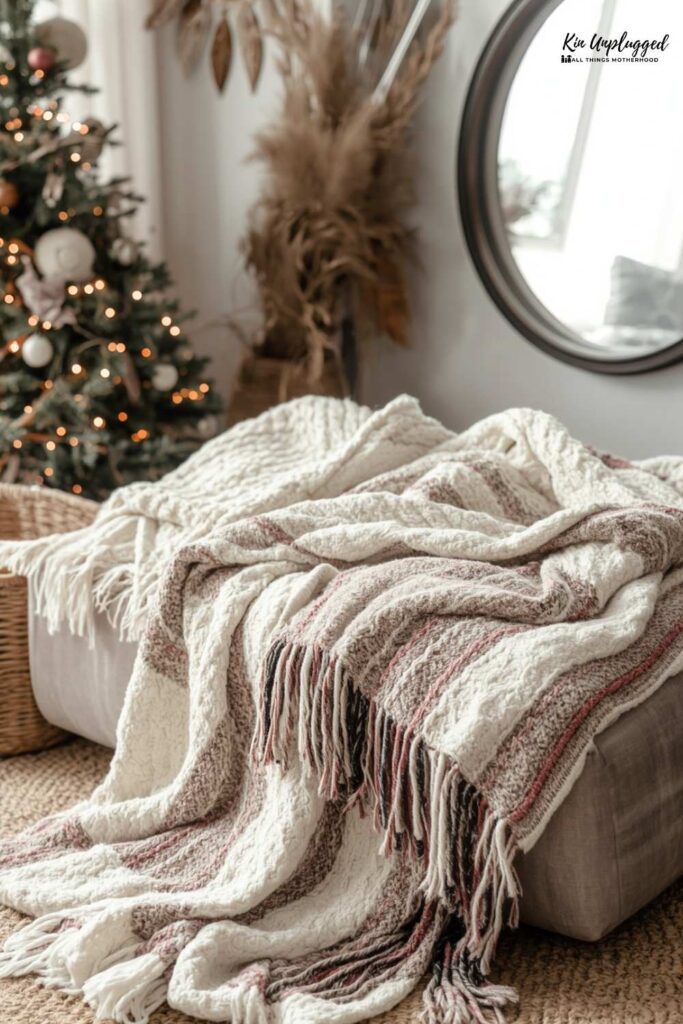
People stay in more.
Children spread out more.
Blankets migrate permanently onto sofas.
Everybody starts searching for softness instinctively.
The best winter homes feel warmer visually before the heating even turns on.
And thankfully, creating that feeling usually has less to do with expensive seasonal shopping and more to do with texture, lighting, layering and tiny shifts that make rooms feel gentler during darker months.
Especially in family homes, winter decor should feel comforting and practical. Not like the house is preparing for a woodland-themed catalogue photoshoot where nobody spills juice ever again.
1. Layer softer lighting everywhere possible
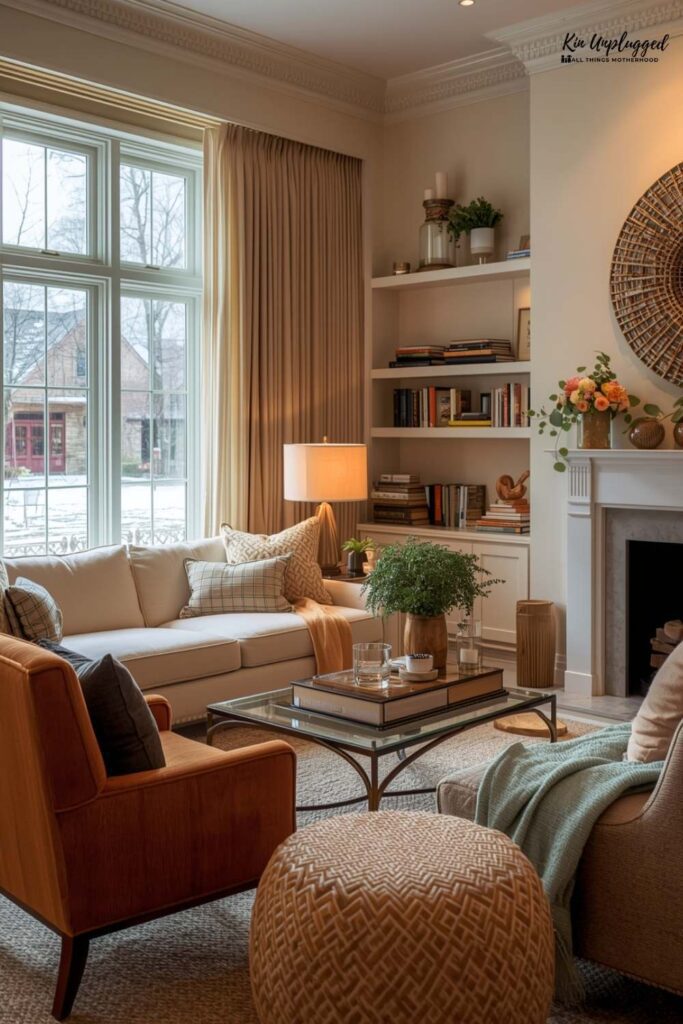
Winter lighting changes everything.
Bright overhead lights feel especially harsh once the skies turn grey at 3pm and everyone is slightly tired for mysterious seasonal reasons.
The quickest way to make a home feel warmer is adding:
- table lamps
- wall sconces
- fairy lights used subtly
- warm-toned bulbs
- battery candles
According to the American Lighting Association, layered warm lighting improves comfort and perceived relaxation within homes significantly.
And honestly, one small lamp can emotionally outperform an entire expensive room makeover during winter.
2. Add blankets like the house is gently preparing for hibernation
Winter homes need visible softness.
Not:
one decorative throw folded so neatly nobody feels emotionally permitted to touch it.
Actual usable blankets matter.
Especially:
- chunky knits
- fleece throws
- quilted layers
- textured neutral blankets
The room immediately feels warmer visually.
And practically, people naturally gather more comfortably during colder months when blankets are accessible instead of hidden away in storage.
READ: Budget Christmas Home Decorations to add festive touches
3. Use warmer bulbs instead of cool white lighting
This sounds tiny.
It is not tiny.
Cool white bulbs can make winter evenings feel strangely clinical.
Warmer bulbs soften:
- skin tones
- walls
- fabrics
- entire rooms
The atmosphere changes immediately.
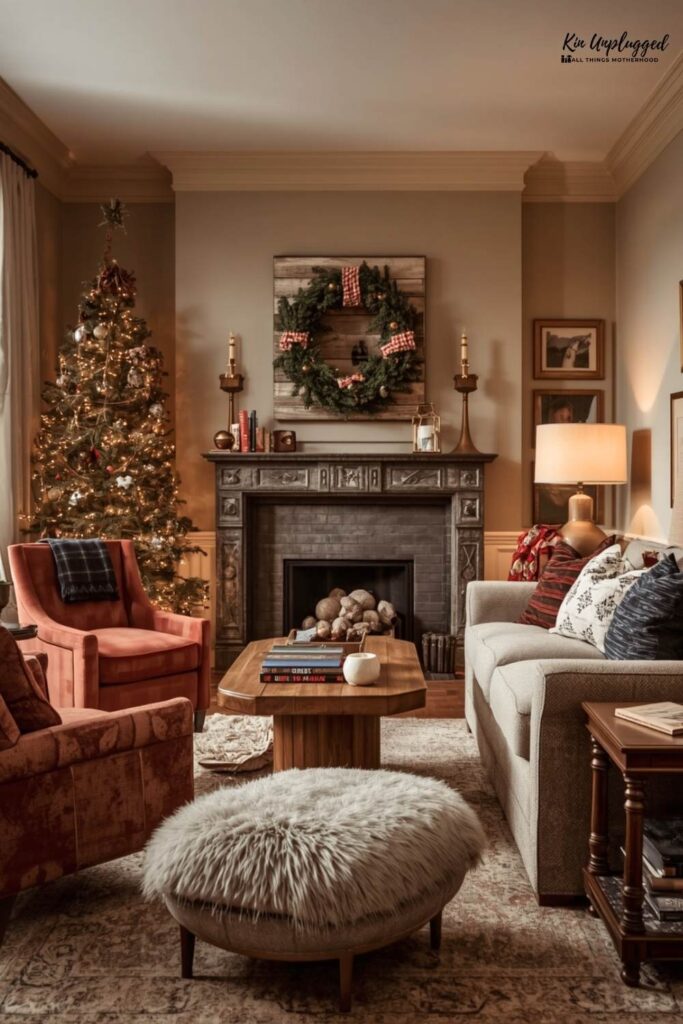
Especially in:
- living rooms
- kitchens
- bedrooms
Homes feel calmer once the lighting stops resembling a supermarket refrigerator aisle.
4. Add texture before adding seasonal decor
Many winter homes become visually cluttered because people add:
- signs
- mini trees
- decorative figurines
- endless tiny accessories
when what the room actually needs is softness.
Texture changes rooms faster:
- boucle cushions
- velvet pillows
- woven baskets
- thicker curtains
- soft rugs
The room starts feeling warmer naturally without becoming overcrowded.
5. Move furniture slightly closer together
This is one of the most overlooked warm winter decor ideas.
Winter rooms feel more intimate when seating arrangements tighten slightly.
Not cramped.
Just closer.
Especially:
- sofas angled inward
- chairs nearer lamps
- poufs gathered around tables
The room begins feeling more connected emotionally.
Almost like the furniture itself decided everybody should stay awhile.
6. Bring in deeper winter colours carefully
Winter homes usually benefit from slightly richer tones:
- forest green
- warm brown
- muted burgundy
- charcoal
- cinnamon
- deep cream
Not necessarily everywhere.
Just layered gently through:
- cushions
- throws
- candles
- artwork
The room instantly feels grounded.
7. Use lamps in unexpected places
This changes homes dramatically during winter.
Tiny lamps work beautifully in:
- kitchens
- bathrooms
- hallways
- bookshelves
Especially during darker afternoons.
The home feels softer immediately.
And honestly, small pools of warm light make winter evenings feel significantly less exhausting psychologically.
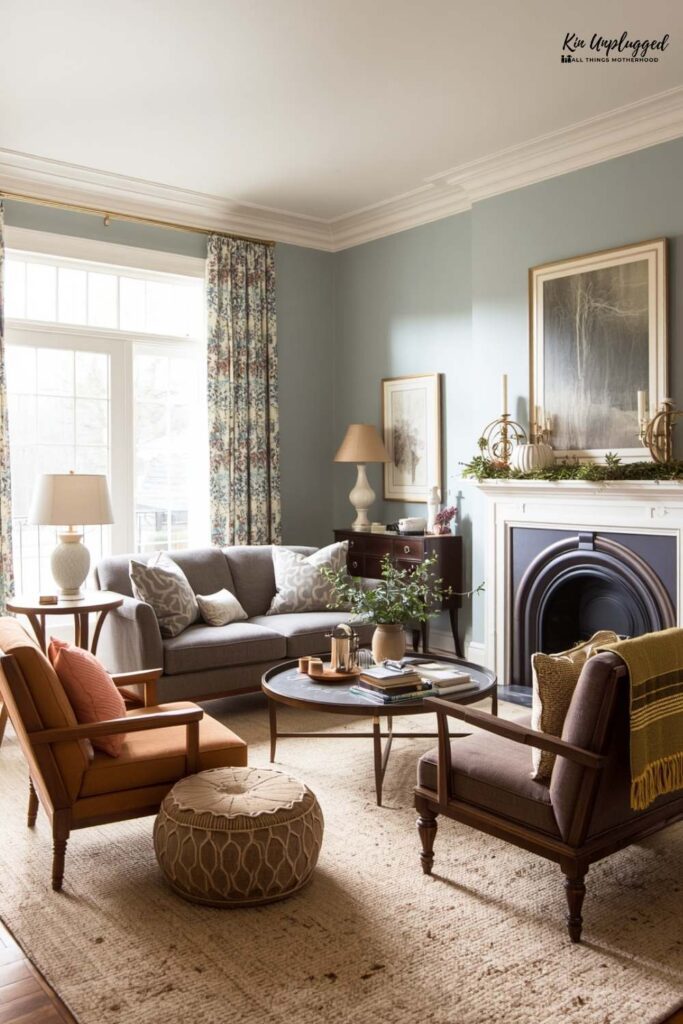
8. Add winter scents subtly
Homes feel warmer when they smell warmer too.
Especially:
- cedar
- cinnamon
- vanilla
- orange
- pine
- clove
According to the Harvard Medical School, scent is strongly connected to emotional memory and mood perception.
Even simmer pots make a huge difference:
- orange slices
- cinnamon sticks
- cloves
The entire house begins feeling calmer.
And slightly more expensive somehow.
9. Swap lighter fabrics for heavier textures
Winter homes feel unfinished when summer fabrics linger too long.
Simple swaps help:
- linen to velvet cushions
- cotton throws to knits
- light rugs to thicker textures
The visual warmth changes immediately.
Rooms begin feeling more protected from winter outside.
10. Let the home look slightly lived in
This matters deeply during winter.
Perfectly styled rooms often feel colder emotionally.
Winter homes become comforting through:
- folded blankets nearby
- books stacked casually
- mugs resting on trays
- softer imperfect layering
The goal is:
warm and welcoming
Not:
untouched luxury cabin where nobody is allowed to exhale near the cushions.
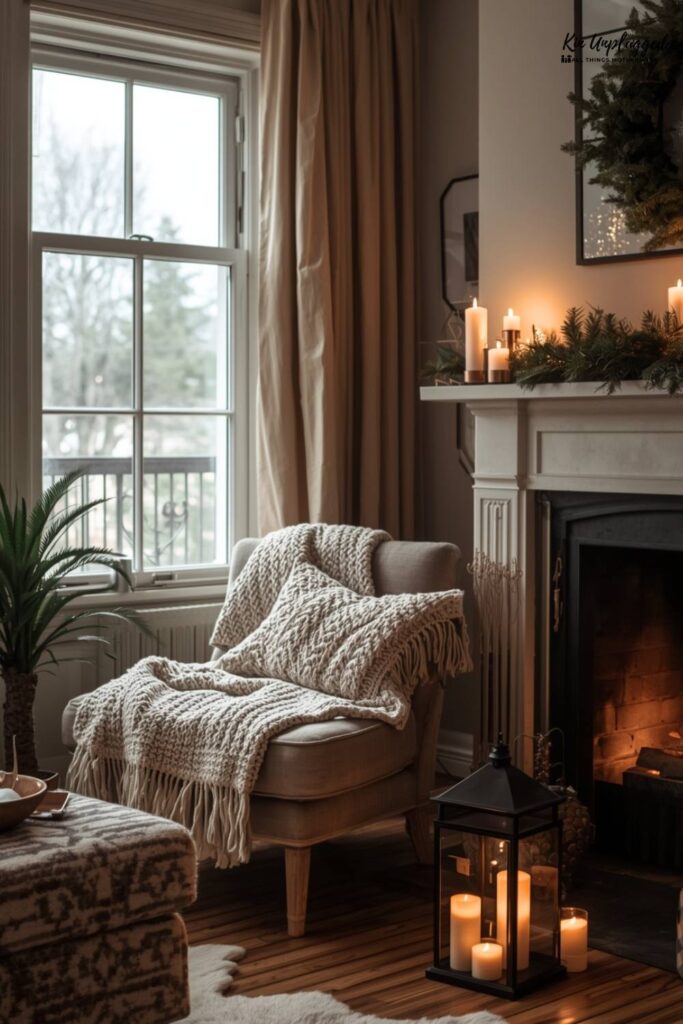
11. Add candles in groups instead of individually
Grouped candles feel softer visually.
Especially mixed:
- pillar candles
- tea lights
- ribbed textures
- matte ceramics
Battery candles work brilliantly too for family homes.
Because eventually:
- children
- pets
- distracted adults
all enter the room carrying questionable decision-making energy.
12. Use rugs to soften hard flooring
Winter floors feel colder emotionally as much as physically.
Rugs help:
- absorb sound
- add texture
- warm the room visually
Layered rugs work especially beautifully during winter.
Even small additions near:
- sofas
- beds
- kitchen sinks
change the atmosphere immediately.
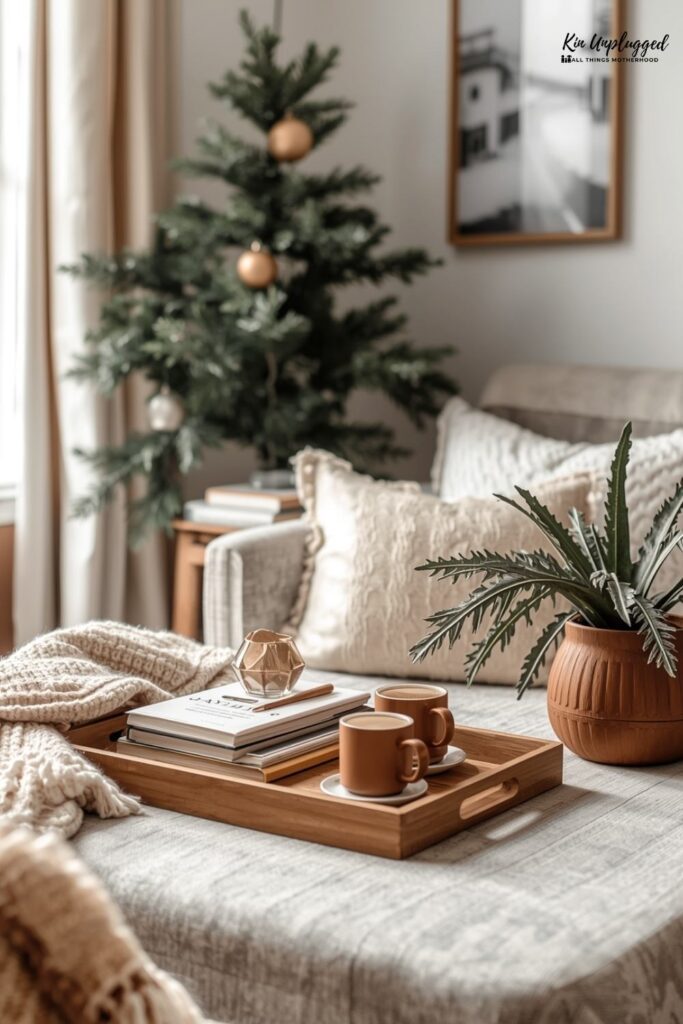
13. Style shelves more softly for winter
Shelves benefit from seasonal softness too.
Try:
- stacked books
- warmer ceramics
- darker wood tones
- woven textures
- softer lighting nearby
And importantly:
remove some visual clutter first.
Winter rooms already contain more physical layers naturally:
- coats
- blankets
- boots
- extra laundry somehow
The shelves should not join the chaos aggressively.
14. Add curtains if the room feels visually cold
Bare windows often feel harsher during winter.
Curtains soften:
- sound
- light
- temperature perception
Even lightweight curtains add warmth psychologically.
Especially in:
- bedrooms
- living rooms
- dining spaces
The room feels quieter immediately.
15. Make one corner intentionally slower
This is one of the most powerful winter home shifts.
A small slower corner might include:
- chair
- lamp
- blanket
- tiny table
- books
That is it.
Not every area needs productivity attached to it constantly.
Winter homes feel better when at least one space quietly invites people to pause.
Especially busy parents.
16. Use baskets for winter overflow
Winter objects multiply rapidly:
- scarves
- blankets
- slippers
- hats
- extra cushions
Baskets prevent the home from looking overwhelmed.
Natural woven baskets work especially well because they soften rooms while hiding visual clutter.
And honestly, winter homes need forgiving storage systems more than aesthetic perfection.
17. Keep surfaces slightly simpler during winter
This sounds backwards because people often decorate more during colder months.
But winter already adds visual heaviness naturally:
- darker skies
- thicker fabrics
- extra layers everywhere
Simpler surfaces balance that beautifully.
Less clutter.
Fewer tiny objects.
More breathing room.
The home immediately feels calmer.
18. Add warmth to bathrooms too
People forget this constantly.
Winter bathrooms matter emotionally.
Simple additions help enormously:
- thicker towels
- softer bath mats
- warm lighting
- wooden accents
- candles
The room instantly feels less like:
a cold tile-based administrative facility.
And more like an actual comforting part of the home.
Sometimes homes feel warmer not because more decor was added but because the space started supporting slower living more gently.
Frequently Asked Questions
How do you make a house feel cozy in winter?
Layer warm lighting, soft textures, blankets, rugs and richer colours throughout the home. Reducing visual clutter also helps rooms feel calmer and warmer during winter months.
What colours make a home feel warm in winter?
Warm neutrals, deep greens, charcoal, cinnamon, burgundy and earthy browns all work beautifully. Softer layered tones help create warmth without overwhelming rooms visually.
What decor makes a room feel cozy?
Soft lighting, textured fabrics, candles, layered rugs, baskets and comfortable seating all help rooms feel warmer and more inviting.
Are fairy lights still in style for winter decor?
Yes, especially warm-toned fairy lights used subtly. They work best layered into shelves, mantels or small corners rather than overwhelming entire rooms.
How can I decorate for winter without cluttering my home?
Focus on texture and lighting first instead of adding lots of small seasonal decor items. Blankets, rugs, lamps and candles often create more warmth than decorative accessories alone.
The best winter homes do not feel perfect.
They feel softer.
Blankets casually folded nearby. Lamps glowing quietly in corners. A kitchen that smells faintly of cinnamon. Rooms that feel warmer emotionally even before the heating fully catches up.
That atmosphere matters more than trend perfection ever will.
Especially during darker months when home stops being just a place people pass through quickly and becomes the place everyone slowly settles back into again each evening.
 0
0

 278
278