
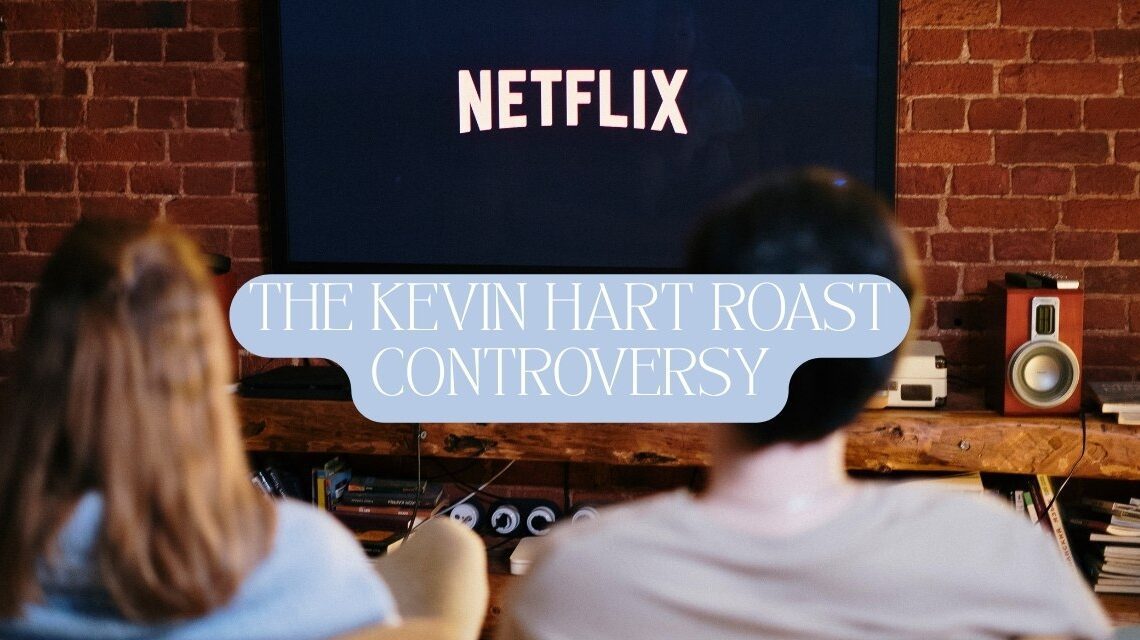
The Kevin Hart roast controversy matters because children will hear the clips without the context, without the age rating and without the adult excuse of, well, it was only a roast.
And that is the problem.
READ: Being the only Black Family at School: What it feels like (and what can help)
Not that grown adults gathered on a stage to insult one another. Not that comedy got sharp. Not even that the night was uncomfortable because some comedy is meant to be uncomfortable.
The problem is that racial humiliation was allowed to dress itself up as a joke, walk onto a massive Netflix stage and then go home with our children in their phones, their group chats, their classrooms, their bus rides and eventually, maybe, their mirrors. And don’t you dare say that kids don’t watch roasts because how easy is it to stop kids from finding things online these days? Or seeing things online by accident even?
READ: How I build my Black daughter’s Confidence in a predominantly White school
Small mom life side note before we get into the heavier part of this: some conversations with children need help. Books, simple family prompts and little confidence building bits can make those talks less awkward and more human.
Browse children’s books for race, kindness and confidence
See family conversation cards and confidence picks
And now, back to the thing that has been sitting in my chest because this one is not just about comedy.
It is about what children learn adults are allowed to laugh at.
What happened at The Kevin Hart Roast?
Netflix lists The Roast of Kevin Hart as a 2026 TV-MA comedy special that streamed live on 10 May 2026 with Shane Gillis as roastmaster and a line up including Jeff Ross, Chelsea Handler, Lizzo, Pete Davidson, Tony Hinchcliffe, Sheryl Underwood and Katt Williams.
That rating is important of course.
TV-MA tells us the special was not made for children but that is also where the adult fantasy ends because children do not need to watch a three hour Netflix special to absorb its worst moments.
They only need one clip. One stitched video. One older cousin laughing in the kitchen.
One boy in form time repeating a line he barely understands but knows will get a reaction.
One child on the playground saying it in jest and another child carrying it home in silence.
The biggest backlash centred on race-based material. Especially a Tony Hinchcliffe joke that invoked George Floyd’s death. BET reported that a spokesman for The Gianna and George Floyd Foundation called Hart’s decision to let Hinchcliffe back into a roast “sad for the culture.”
Michael Che also publicly criticised the roast’s writing and the kind of topics that showed up, pointing to jokes around slavery, sex crimes and slurs, while also raising concern about the role of mostly white writers in a special meant to celebrate one of the most successful Black comedians of the past decade.
That detail matters too because this was not a small back room set.
This was a global platform. Netflix.
This was a Black comedian in the chair with Black people and Black children watching the afterlife of the clips unfold online.
And yes again, I know. Someone will say it was a roast. Someone will say everything is allowed there. Someone will say comedy is meant to offend but there is a difference between being roasted and being racially reduced.
There is a difference between insult comedy and cultural permission.
There is a difference between a joke that stings and a joke that arms other people.
Why this is so different when you are raising children
I keep thinking about the children not the adults arguing in comment sections.
Black children. White children. Asian children. Mixed children.
Children who are still trying to work out what is funny, what is cruel, what is powerful, what gets rewarded, what gets punished and what adults really mean when they say, “It was only a joke.”
That phrase has carried a lot of bad behaviour over the years.
It was only a joke.
Except children do not experience it that simply.
A Black child with darker skin already hearing comments about being too dark does not need a viral clip confirming that Blackness is a public punchline.
A Black girl already having her hair touched, judged, mocked, compared or questioned does not need adults laughing at jokes that make Black bodies feel like open territory.
A Black boy already being treated older than he is does not need another public reminder that his pain might be funny to people who do not see him as fully innocent.
A white child who repeats one of those jokes at school may not understand the history under it but the Black child on the receiving end still feels the hit.
That is why this matters.
Because the internet does not keep adult material inside adult rooms.
It chews it up, cuts it into bite-sized clips, adds captions and feeds it back to children as culture.
The harm is not abstract. Kids pick this up early.
This is not just a feeling.
The American Academy of Pediatrics has warned that racism has a profound impact on children’s health and development and that reducing its impact is part of helping children reach their full potential.
Research published in Current Directions in Psychological Science also notes that racial awareness and bias begin early in childhood, which means children are not blank little clouds floating above the world until secondary school. They are watching, sorting, hearing, copying and making meaning far earlier than many adults like to admit.
So when a racial joke becomes viral, it is not floating above children.
It lands sometimes quietly. Sometimes loudly. Sometimes in the child who repeats it. Sometimes in the child who is wounded by it.
Sometimes in the Black child who laughs along because that feels safer than being the one who says, actually, that hurt.
And I think that is one of the parts we do not talk about enough.
Not every wound looks like tears.
Sometimes it looks like a child laughing at themselves before anyone else gets the chance.
Sometimes it looks like hating their hair in year four.
Sometimes it looks like asking for lighter foundation at thirteen.
Sometimes it looks like flinching when the whole class laughs at a joke about Black people and then pretending they did not care.
Sometimes it looks like going home and saying nothing.
What adults call edgy, children may hear as permission
Here is the bit that bothered me most.
The jokes did not vanish when the credits rolled.
They became material.
And material travels.
A child does not need to know who Tony Hinchcliffe is to repeat a Tony Hinchcliffe line.
A child does not need to know the history of lynching to understand that a joke about it makes Black fear feel small.
A child does not need to know George Floyd’s story in full to understand that adults are laughing at the language tied to a man’s last moments.
That is why I cannot file this away as adult entertainment and move on.
For some people, it was three hours of edgy comedy.
For children, especially Black children, it may become years of echo.
| What adults say | What children may hear |
| It was just a roast | Cruelty gets a pass when the room laughs |
| It was not meant for kids | Clips are still made for everyone once they spread |
| People are too sensitive now | Pain is embarrassing, so keep quiet |
| It was equal opportunity offence | Some bodies and histories are easier targets than others |
| Kevin laughed, so it is fine | A Black adult’s public reaction cancels a Black child’s private hurt |
| Comedy has no limits | The loudest person gets to decide whose dignity is disposable |
That last one is the one I cannot shake.
Because children are always learning where power sits.
They learn it in school corridors. They learn it at birthday parties.
They learn it when one child says something cruel and every other child laughs because laughing feels safer than standing apart. They learn it in little glances. They learn it in who gets protected. They learn it in who is told to take a joke.
Kevin Hart laughing was part of the pain
I have thought about Kevin Hart laughing more than I expected to because on one hand, I can imagine the pressure of that chair.
The whole night is arranged around you being roasted.
You know the premise. You know cameras are on you. You know any visible discomfort will become another clip and from what could be seen, drinks were being served across the night, the energy was loud and the whole point seemed to be that nothing was off limits.
So no, I do not want to flatten Kevin Hart into a villain but I also cannot pretend his laughter did not sting.
He is a Black father. He has Black children. He has a Black daughter.
And that makes the optics of him laughing through race-based humiliation harder to sit with.
Every Black parent knows the little private work that goes into raising Black children with confidence.
You praise the skin. You praise the hair. You fix the crown. You correct the world when it tries to shrink them. You say, no, your hair is not difficult. You say, no, your nose is not too much.
You say, no, your skin is not a problem to be solved. You say, no, you do not have to be smaller to be loved.
And then a huge stage tells the world that Black pain, Black history, Black death, Black height, Black bodies and Black dignity can all be thrown into the same bin as punchlines.
That is hard.
That is disappointing.
That feels like watching somebody laugh while the door is being opened to language your own children may later have to survive.
The Lazy Part is important to me too
I also want to say something that will probably annoy the comedy purists.
Some of it was not just offensive.
It was lazy.
Not all dark comedy is clever. Not all shock is skill. Not all discomfort means depth.
Sometimes a joke is only dangerous because it is standing on the oldest, easiest, dirtiest floorboards in the room.
Slavery.
Lynching.
Black death.
Black pain.
Racial slurs.
The old machinery.
The tired machinery.
The machinery that has been grinding Black people down for centuries now repackaged with a laugh track and a Netflix budget.
That is not brave to me.
It is not genius. It is not some fearless act of truth telling.
It is the comedic equivalent of finding the bruise and pressing on it, then calling the win “free speech” because somebody made a noise.
And this is why Chelsea Handler and Sheryl Underwood stood out differently to me.
Not because every joke was gentle.
It was a roast, after all.
But because there were moments where the wit felt more pointed, more adult, more angled toward actual observation rather than just grabbing a racist relic off the shelf and waving it at the crowd.
There is a way to be brutal without being historically vacant.
There is a way to be sharp without handing bullies new vocabulary.
There is a way to be funny without turning Black children into the unpaid audience for adult racial carelessness.
Comedy doesn’t happen in a vacuum
People love to say comedy should not have rules. I get the instinct.
No one wants a world where every joke has to pass a committee of the most easily offended people in the room but comedy does not happen in a sealed container.
It happens in a culture.
And in this culture, Black children are already dealing with hair discrimination, colourism, adultification, school bias, online racism, beauty standards and a long list of small daily messages telling them that their Blackness is either too much or not enough.
So when a major roast leans into race as an easy laugh, the impact is not equal.
It does not land on everyone the same way.
A white child may hear a shocking joke and move on.
A Black child may hear the same joke and add it to a private pile of evidence.
Evidence that their pain is funny. Evidence that adults will laugh before they protect. Evidence that being Black means always having to be a good sport about your own humiliation.
And I know that sounds heavy but motherhood has made me less interested in pretending that heavy things are light just because adults find that more comfortable.
The self hate conversation is the one we can’t dodge
One of the most dangerous parts of public racial comedy is what it can confirm inside the people it targets.
That is the part I keep coming back to because racism does not only work by making one group look down on another.
It also works by teaching people to look down on themselves. That is where colourism lives. That is where texturism lives. That is where featurism lives. That is where the child who looks in the mirror starts negotiating with their own face.
A joke about Blackness does not land in a neutral room.
It lands in a world where some Black children already wonder if lighter skin would make life easier. It lands in a world where some Black girls are still told their natural hair is “too much.”
It lands in a world where some Black boys learn early that the world may read them as older, harder, louder or more threatening than they are.
It lands in a world where children learn which version of Blackness is praised and which version is mocked.
So when a stage full of adults laughs at racial humiliation, it does not just entertain an audience.
It can feed the old voice inside a child that says, maybe they are right.
That is why I use the word violence.
Not because a punch was thrown.
Because dignity can be assaulted.
Because a child’s self-image can be chipped away by repetition.
Because language can make the world feel less safe.
Because laughter can be a weapon when it gathers around the wrong target.
What we can say to our kids after moments like this
This is where moms come in.
In the car.
At bedtime.
In the kitchen.
On the walk home.
When the clip comes up.
When the question comes.
When a child says, why were they laughing?
The answer can be simple.
Some adults laugh at things that are not kind. That does not make those things okay.
That is a full answer.
For older children, it can go further.
A roast is meant to make fun of people but jokes about racism, death, slavery or someone’s body can still harm people. Comedy doesn’t make unkindness okay.
For Black children, the message may need to be even more direct.
Nothing about your skin, hair, features or history makes you a joke. Other people’s laughter does not decide your worth.
For non-Black children, there is important work too.
Never repeat a joke that turns another group’s pain into entertainment. If you are not sure, do not use it.
That last sentence could save a child a lot of hurt.
Honestly, it could save many adults too.
A Different Way to teach Kids about Jokes
I do not think we should raise children who cannot laugh. That would be miserable. Children should know silliness. They should know teasing that is loving. They should know wit. They should know how wonderful it feels to laugh until your stomach hurts.
But they also need a better test for comedy than “did people laugh?”
Because people laugh for all sorts of reasons.
They laugh because they are surprised.
They laugh because they are nervous.
They laugh because everyone else is laughing.
They laugh because the person with power laughed first.
They laugh because silence would make them stand out.
So I like the idea of giving children a simple family rule.
A good joke makes people laugh without hurting someone’s heart.
That is easy enough for a child to understand.
And honestly, it is apparently hard enough for some adults to need reminding.
The Questions I would Ask around any Viral Joke
This is the kind of little checklist I wish more families had.
Just a way to slow things down before children start repeating things they don’t understand.
| Ask this | Why it matters |
| Who is the joke about? | Children learn to notice the target |
| What history is being used? | Some words carry more than today’s meaning |
| Who is laughing loudest? | Power often hides inside the crowd |
| Who might go quiet? | Silence can be hurt, not agreement |
| Could this be used at school to shame someone? | That is where viral humour often ends up |
| Is the joke clever without the cruelty? | If not, maybe it was never that clever |
That last question is the one I want to tape to every microphone.
Is the joke clever without the cruelty?
Because if the only thing holding it up is racial pain, maybe it is not a joke with teeth.
Maybe it is just an insult wearing a suit.
Why moms shouldn’t look away
Busy moms do not have time to monitor every clip, every meme, every group chat, every school corridor.
We already know that.
But we do not have to catch everything to shape something.
We can shape the language in our homes.
We can shape the way our children respond when cruelty gets a laugh.
We can shape the small brave sentence that says, that is not funny.
We can shape the way Black children understand themselves before the world tries to hand them a smaller story.
And we can shape the way non-Black children understand that being “in on the joke” is not always harmless.
This is not about raising children to be fragile.
It is about raising children who can tell the difference between humour and humiliation.
That difference matters.
A lot.
This is urgent
The urgency here is not that every child has watched the roast.
The urgency is that clips move faster than care.
A harmful joke can travel around the world before a parent even knows it exists.
By the time adults are debating intent, children may already be testing the language on each other.
That is why I do not think the answer is only outrage.
Outrage burns hot and then disappears.
Children need something steadier.
They need adults who explain. Adults who correct. Adults who say, no, we do not repeat that. Adults who say, I know everyone laughed but that does not mean everyone was safe. Adults who can admit that sometimes the culture gets it badly wrong.
This isn’t about protecting kids from every hard thing
I do not believe children should be kept from every hard conversation.
Actually, I think the opposite.
Children need honest conversations, especially about race, because silence does not protect them. Silence just lets the loudest voices teach them first but there is a difference between teaching a child about racism and letting racism entertain them.
There is a difference between explaining George Floyd’s death with care and letting a comedian turn it into a cheap punchline.
There is a difference between age-appropriate honesty and viral cruelty.
Mothers know this difference instinctively.
We know when a conversation is hard but necessary.
We also know when something is just nasty and people are trying to make us feel boring for saying so.
The wider message Black children receive
For Black children, the message from nights like this can be especially complicated.
Because they may see a famous Black man laugh.
They may see a mixed crowd laugh.
They may see other Black adults laugh.
And then they may wonder if they are overreacting by feeling hurt.
That is one of the cruelest parts.
Public laughter can make private pain feel foolish.
So we need to say clearly, in our homes and on our platforms:
You are allowed to be hurt by something other people laughed at.
That sentence is important not just for this roast.
For life.
Because children will meet many rooms where the crowd gets it wrong.
They need to know their body can tell the truth before the crowd catches up.
The wider message non-Black children receive
Non-Black children are learning too.
They are learning what jokes get social approval.
They are learning which targets are seen as safe.
They are learning how far they can go before someone stops them.
That is why adults cannot shrug this off.
A non-Black child who hears adults laughing at racial pain may not become hateful because of one clip.
But a seed can still be planted.
A script can still be handed over.
A boundary can still be moved.
And later, at school, that child might repeat the joke as a test.
Will people laugh?
Will the Black child react?
Will the teacher hear?
Will I get away with it?
That is how culture moves from screens into children’s bodies.
Not always as ideology.
Sometimes just as a dare.
What I Wish The Adults On That Stage Had Remembered
I wish the adults on that stage had remembered that a roast is not a private family WhatsApp group.
It is not a pub table after midnight.
It is not an inside joke among people who all share the same history.
It is a broadcast and it is searchable. It is permanent enough for children to find and messy enough for children to misunderstand. I wish someone had remembered that Black children are already doing enough work.
A better standard than “Can we say it?”
Maybe the question should stop being, can comedians say it?
Obviously, people can say many things.
The better question is, what does saying it do?
What does it feed? Who does it arm? Who does it make smaller? Who will repeat it tomorrow? Who will be expected to laugh along? Who will be told to calm down? Who will be carrying it while everyone else moves on?
Those are better questions.
Comedy that touches race, death and history needs to be smarter than a playground bully with stage lighting.
For the mom who feels uncomfortable but can’t quite explain why…
Maybe you saw the clips and felt your stomach tighten.
Maybe you did not watch the roast but you saw enough to know something was off.
Maybe you are tired of being told that concern is censorship.
Maybe you are raising Black children and felt that old protective fire rise up.
Maybe you are raising non-Black children and realised, oh, I need to talk to them about this before somebody else does.
That feeling is worth listening to.
Not every discomfort is oversensitivity.
Sometimes it is your motherhood saying, no, we are not normalising this.
Sometimes it is the part of you that knows children are always listening, even when adults pretend they are not in the room.
A note for my email family
I write about family life, motherhood, childhood, identity, travel, home, confidence and the small things that shape who our children become.
Some days that is lunchboxes and family trips. Some days it is the heavier stuff we wish did not need saying. If this is the kind of honest, mom-to-mom conversation you want more of, you can join my email family here:
[Join the Kin Unplugged email family]
FAQs
Why is the Kevin Hart roast controversial?
The Kevin Hart roast controversy is mainly about race-based jokes made during the Netflix special, especially material that referenced George Floyd’s death, slavery, lynching and other painful topics. The backlash grew because people felt some of the jokes were not clever roast humour but racial humiliation placed on a huge platform.
When did The Roast of Kevin Hart stream on Netflix?
The Roast of Kevin Hart streamed live on Netflix on 10 May 2026. Netflix lists it as a 2026 TV-MA comedy special hosted by Shane Gillis.
Who hosted The Roast of Kevin Hart?
Shane Gillis hosted The Roast of Kevin Hart as roastmaster. Netflix lists Kevin Hart, Shane Gillis, Jeff Ross, Chelsea Handler, Lizzo, Pete Davidson, Tony Hinchcliffe, Sheryl Underwood and Katt Williams among the names connected with the special.
What did people say about the George Floyd joke?
George Floyd’s family, through a spokesman for The Gianna and George Floyd Foundation, criticised the joke and described Hart’s decision to allow Hinchcliffe back into a roast as “sad for the culture,” according to BET.
Why do racist jokes harm children?
Racist jokes can harm children because children learn social rules from what adults laugh at, repeat and excuse. The American Academy of Pediatrics has said racism has a profound impact on children’s health and research shows racial awareness and bias can begin early in childhood.
Should parents talk to kids about viral racist jokes?
Yes. Parents can keep it simple and age-appropriate. A useful place to start is: Some adults laugh at things that are unkind. That does not make those things okay.
Is it wrong to enjoy roast comedy?
No. Roast comedy can be funny, sharp and smart. The issue is not roasting itself. The issue is using racism, Black pain, slavery, lynching or death as easy material, then acting as if anyone hurt by it simply failed to understand comedy.
How can parents teach children not to repeat offensive jokes?
A simple rule helps: Do not repeat a joke that uses someone’s race, body, culture, pain or family tragedy as the punchline. Children do not need a full history lesson every time. They do need clear boundaries.
Finally…
I don’t think the Kevin Hart roast controversy will be the last time a room full of adults laughs at something children later have to carry.
That is why our homes matter. Our kitchen tables matter. Our car conversations matter. Our small corrections matter.
The world will keep handing our children jokes, clips, captions and cruelty dressed up as entertainment.
And we get to hand them something stronger.
A voice. A boundary. A sense of self that does not collapse because a crowd laughed.
A simple truth they can carry into school, online, into friendships, into adulthood and back to their own children one day:
My dignity is not a punchline.
 0
0

 278
278