

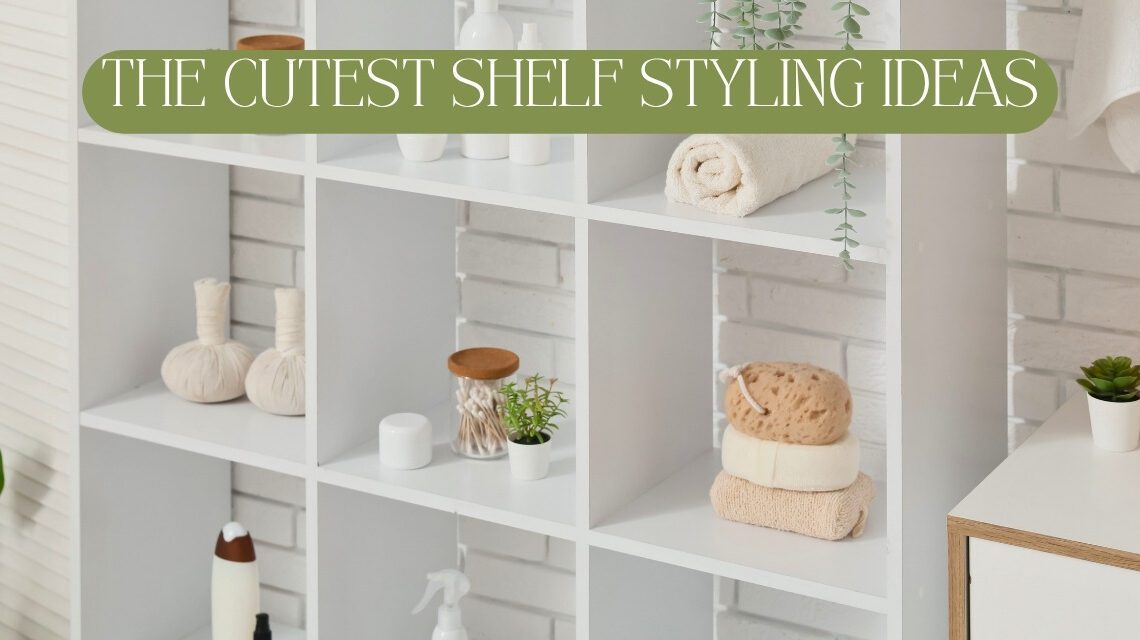
Shelves are strange little traps.
SHOP: Essentials for Home decor, furnishings and more!
At first, they seem helpful. Extra storage. Somewhere to put books. Somewhere to display nice things. Then suddenly the shelves contain:
three candles
a tiny vase
receipts somehow
half a puzzle
tangled chargers
one lonely decorative bead garland nobody fully understands
And now the room feels visually stressed for absolutely no reason.
READ: 28 Fall Living Room Makeovers That Feel Warm and Modern
That is why learning how to style your shelves properly changes an entire room faster than people expect. Shelves sit directly at eye level. If they feel cluttered, chaotic or overloaded, the whole space feels heavier immediately.
The good news is that beautiful shelves are usually not about buying more decor.
In fact, the best shelves often contain fewer things.
Just arranged with slightly more intention and significantly less panic.
Especially in family homes, shelves need to feel warm and realistic. Not like a furniture showroom where nobody has ever misplaced a remote control in their life.
1. Start by removing at least one third of the items
This is the step nobody wants to hear initially.
But overcrowded shelves instantly make rooms feel smaller and noisier visually.
According to research from the Princeton University Neuroscience Institute, visual clutter competes for attention and increases cognitive overload. Shelves packed edge-to-edge quietly exhaust the eye.
Most shelves improve dramatically once:
- duplicate decor disappears
- tiny filler objects go away
- random unrelated items relocate elsewhere
The room immediately starts breathing again.
And honestly, many shelves are carrying decorative objects that nobody even notices anymore.
2. Mix practical items with decorative ones
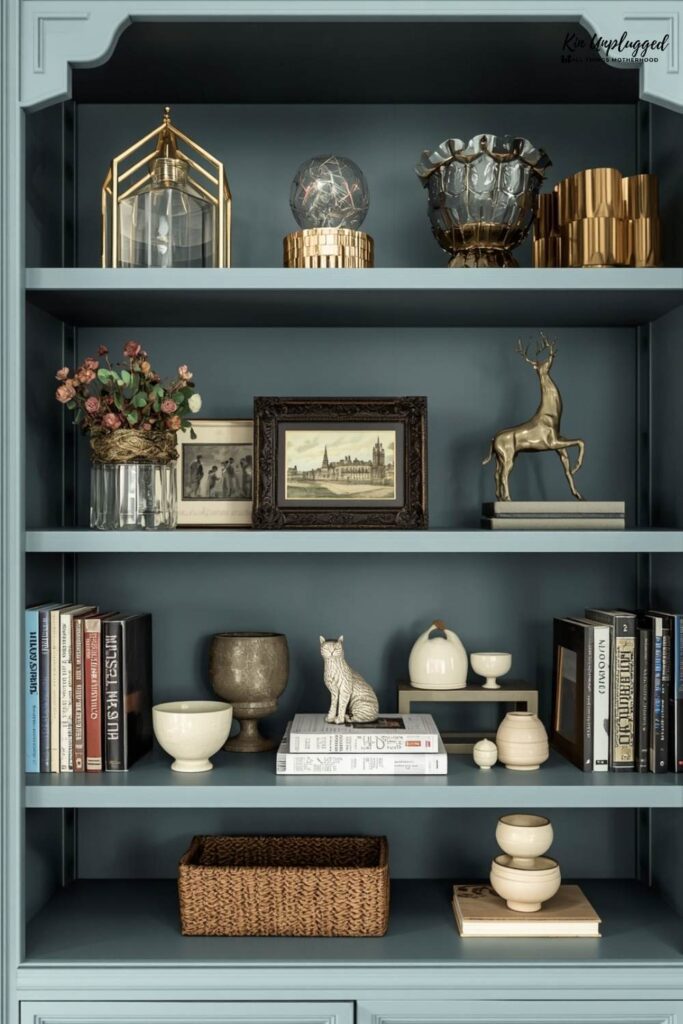
Shelves look warmer when they support real life too.
Not everything needs to exist purely for aesthetics.
Some of the best shelf styling includes:
books
baskets
mugs
cookbooks
framed photos
storage boxes
candles
This balance matters especially in family homes.
Otherwise shelves can start looking slightly emotionally unavailable.
Like they belong to someone who becomes tense if a child breathes near a cushion.
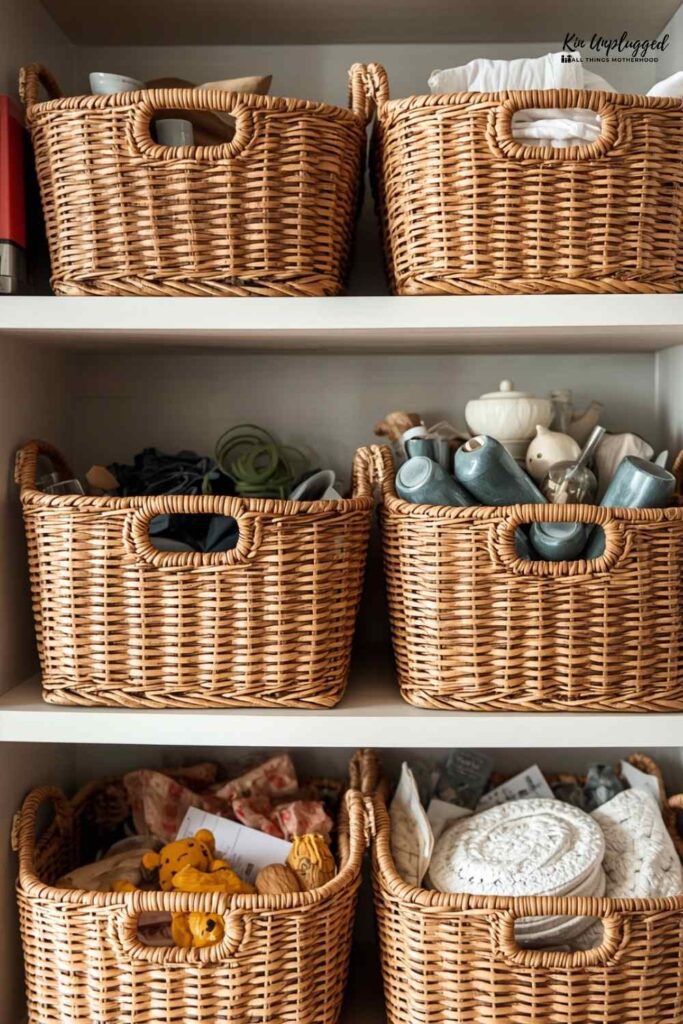
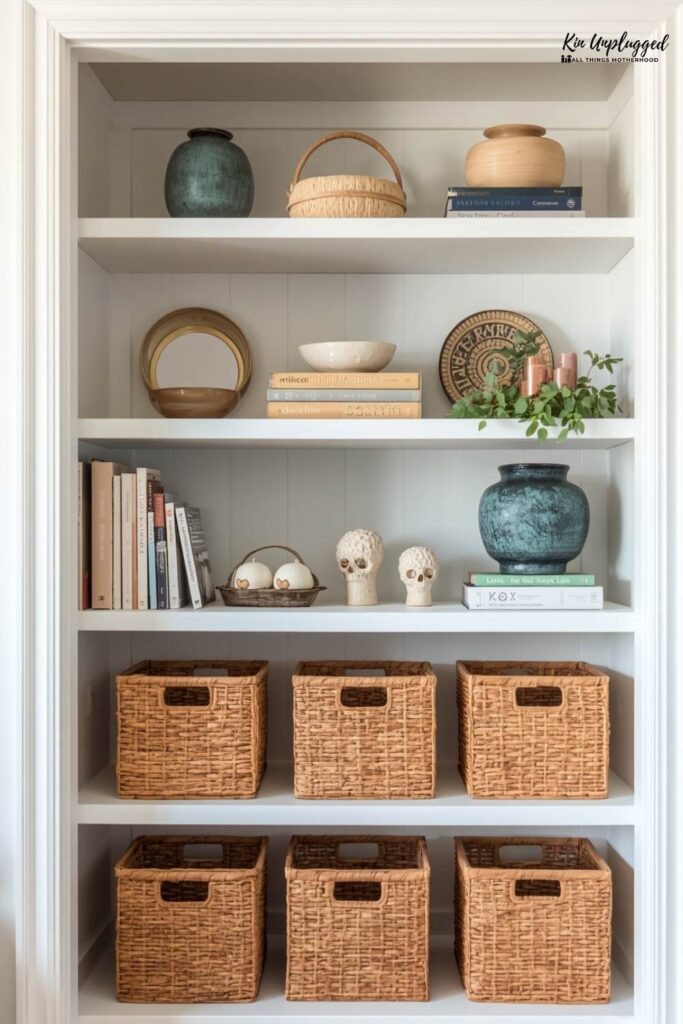
3. Use baskets for the visually messy things
This changes shelves immediately.
Baskets soften clutter beautifully without requiring perfection.
Especially useful for:
- chargers
- papers
- toys
- craft supplies
- remotes
- random child collections containing approximately fourteen rocks and a sticker
Natural woven baskets work especially well because they add texture while hiding visual noise.
And psychologically, concealed clutter feels calmer than exposed clutter.
Even when the exact same objects still exist inside the basket behaving exactly as before.
4. Stop placing everything at the exact same height
This is where shelves start looking stiff.
The eye likes variation.
Mix:
taller vases
stacked books
shorter objects
trailing plants
framed art leaning casually
Different heights create movement naturally.
Otherwise shelves begin looking like slightly nervous soldiers standing in formation.
5. Leave some empty space on purpose
Not every inch needs filling.
This is one of the biggest shelf styling mistakes online.
People keep adding:
- beads
- tiny bowls
- decorative chain objects
- miniature sculptures with unclear emotional purpose
until the shelves feel visually exhausted.
Empty space matters.
It allows:
- larger pieces to stand out
- the eye to rest
- the room to feel calmer overall
Good shelves breathe.
6. Stack books horizontally sometimes
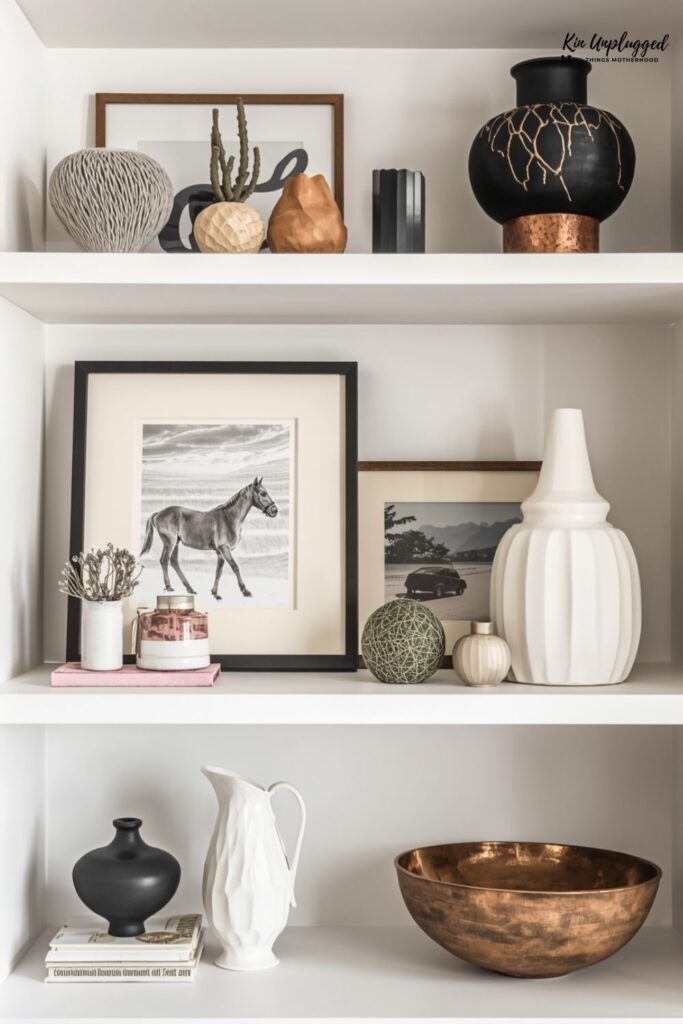
Vertical books alone can feel slightly library-adjacent.
Horizontal stacks soften shelves beautifully.
Especially when topped with:
candles
small bowls
framed photos
ceramic pieces
Books also help ground lighter decorative items visually.
And honestly, even decorative books feel more believable once they look slightly touched instead of colour-organised within an inch of their life.
7. Use fewer tiny objects
Tiny decor multiplies visual clutter rapidly.
Especially:
- mini ornaments
- tiny frames
- small filler pieces
Larger simpler objects usually work better:
- one large vase
- one framed print
- one sculptural bowl
Instead of:
twelve tiny decorative objects having a very loud group conversation simultaneously.
8. Add natural textures so shelves feel softer
Texture matters more than people realise.
Especially in rooms with:
televisions
glossy furniture
sharp edges
modern finishes
Shelves instantly feel warmer with:
wood
linen
ceramic
woven materials
stone textures
greenery
The room begins feeling layered instead of flat.
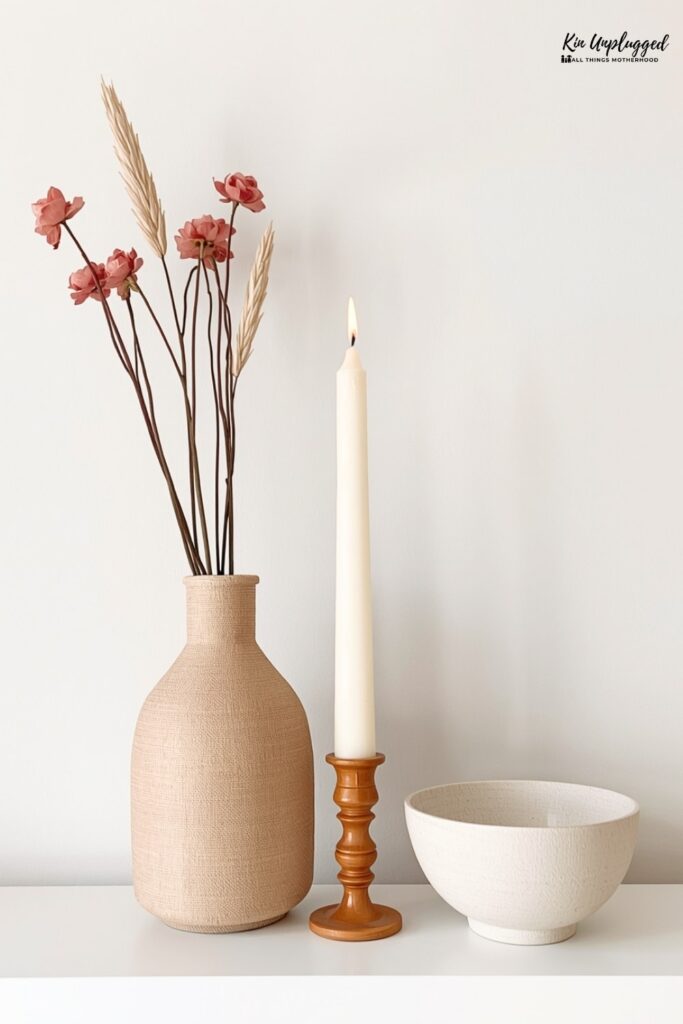
9. Style in visual triangles
Interior stylists use this constantly.
Objects grouped in triangle shapes naturally feel balanced to the eye.
For example:
- tall vase
- medium candle
- small bowl
This arrangement quietly creates harmony without looking overly staged.
The shelves feel more relaxed immediately.
Even if nobody consciously notices why.
10. Let shelves reflect actual personality
This matters deeply.
Homes become more interesting once shelves stop looking copied directly from social media.
Add pieces that genuinely mean something:
- travel finds
- favourite books
- family photos
- handmade pottery
- meaningful objects
Rooms feel emotionally warmer once they stop trying to look universally perfect.
Especially family homes.
11. Use trailing plants carefully
Plants soften shelves beautifully.
But too many plants quickly become:
accidental indoor jungle with administrative problems.
A few work best:
- pothos
- ivy
- string of pearls
Trailing greenery adds movement naturally.
And according to the Royal Horticultural Society, indoor plants can positively affect wellbeing and perceived comfort within home environments.
Even one small plant changes shelf styling dramatically.
12. Repeat colours subtly across the shelves
This helps shelves feel cohesive.
Not perfectly matched.
Just connected visually.
For example:
- similar wood tones
- repeated black accents
- recurring soft neutral colours
Without repetition, shelves can start looking random instead of intentional.
The eye likes quiet consistency.
13. Layer artwork instead of hanging everything
Leaning framed art on shelves softens rooms immediately.
Especially:
- small prints
- family photos
- neutral artwork
- vintage frames
Layering feels more relaxed than rigid wall arrangements.
And practically, it is easier to update over time too.
Which matters for homes constantly evolving around family life.
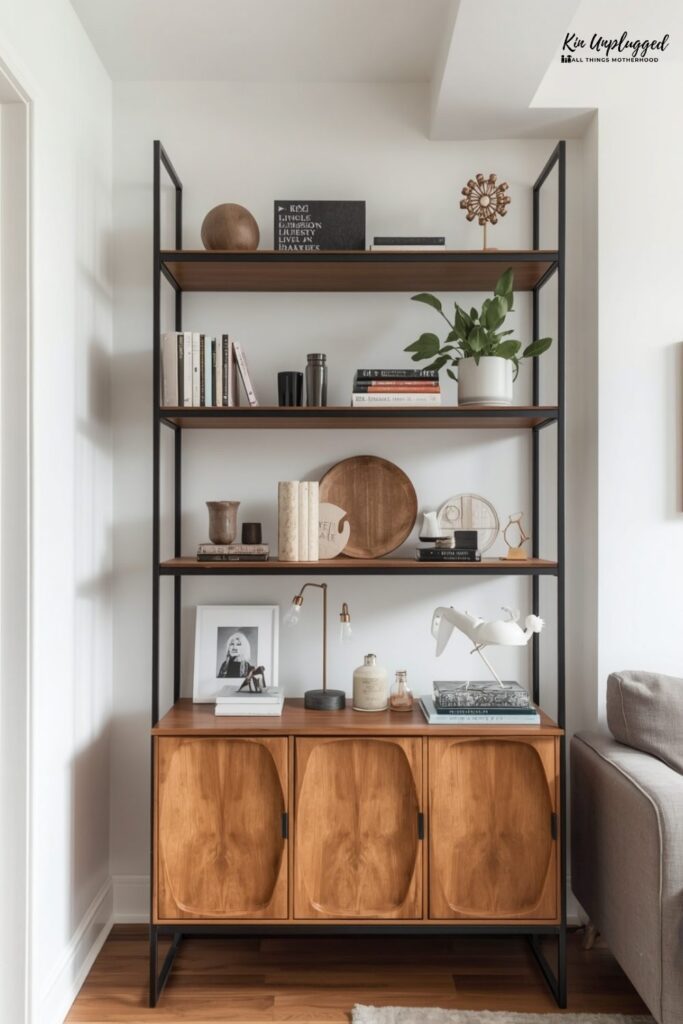
14. Store less attractive essentials higher up
This is a genuinely useful trick.
Place prettier items at eye level.
Less attractive practical storage higher up.
The room immediately feels more styled because the eye naturally focuses on the most visible shelves first.
This works especially well for:
paperwork
toy bins
office supplies
bulky storage boxes
15. Style shelves for the room they are in
Living room shelves should feel different from kitchen shelves.
This sounds obvious but many homes accidentally style everything identically.
Kitchen shelves work well with:
- cookbooks
- ceramics
- wooden utensils
Bathroom shelves feel softer with:
- towels
- candles
- baskets
Children’s spaces benefit from:
- accessible books
- playful storage
- lower practical baskets
Shelves should support the room’s actual rhythm.
16. Avoid making every shelf symmetrical
Perfect symmetry can feel strangely formal.
Especially in family homes.
Slight asymmetry feels more relaxed and natural:
- one stacked side
- one taller object
- uneven groupings
The shelves begin feeling collected gradually instead of installed in a single emotionally intense afternoon.
17. Hide cords aggressively
Nothing ruins beautiful shelves faster than cable spaghetti.
Especially around:
- routers
- speakers
- chargers
- lamps
Cord clips and concealed cable boxes help enormously.
Because visually, tangled wires create instant stress.
Even if the rest of the shelves look lovely.
18. Rotate shelf decor seasonally instead of buying more
This changes shelves beautifully without increasing clutter permanently.
Simple seasonal swaps work well:
softer textures in autumn
greenery in spring
lighter ceramics in summer
The shelves feel refreshed naturally.
Without requiring:
constant shopping
massive redecorating
decorative panic purchases at midnight online
19. Use lighting near shelves whenever possible
Shelf styling looks dramatically better with softer nearby lighting.
Especially:
- picture lights
- table lamps
- sconces
- warm LEDs
Lighting creates depth and softness.
And honestly, shelves photographed in harsh overhead lighting rarely look appealing in real life either.
20. Keep children in mind when styling lower shelves
This matters in family homes.
Lower shelves should survive actual life.
Instead of fragile decorative objects beside toddler eye level like tiny ceramic hostages.
Use lower areas for:
- baskets
- books
- soft decor
- practical storage
The room functions better for everyone.
And there is significantly less unnecessary stress.
Sometimes shelves change more than expected.
A room can feel completely different once the visual noise quiets down slightly.
Frequently Asked Questions
How do you style shelves without making them look cluttered?
Use fewer objects, vary heights, leave empty space intentionally and include concealed storage like baskets. Larger grouped pieces usually work better than lots of tiny decor items.
What should you put on shelves for decoration?
Books, framed art, plants, candles, baskets and meaningful personal items all work well. The best shelves mix practical items with decorative ones naturally.
How many items should go on a shelf?
Less than most people think. Shelves generally look calmer and more intentional when objects have breathing room around them instead of filling every inch.
How do you make shelves look expensive?
Use cohesive colours, natural textures, layered lighting and fewer larger decor pieces. Decluttering shelves often makes them look more expensive immediately.
Are open shelves still in style?
Yes. Open shelving remains popular because it adds personality and visual softness to rooms when styled thoughtfully and not overcrowded.
The best shelves do not look perfect.
They look lived with.
Books slightly stacked sideways. A candle beside a framed photo. A basket quietly hiding all the random objects nobody wants visible. Tiny pieces of everyday life arranged in a way that feels calmer instead of heavier.
That softness matters.
Especially in homes already full of movement, noise and visual demands all day long.
Good shelves do not just store things.
They quietly shape how a room feels to exist inside every day.
 0
0

 278
278