
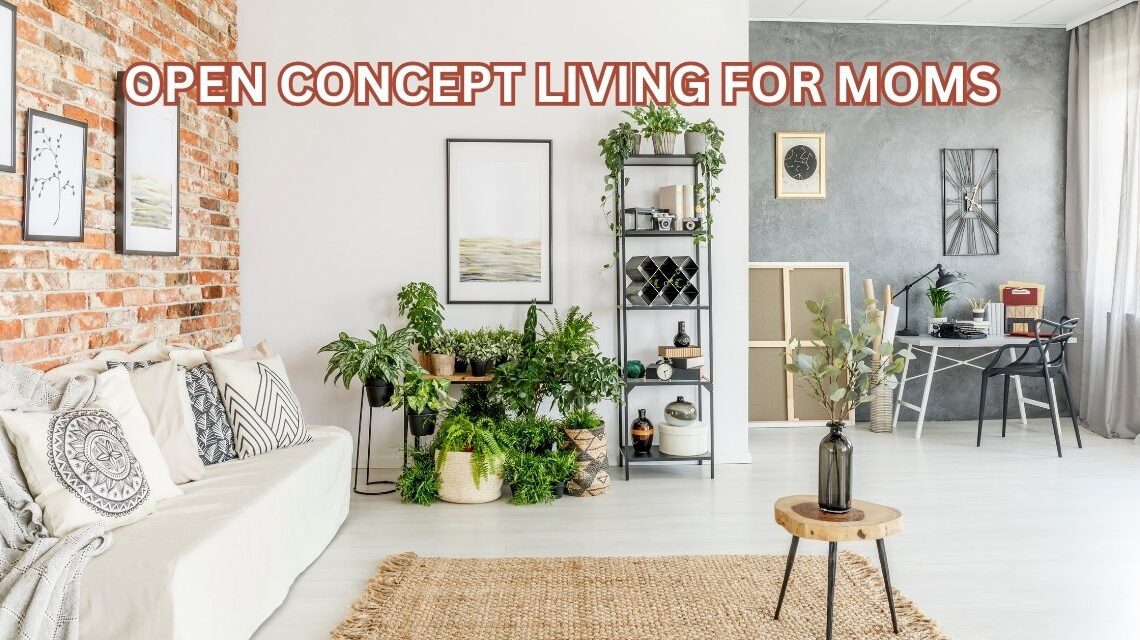
Open concept living rooms are one of the most popular home layouts today. They feel modern, bright and welcoming…but if you’re a mom with little kids, you know they can also mean toys everywhere, zero privacy and noise that travels faster than your toddler’s scream.
READ: Understanding the difference: Family room vs. Living room
This article unpacks the pros and cons of open concept living, shares a step-by-step guide for styling your space and gives you practical open concept living room ideas. All with a family-first lens. From budget-friendly solutions to furniture choices that can withstand kid mess, here’s how to make an open floor plan truly work for you.
READ: 23 Front Porch Makeovers: Budget, Small and Modern Ideas
The pros of open concept living
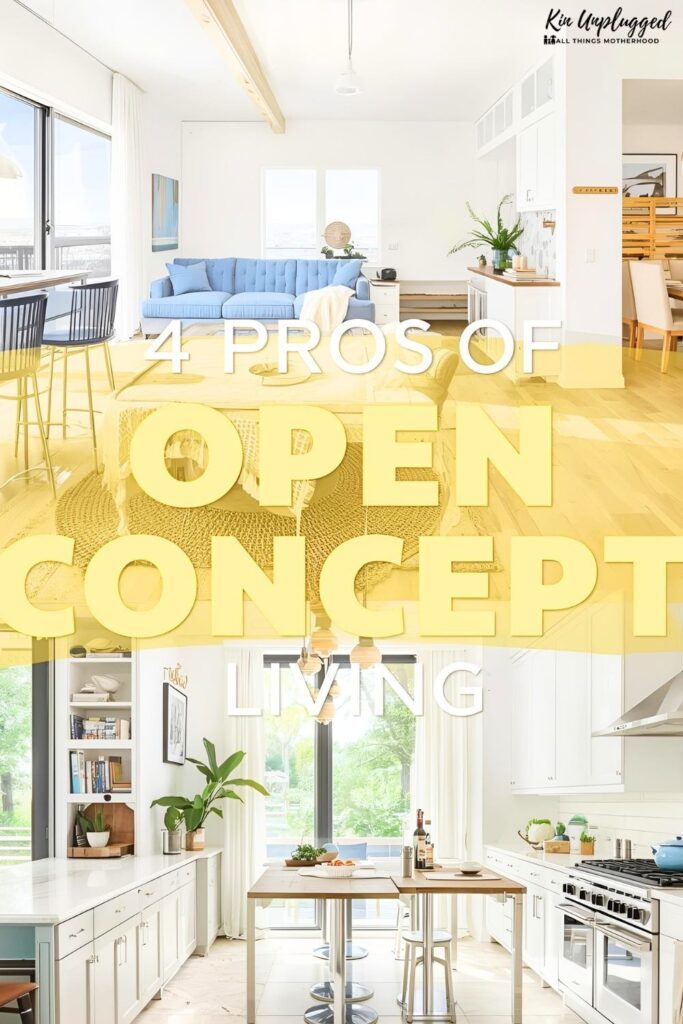
Open concept living rooms have real benefits for families. Let’s look at why so many moms love them.
1. Togetherness and visibility
You can cook dinner while keeping an eye on your toddler stacking blocks or your older child working on homework. This visibility is a game-changer when you’ve got little ones. You don’t have to run back and forth between rooms. You’re part of everything.
Mini Q&A
Why do families prefer open concept living rooms?
It allows parents to multitask while staying connected with kids.
2. Natural light flows everywhere
Open layouts let sunlight travel from one side of the house to the other. That natural light makes your home feel bigger and lifts everyone’s mood (which, let’s be real, matters when you’re on your third round of laundry and it’s only 10 a.m.).
3. Flexible layouts
No walls mean you can change the flow of furniture as your family grows. That play corner can later become a reading nook or even a teen hangout spot.
4. Great for entertaining
Birthday parties, holiday dinners and playdates all feel easier with open space. Guests don’t feel cut off in one room and you don’t feel trapped in the kitchen.
Mini Q&A
Do open concept living rooms increase home value?
Yes. Buyers often see them as modern and versatile, which can raise resale appeal.
The Cons of open concept living (especially for moms)
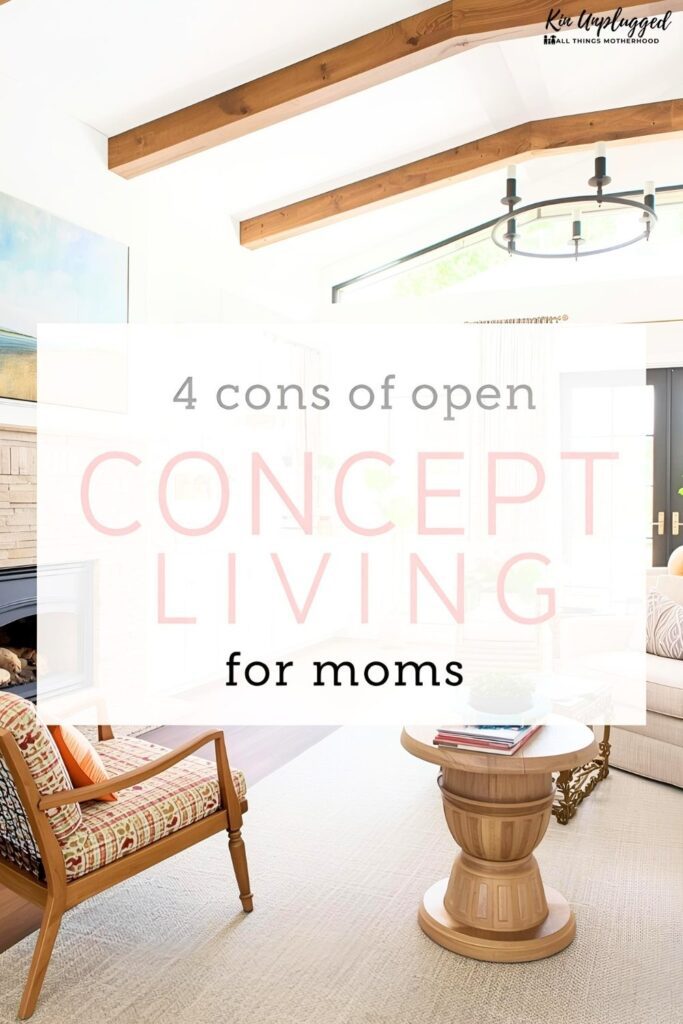
Open concept living isn’t always great. For moms, the challenges are real.
1. Mess is always visible
In a closed layout, you can shut the door on a messy playroom. In open concept, the chaos is right there. If you’ve got toddlers, you know the floor can go from clean to tornado zone in minutes.
Design solution: use stylish baskets and ottomans with hidden storage. At least you can do a five-minute swoop and hide before guests arrive.
2. Noise travels everywhere
Cartoons, crying, music and kitchen noise all blend into one soundtrack. With no doors, it’s tough to contain.
Design solution: rugs, curtains and upholstered furniture absorb sound. Even hanging fabric wall art can help reduce echo.
3. Zoning feels impossible
Without walls, your space can feel like one giant catch-all. Toys spill into the dining zone, homework takes over the couch and the vibe turns chaotic.
Design solution: rugs, lighting and furniture placement act like invisible walls. More on that soon.
4. Cooking smells spread
Pancakes smell great in the morning. Fish sticks? Not so much. In open layouts, scents travel fast.
Design solution: invest in a good range hood and use essential oil diffusers to reset the atmosphere.
Mini Q&A
What’s the hardest part of open concept living with kids?
Keeping clutter and noise from taking over every zone.
Step by step guide to styling an Open concept living room
Styling open spaces can feel overwhelming, so here’s a step by step approach.
Step 1: Define your zones
Think living, dining, play, kitchen. Even in a small open layout, every zone needs a purpose.
Step 2: Anchor with rugs
Choose rugs that define each space. A washable rug under the play area, a patterned rug under the dining table and a neutral rug in the lounge.
Step 3: Use lighting as a divider
Pendant lights over the dining area, a floor lamp in the lounge and recessed lighting in the kitchen. Lighting tells the brain where one zone ends and another begins.
Step 4: Add functional storage
Use ottomans, sideboards and shelving to keep things in order. Hide toys when needed.
Step 5: Layer in personality
Wall art, family photos, plants. Things that make the space feel yours.
How to style an open concept living room
Here’s where we expand into creative, practical tips.
1. Rugs = boundaries
A rug isn’t just decor. It’s a signal. Kids learn that this is the play zone, while adults know this is where we gather.
2. Storage that doubles as decor
Think woven baskets, sleek sideboards and ottomans with lids. They hide clutter but look intentional.
3. Color coding for calm
Use a color family for each zone. Play = bright, Dining = earthy, Lounge = calm neutrals. The eye recognizes the shift.
4. Create sightline breaks
Use plants, consoles or open shelving to add subtle separation without blocking light.
5. Lighting layers
Pendants, sconces and floor lamps help each zone feel distinct.
6. Kid friendly materials
Skip delicate fabrics. Choose washable slipcovers, stain-resistant rugs and wood furniture that can handle spills.
7. Flexible furniture
Lightweight chairs and nesting tables that can move as your family’s needs change.
8. Build vertical storage
Floating shelves, peg rails and wall baskets keep the floor clear.
Best materials and furniture choices for open spaces
When you’ve got kids, material choice is everything.
Performance fabrics. Sofas with washable slipcovers or stain-resistant upholstery.
Rugs. Low-pile, washable options (Ruggable, Lorena Canals).
Wood finishes. Medium-tone hides scratches better than dark or light.
Tables. Rounded corners to avoid bumps and bruises.
Storage. Benches with hidden bins, toy chests that double as coffee tables.
Mini Q&A:
What’s the best sofa for an open concept living room with kids?
A sectional with washable slipcovers. Big enough for family lounging, durable enough for spills.
Extra styling tips moms swear by
Toy rotation: Keep half hidden, swap weekly.
Family command center: A wall with a calendar, hooks and cubbies keeps chaos contained.
Washable slipcovers: Kids and spills = sanity saved.
Hidden charging stations: Keeps cords from snaking across open spaces.
FAQs about open concept living
Q: What is the downside of open concept living?
A: Noise, clutter visibility and smells that travel everywhere.
Q: Is open concept going out of style?
A: Not fully. Families still love it, though some buyers are returning to more defined spaces.
Q: How do you style an open concept living room?
A: Use rugs, lighting and furniture placement to create distinct zones while keeping flow open.
Q: What are the benefits of open concept living?
A: More natural light, easier entertaining, better visibility for parents.
Conclusion
Open concept living rooms can feel chaotic with kids but they can also be a dream when styled intentionally. By zoning with rugs, choosing durable materials and adding flexible storage, you can create a home that’s both functional and beautiful.
 0
0

 278
278