
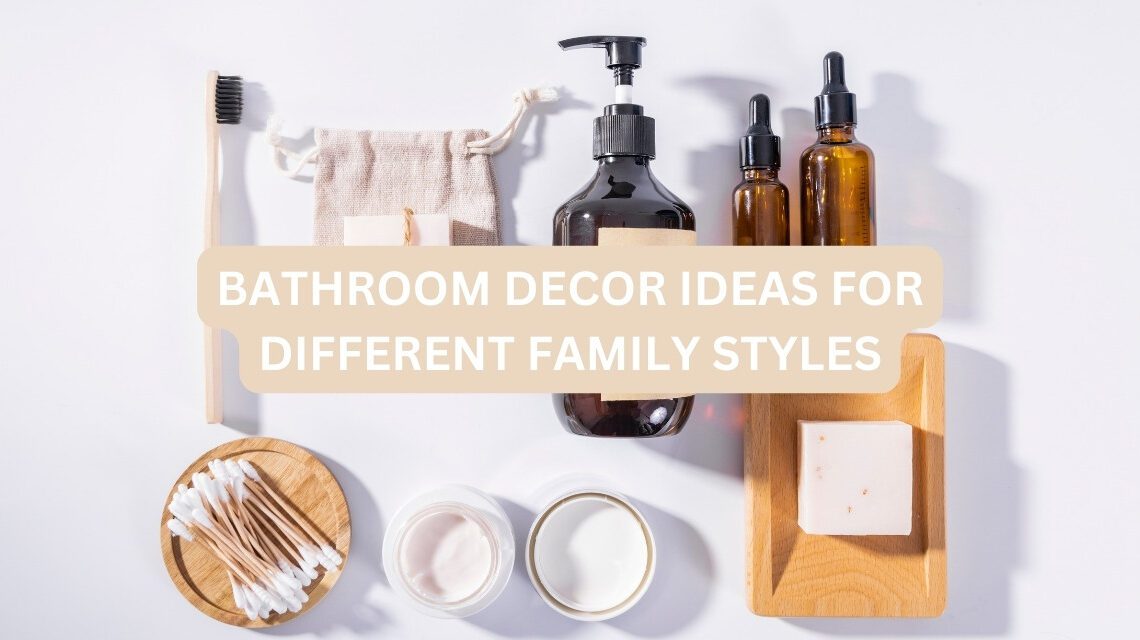
If you’ve been searching for bathroom decor ideas for different family styles, you are probably standing in your bathroom right now wondering why it feels harder than it should. You’re tired of cluttered counters, missing toothpaste caps, soggy towels and mornings that already feel rushed before they even start.
Here is the direct answer: most family bathrooms fail because they are designed for looks instead of systems. When the systems work, the space works. When the space works, your family works better.
YOU MIGHT LIKE: Vanity Aesthetic: 40+ Stylish Makeup Vanity Ideas
This article will show you how to fix that without remodeling, without spending thousands and without adding more to your mental load.
My go-to bathroom essentials
Before we start, these are the tools that make everything in this post possible.
They are not trendy. They are practical. They work.
SHOP: Smart Family Bathroom Storage System
SHOP: Wall-Mounted Toothbrush Organizer
SHOP: Spill-Proof Soap Dispenser Set
These three items can reduce daily counter clutter by up to 60% when installed correctly.
Why most family bathrooms feel overwhelming
Most bathrooms are built for adults.
Not for kids learning routines. Not for teens managing self-image. Not for grandparents needing stability.
Design research from the American Society of Interior Designers shows that functional environments reduce stress and improve daily habits.
Your bathroom is not neutral.
It shapes behavior.
Family style comes first (not trends)
Every family has a style.
Not aesthetic. Functional.
How you move. How you rush. How you reset.
Here’s how different families actually use bathrooms.
Family bathroom styles overview
| Family Type | Daily Struggle | Decor Focus | Key Feature |
| Toddlers & Preschoolers | Spills, safety | Low-access storage | Non-slip flooring |
| Elementary Kids | Forgetfulness | Visual systems | Personal bins |
| Teens | Grooming clutter | Zoned drawers | Lighted mirrors |
| Multigenerational | Safety | Universal design | Grab bars |
| Small Spaces | Crowding | Vertical storage | Wall systems |
| Neurodiverse Families | Sensory overload | Soft lighting | Dimmable controls |
Find yourself here. Everything that follows is built on this.
Bathroom decor for toddlers and preschoolers
This stage is loud.
Messy. Fast. Unpredictable.
Your decor should forgive mistakes.
What works
Install storage at child height. Hooks at 30–36 inches. Step stools under sinks.
Choose washable materials. Vinyl wallpaper. Plastic bins. Machine-safe rugs.
Use soft close hardware. Finger injuries drop significantly when doors close slowly.
Overlooked strategy
Create a learning wall.
Mirror and laminated routine chart.
Brush.
Rinse.
Wipe.
Finish.
Kids follow visuals faster than lectures.
Bathroom decor for elementary age kids
This is the habit building phase.
They want independence. They forget everything.
Your bathroom must guide them quietly.
Systems that work
Individual baskets. Color-coded. Named.
Visible storage. Open shelves beat closed cabinets.
Waterproof clocks. Time awareness reduces morning conflict.
Studies in developmental psychology show visible cues improve consistency by over 40%.
Unique idea
Install reset zones.
Two shelves:
Morning Reset
Night Reset
They return items when done.
No nagging required.
Bathroom decor for teen families
Teen bathrooms are emotional spaces.
Identity forms here. Confidence grows here. Privacy matters here.
Design accordingly.
What teens need
Zoned drawers.
Hair.
Skin.
Makeup.
Good lighting.
LED strips improve facial visibility and self-image (Journal of Environmental Psychology).
Personal shelves.
One area they own.
Ownership reduces resistance.
Conflict saving tip
If possible, install two mirrors.
One for speed. One for detail.
It prevents morning standoffs.
Bathroom decor for multigenerational homes
When grandparents share space, safety becomes love.
Not restriction.
Safety features
Grab bars disguised as towel racks. Textured porcelain tiles. Raised toilet seating.
CDC reports most senior home injuries happen in bathrooms.
Design prevents emergencies.
Comfort touches
Bench seating.
Warm lighting.
Heated towels.
Small upgrades.
Big dignity.
Bathroom decor for small space families
Small bathrooms don’t need less.
They need smarter.
Space solutions
Over-toilet towers.
Door-mounted racks.
Magnetic strips for tools.
Clear containers.
Visual order reduces stress.
Rarely used hack
Ceiling towel racks.
They free entire cabinets.
Almost no one uses this.
You will.
Bathroom decor for neurodiverse families
This matters deeply.
Bathrooms can overwhelm sensitive systems.
Lighting.
Sound.
Textures.
All affect regulation.
Calming design
Soft white bulbs.
Muted tones.
Minimal patterns.
Autism Research Institute confirms sensory-friendly environments improve daily functioning.
Support tools
Quiet-close lids. Sound-dampening curtains. Weighted bath mats.
These reduce overload.
READ: 20 Effective & Fun Self-regulation activities for Toddlers
Classroom Organization in the Bathroom (Yes, It Works)
Teachers understand systems.
Borrow them.
Classroom Tools at Home
Pocket charts.
Supply bins.
Visual schedules.
They reduce reminders.
They build independence.
The three zone morning flow method
This is my signature setup.
Step One: Entry
Hooks. Towels. Pajamas bin.
Step Two: Action
Sink. Products. Timer.
Step Three: Exit
Mirror. Tools. Final check.
Clear flow reduces stress automatically.
Materials that survive family life
Use what lasts.
- Quartz counters
- Porcelain tile
- PVC cabinets
According to the National Kitchen & Bath Association, these last up to 50% longer in high-use homes.
Less replacement. More peace.
Your bathroom is a relationship space
People talk there. Cry there. Prepare for hard days there.
Design shapes those moments. A calm space creates calm starts. Calm starts change families.
Frequently asked questions
What is the best bathroom decor for families?
Decor that prioritizes systems, washable materials and visible storage works best. These reduce stress and improve routines.
How do I organize a shared family bathroom?
Use zoned storage with labeled baskets and personal shelves. This prevents overlap and arguments.
What colors reduce bathroom stress?
Soft neutrals, light blues and muted greens are proven to calm the nervous system.
How do I make bathrooms safer for kids and seniors?
Install non-slip mats, grab bars, soft-close hardware and strong lighting.
How often should bathrooms be updated?
Functional updates every 3 – 5 years are recommended by industry experts.
Finally…this isn’t about a pretty bathroom
This was never really about baskets, tiles or shelves. It was about mornings that don’t start in panic, kids who feel capable instead of rushed and you feeling less like you’re holding everything together by willpower alone.
When your bathroom works, your day works better. You move with more patience. Your kids move with more confidence. Small wins stack up and suddenly life feels lighter than it did before.
You don’t need perfection. You need systems that support the family you already are, not the one you think you’re supposed to be. And you are allowed to design your home in a way that makes your life easier, not harder.
Start with one drawer. One hook. One shelf. One small change today can give you back years of calmer mornings.
And if you ever need guidance, reminders or someone who gets it, I’ll be right here with you.
 0
0

 278
278