
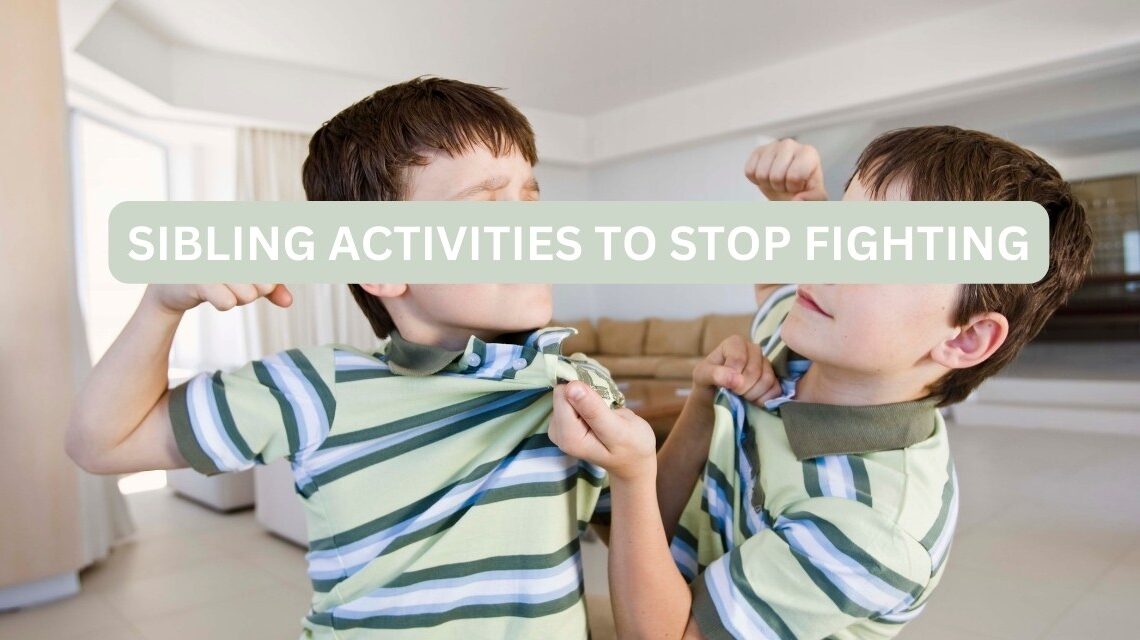
Sibling fighting can make a normal day feel like a full-time job. One minute they’re best friends and the next minute someone is screaming about who looked at who.
The goal isn’t to create a home where siblings never argue.
The goal is to reduce the frequency, shorten the blow-ups and give them better ways to connect.
READ: How to Prevent Sibling Rivalry: 7 Top Tips for Parents
The fastest way to get there is shared wins. Cooperative sibling activities help kids feel like they’re on the same team again.
This article gives you practical ideas you can use at home with minimal prep. Most of them take under 15 minutes and work even when kids are in a spicy mood.
Why siblings fight so much (and why activities help)
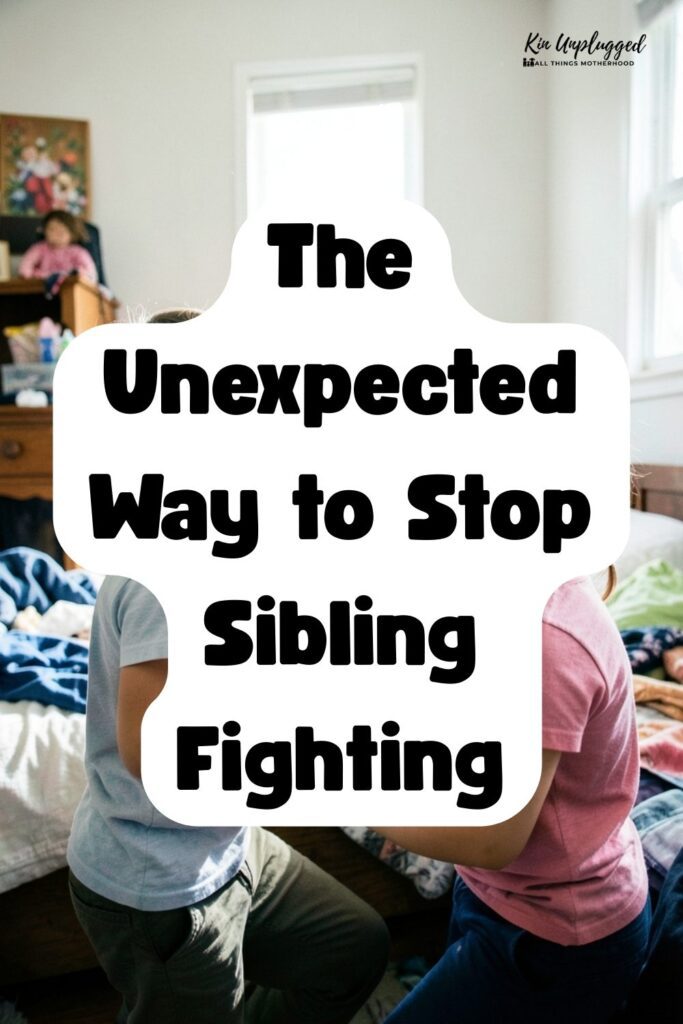
Most sibling conflict is about one of four things. Attention, control, fairness or overwhelm.
They don’t always have the words to say “I feel left out” or “I need space.” So it comes out as grabbing, blaming, teasing or competing.
Activities help because they change the dynamic. Instead of “me vs you,” it becomes “us vs the challenge.”
And when the activity is set up correctly, it creates a small moment of success. That success lowers stress and makes the next hour easier.
A quick fight proof rule
Before you start, say this one sentence:
“This is a team activity. If it turns into fighting, we pause and reset.”
That’s it.
Not a lecture, not a threat, just a clear container.
Then keep the first round short. Ending while it’s still going well is what makes kids want to do it again.
Quick pick table | Sibling activities based on your situation
Use this table when you don’t have the brain space to choose.
Pick a row that matches your moment and go.
| Situation you’re in | Best activity type | Time needed | What it helps with | Try this first |
| They’re arguing over toys | “Shared mission” challenge | 10–15 min | Cooperation, taking turns | Toy Rescue Mission |
| They’re cranky after school | Calm connection | 5–10 min | Decompression, emotional regulation | Two-Minute Team |
| One kid keeps “bossing” | Role-switch games | 10 min | Power balance, empathy | Leader Swap |
| They fight during chores | Gamified teamwork | 10–20 min | Motivation, fairness | Speed-Run Clean |
| They can’t share attention | One-on-one micro turns | 8–12 min | Reduced jealousy | Token Turn Game |
| They’re too energetic | Movement teamwork | 10–15 min | Energy release, bonding | Balloon Keep-Up |
| They’re bored and poking | Structured creativity | 15–30 min | Focus, joint planning | Sibling Build Studio |
| It’s bedtime madness | Wind-down ritual | 5–8 min | Calm, connection | “Three Good Things” Circle |
10 minute sibling activities that stop fights fast
These are designed for the exact moment you want to scream, “CAN YOU JUST STOP.”
They’re short, structured and reset the vibe.
1) Toy Rescue Mission
Choose 10 toys that “need rescuing” into a basket.
Kids must work together to collect them without arguing.
Give them roles: Finder and Carrier.
Switch roles halfway.
2) Balloon Keep-Up Team Challenge
One balloon, one mission: don’t let it hit the floor.
They can only use elbows or knees if you want extra laughs.
Set a timer for 2 minutes.
Try to beat their score together.
3) The “Same Team” Scavenger Sprint
Call out items they must find together.
Examples: “Something soft,” “something blue,” “something from the kitchen.”
They must return as a pair.
No solo wins allowed.
4) The Silent Build
Give them 20 blocks, cups or LEGO pieces.
Their job is to build one thing together without talking.
It’s harder than it sounds.
It also stops the arguing because they have to concentrate.
5) Two minute Team
Set a timer for two minutes.
They have to do something helpful together.
Ideas: match socks, wipe the table, stack books, sort crayons.
Short wins build momentum.
6) Tape Road Collab
Tape a road on the floor or table using painter’s tape.
They design it together, then drive cars along it.
Give each kid a job: Road Builder and Sign Maker.
Switch roles.
7) “We Both Win” Dice Game
Roll a die.
Whatever number it lands on, they do that many of a silly action together.
Examples: 4 frog jumps, 2 spins, 6 claps.
This burns off tension fast.
8) The Compliment Toss
Toss a soft ball or rolled-up sock back and forth.
Each throw must include one kind sentence.
Keep it simple: “Thanks for playing,” “You’re funny,” “Nice job.” This is a sneaky reset.
Cooperative games that reduce sibling rivalry over time
These aren’t just distractions.
They’re “relationship builders” that create a pattern of teamwork.
9) Sibling Detective
One child hides 5 small objects around one room.
Both siblings work together to find them.
To avoid bossiness, assign roles.
One is the “Clue Giver,” one is the “Searcher,” then swap.
10) Build Studio
Give them one shared prompt.
“Build a zoo,” “build a tiny house,” “build a bridge.”
The rule is they must agree on the plan before touching pieces.
That one step prevents most fights.
11) Puzzle Partners
Pick a puzzle that’s slightly easier than you think.
Overly hard puzzles create blame.
Make it cooperative with roles: Edge Pieces Captain and Middle Pieces Captain.
Switch halfway.
12) The Floor Is Lava (Team Edition)
Create “safe spots” with pillows or paper plates.
Their mission is to get from one side of the room to the other as a team.
They can’t leave anyone behind.
The teamwork is the point.
13) Fort Architects
Give them 10 minutes to build one fort together.
Then give them 10 minutes inside it with books or quiet toys.
Assign roles: Blanket Manager and Pillow Engineer.
Switch tomorrow.
14) Movie director and camera crew
One sibling is the director, one is the actor.
They film a 30-second scene on a phone or pretend camera.
Then they swap.
Short, structured and surprisingly bonding.
15) Team Snack Board
They build one snack plate together.
One chooses fruit, one chooses crunch, one chooses dip.
Kids are less likely to fight when they’re involved in feeding themselves.
Also, snack solves 40% of sibling drama.
Activities that fix the fairness fights
So many sibling fights are really courtroom cases.
“HE GOT MORE,” “SHE WENT FIRST,” “THAT’S NOT FAIR.”
Use activities with built-in fairness. Clear turns reduce arguments before they start.
16) Token Turn Game
Give each child 5 tokens (coins buttons, LEGO pieces).
Every time they choose the activity direction, they spend one token.
When tokens are gone, they’re done choosing.
It makes “turns” visible and reduces complaining.
17) The Switch Timer
Set a 3-minute timer.
When it rings, they must switch roles.
This works for almost anything: toys, games, drawing, even seat choice.
It removes you as the referee.
18) Pick Two, I Pick One
Each child picks two options for what to do next.
You choose one of the four.
Kids feel heard without controlling the whole house.
It stops the “but I never get to choose” spiral.
19) Shared Treasure Box
Create a box of “only-together” items.
This can be stickers, a special deck of cards, tiny figurines or a specific toy.
They can only open it when they’re playing cooperatively.
It turns teamwork into access.
Activities for siblings with big age gaps
When one child is older, the “fight” is often frustration and mismatch.
The older one gets bored and the younger one gets overwhelmed.
You need activities where both feel competent.
That’s the sweet spot.
20) Big Kid Helper Cards
Create 10 “helper” cards for the older sibling.
Examples: “Teach one trick,” “Read one page,” “Build the first step.”
The older kid gets a leadership role without bossing.
The younger feels special, not controlled.
21) Copy me art
The younger sibling chooses simple shapes.
The older turns them into a real picture.
Both contribute. Neither “wins.”
22) Treasure Map Walk
The older draws a simple treasure map of the living room.
The younger follows it and finds a small “treasure.”
Then swap in a simplified way.
Younger makes a “map” using stickers or arrows.
23) Restaurant Roleplay
Set up a pretend café at the table.
Older is the server, younger is the customer, then switch.
Add a notepad for “orders.”
This keeps the play structured.
Chore based sibling activities that stop fights and get things done
If your kids fight most during cleanup, you’re not alone.
Chores feel like control and control triggers conflict.
Turn chores into shared missions.
Teamwork changes the energy.
24) Speed-Run Clean
Set a timer for 7 minutes. They work together to beat the clock.
Give one job to each child. When the timer ends, stop and celebrate progress.
25) Laundry Match Race (Co-op)
Dump a small pile of clean socks. Their job is to find pairs together and stack them.
Make it cooperative by scoring only total pairs as a team. No “I did more” arguments.
26) The “Before & After” Photo
Take a photo of the messy area. They clean together, then take an after photo.
Kids love visual proof of success.
It becomes a mini project instead of a battle.
27) The Music Cleanup Trade
One song each.
When the song ends, they swap tasks.
This removes the “you always make me do the worst job” fight. Swapping keeps it fair.
Calm down sibling activities for when emotions are high
Sometimes they’re not ready to “play nicely.”
They need regulation first.
These are gentle, low-stimulation activities.
They calm the nervous system and reduce reactivity.
28) Back to back breathing
They sit back-to-back.
They breathe slowly and try to match each other.
Do it for 60 seconds. Then start a cooperative activity.
29) Shared Coloring Prompt
Give one page and two sets of crayons.
Their mission is one theme: “underwater,” “space,” “garden.”
One rule: no scribbling over someone else’s space.
Short, calm and grounding.
30) Build a warm corner
They create a tiny calm corner together using pillows and blankets.
Then they sit there with books or a quiet toy.
Let it be a five-minute reset.
Not a big production.
31) The Whisper Game
They can only whisper for 3 minutes.
Give them a simple goal: build a tower, make a pretend menu, sort cards.
Whispering naturally slows everything down.
It’s oddly effective.
Sibling activities that teach conflict skills without lectures
You don’t want to be the referee forever.
These activities build the skill underneath the fighting.
32) The Role Swap Replay
After a fight, when everyone is calm, do a 60-second replay.
They act it out with roles swapped.
Keep it short and kind.
This builds empathy fast.
33) Fix it menu
Together, they create a menu of 10 ways to fix a problem.
Examples: trade, timer, ask, take turns, choose another toy, play together, take space.
When a fight starts, you point to the menu. It becomes a tool, not a lecture.
34) Team Decision Wheel
Write choices on paper and spin a pencil in the middle.
Options might be: game A, game B, art, snack, outside.
The wheel decides.
Less arguing, less power struggle.
35) The Peace Contract (kid version)
They each choose one sentence to agree on.
Examples: “No grabbing,” “Ask before taking,” “If mad, take space.”
Write it and sign it.
Then refer back to it calmly when needed.
How to choose the right activity in the moment
If they’re fighting because they’re bored, choose movement or a mission.
If they’re fighting because they’re tired, choose a calm reset.
If it’s a fairness fight, use timers and visible turns.
If it’s a control fight, use a shared goal with roles.
You don’t need the perfect activity.
You need the right category for that moment.
Finally…the real secret to stopping sibling fighting
Sibling activities don’t stop fighting because they “distract” kids.
They work because they create shared wins, shared laughter and shared identity.
When kids feel like teammates, the need to compete drops.
And when you repeat the same handful of activities, your home gets a new default pattern.
Start with one or two from the quick table and keep them easy to grab.
You’re not aiming for perfect siblings.
You’re building a calmer rhythm where fighting isn’t the main event.
Sibling activities FAQs
What’s the fastest activity to stop sibling fighting?
A short cooperative challenge like Balloon Keep-Up, a two-minute team task or a quick scavenger sprint usually resets the dynamic fast.
Keep it under 10 minutes and end on success.
How do I stop fights over sharing?
Use timers, visible turn tokens and role-based activities.
It reduces fairness arguments and removes you as the judge.
What if one sibling refuses to join in?
Start with a very short activity and give them a low-pressure role.
You can also begin with a calm regulation reset like whisper play or back-to-back breathing.
Do cooperative games really reduce sibling rivalry long term?
Yes, especially when you repeat them consistently.
They build positive interactions, which makes conflict less frequent and easier to recover from.
What sibling activities work best for different ages?
Role-based activities (Director/Actor, Helper Cards, Treasure Maps) are great for age gaps.
For close ages, shared builds, puzzles and team missions work well.
READ: 19 of the Most Thoughtful and Useful Gifts for Siblings
 0
0

 278
278