
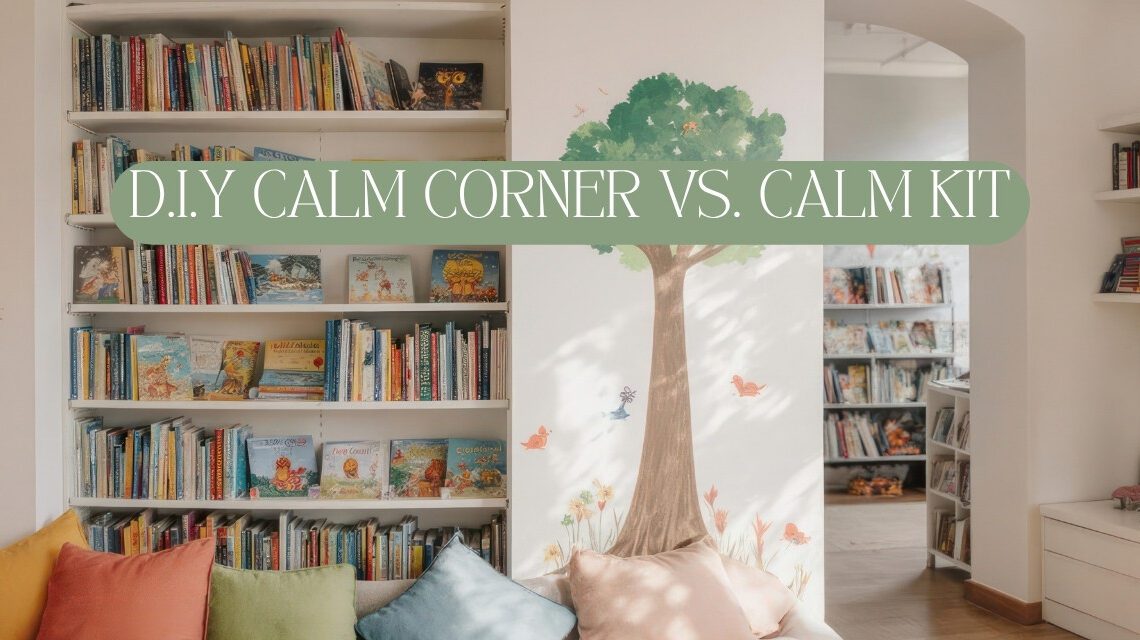
The best choice in the DIY calm down corner vs pre made kit debate is this: go DIY if the child needs something personal, sensory specific and budget friendly. Choose a pre made kit if time is tight and the house needs a fast starting point today.
That is the answer.
READ: What we use for Emotional regulation at Home
Not the Pinterest answer. Not the influencer answer filmed beside a beige playroom where no one has ever stepped on a Lego and questioned God.
For most busy moms, the winning setup is actually a hybrid. Buy the boring useful parts, then add the deeply specific bits only that child would care about.
Shop sensory fidget tools for kids
A calm down corner is not a punishment spot. It is not a naughty step in a better cardigan.
HealthyChildren.org, from the American Academy of Pediatrics, says kids can benefit from a safe quiet spot where they can go to calm down, especially during hard transitions such as screen time ending.
Iowa State University Extension describes a calm down kit as a set of materials in a box, bag or room corner that children can use when emotions feel too big.
So the real job is not buying the cutest basket.
The real job is helping a child know this is where my body can slow down, this is where I am still loved, this is where I can come back to myself without everyone acting like I have ruined the family brand.
Keep going because this is where the bad kit gets exposed in public.
YOU MIGHT LIKE: 20 Effective & Fun Self-regulation activities for Toddlers
The Fast verdict for tired moms
DIY calm down corners are best for sensitive kids, neurodivergent kids, kids with strong sensory likes and dislikes and families working with a smaller budget.
Pre-made kits are best for moms who need a quick setup, teachers, grandparents, babysitters, shared homes and anyone who cannot spend two hours comparing breathing cards while dinner burns.
Hybrid calm down corners are best for almost everyone.
That means buying a basic poster, basket, timer or sensory set, then adding personal items from real life. The hoodie that smells like home. The dog photo. The smooth shell from the beach. The tiny notebook with the dinosaur on it. The squishy thing that looks deeply stupid but somehow works.
Kids are not tiny adults with better knees. They do not calm down because a laminated poster says inhale.
Sometimes they calm down because a blanket feels right under their fingers.
Sometimes they calm down because a fidget keeps their hands from becoming a small legal problem.
Sometimes they calm down because nobody talks for one blessed minute.
The Real Difference Between A Corner And A Kit
A calm down corner is a place.
A calm down kit is a collection.
A pre made kit is a collection someone else packed.
A DIY corner is a place built around the child who will use it.
This matters because a child in a full body meltdown is not browsing options like a woman at Target pretending she only came in for toothpaste. A child needs the next step to feel obvious.
The corner says go here.
The kit says use this.
The adult says I am nearby and you are safe.
That last part is the whole thing with shoes on.
Comparison Table: DIY Calm Down Corner vs Pre Made Kit
| Choice | Best for | Cost | Time needed | Biggest strength | Biggest weakness |
| DIY calm down corner | Kids with specific sensory needs | Low to medium | Medium | Highly personal | Takes planning |
| Pre made calm down kit | Fast setup | Medium to high | Low | Ready quickly | Can feel generic |
| Hybrid setup | Most family homes | Medium | Low to medium | Practical and personal | Needs a quick edit |
| Portable calm down kit | Cars, travel, appointments | Low to medium | Low | Easy to move | Easy to overfill |
| Classroom style corner | Siblings and shared spaces | Medium | Medium | Clear routine | May need adult teaching |
The best calm down space is not the prettiest one. It is the one the child will actually use when their socks feel wrong, the tablet is gone, the brother breathed too close and everyone is one snack away from a documentary.
Why Pre Made Kits Are So Tempting
Pre made kits are popular because moms are tired.
There, research is complete.
A kit arrives with emotion cards, breathing prompts, maybe a little timer, maybe a few fidgets, maybe a poster that says feelings are okay in colours chosen by someone who has never met the family.
That can be genuinely helpful.
A pre made kit removes decision fatigue. It gives a structure fast. It can help a parent start without building the whole thing from scratch during the hour between dinner and bath, also known as the swamp.
Pre made kits can be especially useful when more than one adult needs to follow the same routine. Grandparents, babysitters, co parents and older siblings can all understand a ready made set more quickly than a loose pile of things called his calm stuff.
A pre made kit is a shortcut. Shortcuts are morally fine. So is dry shampoo.
The issue is that many kits are made for an imaginary average child.
And imaginary average children are famous for not living in the house.
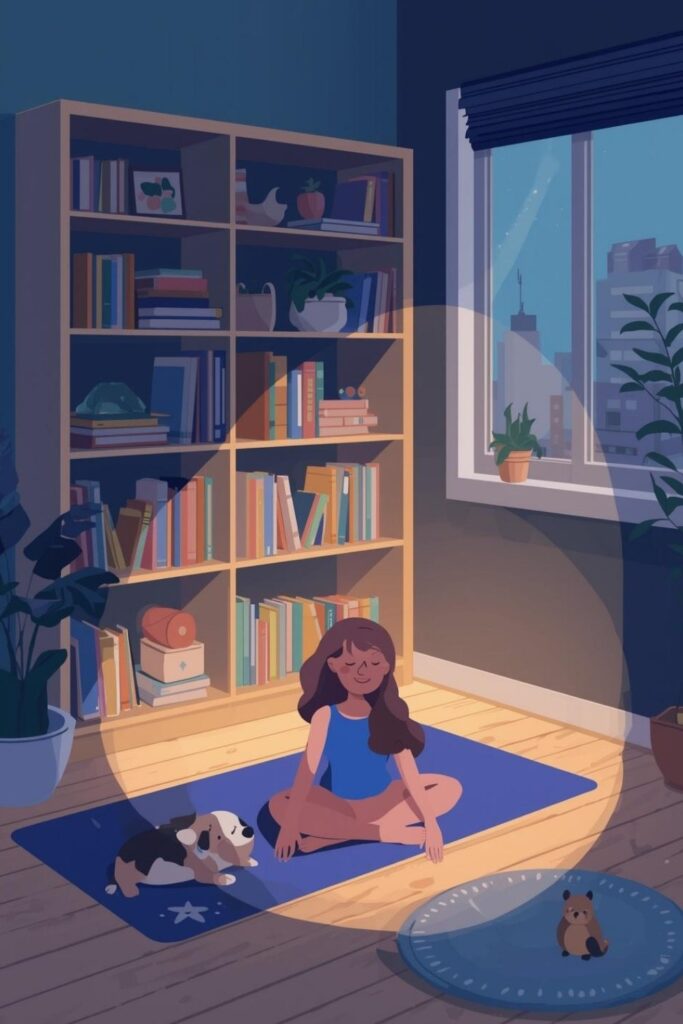
Where Pre Made Kits Fall Apart
A kit can look helpful and still miss the child completely.
Some kids hate breathing exercises. Some kids get more agitated by visual clutter. Some kids chew things. Some kids throw things. Some kids will turn a feelings wheel into a frisbee and honestly the accuracy is upsetting.
A pre made kit can also become too wordy.
During big feelings, many children cannot process a lecture, a chart, a poster, a script, a reflection prompt and a tiny card that says choose a strategy.
Choose a strategy? Ma’am, this person is four and has just discovered betrayal because the banana broke.
Child Mind Institute notes that helping kids name emotions and giving support before difficult moments can help with emotional regulation but big feelings need practice and planning, not just tools handed over at peak distress.
That means the kit has to be taught when everyone is calm.
A calm down corner introduced during a meltdown is like handing someone a violin during a house fire and saying express this.
Why DIY Works So Well
A DIY calm down corner can be more effective because it starts with the child, not the product.
That is the whole point.
It can include the exact sensory input the child seeks. Heavy blanket. Soft hoodie. Chewy necklace. Headphones. Drawing pad. Lavender free everything because scents make them furious. Little book. Visual cards. Family photo. Timer. Water bottle. Feelings chart.
For a younger child, DIY might mean a floor cushion, stuffed animal, simple emotion faces, bubbles and a basket.
For an older child, DIY might mean headphones, sketchbook, putty, a weighted lap pad, low light and a private signal that says I need a minute without making the whole room stare.
For a teen, it might not be a corner at all. It might be a drawer, shelf, chair or playlist station.
The DIY version wins when dignity matters.
And dignity matters a lot.
Nobody wants to be sent to a pastel feelings jail.
The DIY Calm Down Corner Formula
Use this simple structure.
Place, seat, sensory tool, emotion tool, reset tool, return plan.
That is it.
The place should be quiet but not isolated in a scary way. The seat should feel good to the child. The sensory tool should match the body need. The emotion tool should help name what is happening. The reset tool should give the body something simple to do. The return plan tells the child what happens next.
Example for a preschooler:
A small rug near the sofa. A cushion. Stuffed rabbit. Feelings faces. Bubbles. A card that says when my body is ready, I can ask for a cuddle.
Example for a school age child:
Beanbag. Noise reducing headphones. Stress ball. Mood chart. Five minute sand timer. Notebook with three choices: draw it, squeeze it, breathe it.
Example for a tween:
Chair by the window. Soft throw. Putty. Small journal. Headphones. Card with private phrases: need space, need help, need food, need sleep.
Because sometimes the regulation tool is protein.
And nobody wants to admit a boiled egg saved the evening but here we are.
What To Put In A DIY Calm Down Corner
Start small.
Five good items are better than twenty cute items.
Try choosing one item from each category.
| Need | Good DIY item | Avoid |
| Body pressure | Weighted lap pad, heavy cushion, firm pillow | Heavy blankets for young children without guidance |
| Hands | Putty, stress ball, textured fidget | Tiny parts for toddlers |
| Breathing | Bubbles, pinwheel, feather | Long scripts during distress |
| Feelings | Simple emotion faces, mirror, colour scale | Too many posters |
| Sound | Headphones, soft music option | Loud toys |
| Sight | Glitter bottle, lava lamp style visual, dim lamp | Bright flashing lights |
| Return | Timer, small card, adult check in | Sending the child away with no reconnection |
Keep it boring enough to work.
That is the secret.
The corner needs a few tools that match the child’s body.
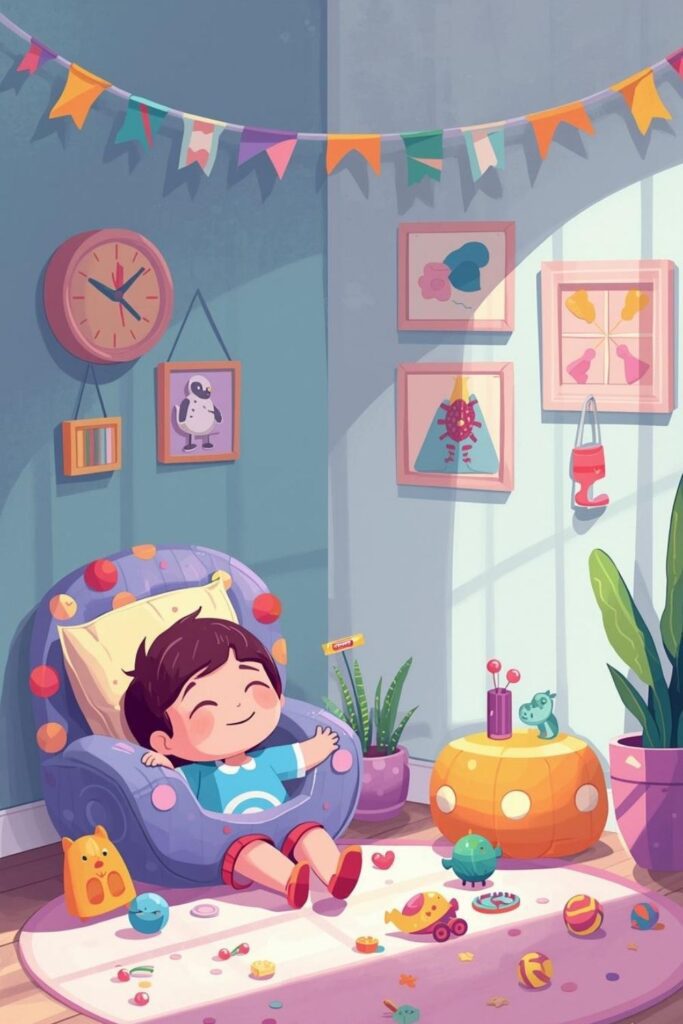
What To Buy Instead Of A Full Kit
Here is the part that saves money.
A full kit is not always needed.
Buy the pieces that are hard to make or genuinely useful. Make the rest personal.
Good buys:
A visual timer.
A few durable fidgets.
Noise reducing headphones.
A washable floor cushion.
A child safe mirror.
A basic emotions chart.
A small basket or pouch.
A weighted lap pad if appropriate.
A wipeable whiteboard.
A simple breathing card set.
Everything else can come from the house.
The blanket already loved by the child is better than a new blanket chosen for a colour scheme. The book they actually reread is better than a mindfulness board book that everyone respects and nobody opens.
Calming tools only count if the child will touch them.
That sounds obvious but so does buying enough toilet paper before guests arrive and yet life continues to humble everyone.
The Pre Made Kit Checklist
Before buying a pre made kit, check these things.
Does it match the child’s age?
Does it have too many small pieces?
Does it rely on reading?
Does it include tools for the body, not just emotion words?
Can it be wiped or washed?
Can it travel?
Does it need adult explanation every time?
Does it include anything that could become unsafe when thrown, chewed, pulled apart or used with sibling level creativity?
A good pre made kit should make the routine easier, not make the house responsible for maintaining a tiny emotional supplies closet.
For toddlers, avoid kits with lots of cards and small parts.
For preschoolers, look for simple pictures, big feelings faces, bubbles, soft items and durable pieces.
For school age kids, a mix of feeling cards, coping cards, fidgets, drawing materials and timers can work.
For tweens, skip anything babyish. Choose tools that look neutral, private and not like a classroom display followed them home.
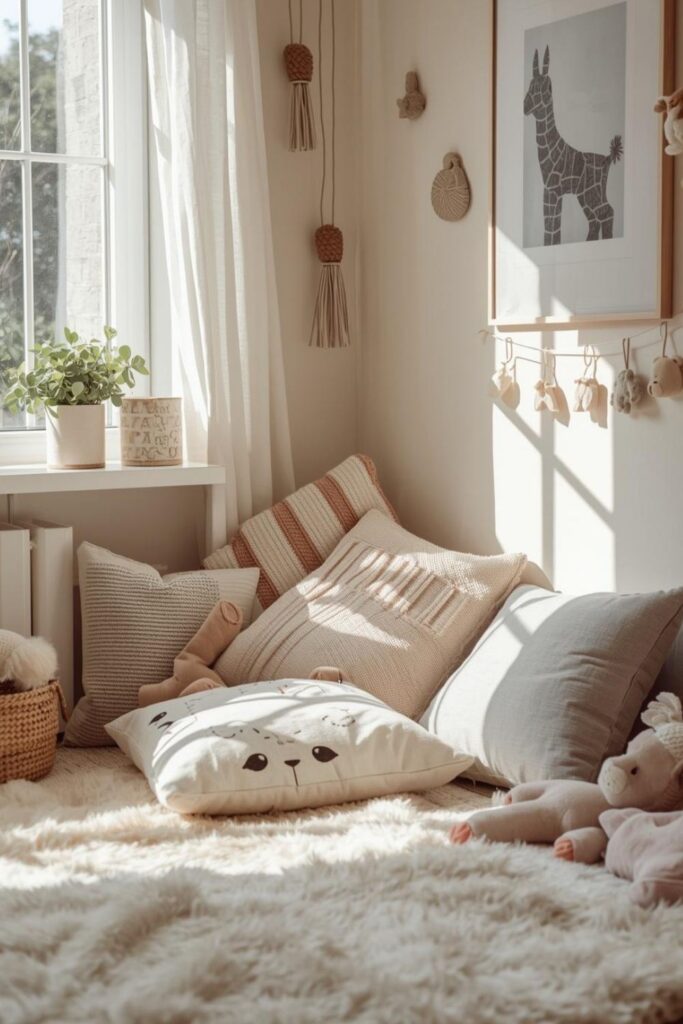
The Hybrid Setup Most Homes Need
The hybrid setup is where the magic happens.
Buy the structure. Personalize the heart.
That might mean buying a ready made poster and fidget set, then adding the child’s favourite hoodie, a family photo, headphones and a small card written in plain family language.
Not therapy speak.
Not we are currently experiencing dysregulation.
Try normal words.
My body is loud.
I need space.
I need help.
I need quiet.
I need a snack.
I need a hug but do not talk.
That last one should be available for adults too.
A hybrid calm down corner is ideal for busy homes because it gives everyone a shared path without pretending every child calms down the same way.
Use calm down corner ideas by age to choose items by stage.
Use sensory tools for kids at home for body based options.
Use kids room corners that actually work for layout help.
How To Set Up A Calm Down Corner In 20 Minutes
Do not overthink this.
Pick a place where the child can be seen but not stared at. A living room corner, bedroom nook, hallway end, playroom edge or space beside a sofa can all work.
Add a soft place to sit.
Add one basket.
Add three tools.
Add one visual.
Add one return plan.
That is the first version.
Do not paint anything. Do not buy labels. Do not alphabetize emotions like a person auditioning for a very niche breakdown.
Use what is already there.
A cushion from the sofa. A stuffed animal. A small notebook. A timer from the kitchen. A blanket. A basket from the bathroom that has been pretending to organize hair products since 2019.
Then watch what the child actually uses.
That is the data.
The Calm Down Corner Rules
Rules should be simple.
This space is safe.
This space is not punishment.
Tools stay in this space unless packed for travel.
Bodies and belongings are treated safely.
An adult will check back.
The child can return when ready.
That is enough.
Too many rules turn the corner into a contract negotiation and children already have enough experience arguing like tiny lawyers who cannot zip coats.
The National Center for Pyramid Model Innovations says a calm down area does not need much space and can be a chair, preferred toys in a bedroom or a basket of calming tools in a quiet soothing area.
That is important because not every family has a spare nook.
Some homes have one living room, one sofa, four people and a toy dinosaur underfoot with a personal vendetta.
A calm down corner can be a calm down basket.
A calm down basket can be enough.
What Not To Put In A Calm Down Corner
Do not put screens there as the main tool.
A tablet can distract, yes. It can also turn the calm down space into a screen negotiation centre and now everyone needs a union rep.
Do not put fragile decor there.
Do not put messy slime there unless the family has accepted its fate.
Do not put rewards there.
A calm down corner is not a prize booth.
Do not put a child there as punishment.
That changes the meaning of the whole space. If the child hears go to your calm corner in the same tone as get out of my face, the corner is now emotional detention.
Do not overfill it.
More stuff does not equal more regulation. Sometimes more stuff equals one child dumping the basket and wearing the timer as a bracelet.
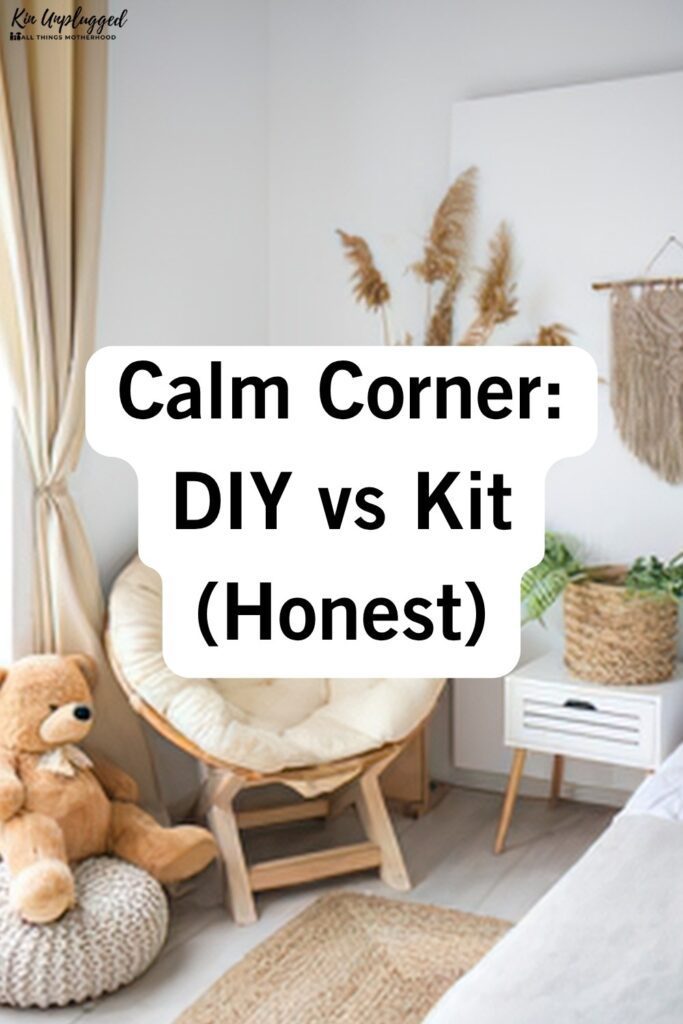
Age By Age: DIY Or Pre Made?
Toddlers
Toddlers need simple, safe, physical tools.
DIY usually wins here because safety and supervision matter so much. Use soft seating, a stuffed animal, bubbles, simple feelings faces and a sensory bottle that is sealed properly.
Pre made kits can be useful only if they are toddler safe.
Skip tiny fidgets, complicated cards and anything that expects a toddler to contemplate disappointment with a laminated wheel.
The toddler is disappointed because the cup is blue.
The wheel has no power here.
Preschoolers
Preschoolers can use a small pre made kit well if an adult teaches it when calm.
A hybrid setup is often best. Use a feelings chart, two sensory tools, one breathing prop and a comfort item from home.
Keep choices limited.
Too many options can make a preschooler more overwhelmed. Offer two choices: squeeze ball or bubbles. Draw or cuddle. Headphones or quiet book.
Two choices are usually enough.
School Age Kids
School age kids can help pick their own tools.
This is where DIY becomes powerful. Ask what their body wants when mad, sad, worried, embarrassed or tired.
Some kids need movement. Some need pressure. Some need sound blocked. Some need to draw. Some need to be left alone while still knowing an adult is near.
Pre made kits can help with language and visuals but let the child edit the basket.
Ownership matters.
A child who chooses the tools is more likely to use the tools.
Tweens
Tweens do not want a baby corner.
Give them privacy and control.
A drawer, shelf, bin or chair can work better than a labeled corner. Use neutral colours, headphones, journal, gum if allowed, textured putty, playlist card and a private signal.
Pre made kits can feel too young unless chosen carefully.
For tweens, DIY usually wins.
Also, do not make it a whole announcement.
Nothing ruins a calming tool faster than a parent presenting it with the energy of a corporate training day.
Teens
For teens, call it something else.
Reset spot. Quiet shelf. Regulation kit. Break basket. My stuff.
Or call it nothing.
A teen might use a calm down setup if it does not look like it was designed for a preschool classroom. Use a small box with headphones, notebook, stress item, water bottle, mint gum, grounding card and charger.
Yes, charger.
A dead phone is not always the moral lesson people think it is. Sometimes it is just one more spark in a room full of petrol.
Use bedroom reset ideas for tweens and teens for older kids who need subtle support.
The Script That Makes Any Corner Work Better
The calm down corner is only as good as the adult script around it.
Try saying less.
During big feelings, fewer words usually help.
Use a low voice.
You are safe.
I am here.
Your body is having a hard time.
Let’s go to the reset spot.
No long speeches.
No moral TED Talk.
No why did you do that when we talked about this yesterday and I specifically explained consequences in the car outside swimming.
That speech may be emotionally accurate. It is also not useful during the volcano portion of the evening.
After the child is calm, talk briefly.
What helped?
What did not help?
What should we try next time?
Then move on.
Kids need repair more than prosecution.
Common Mistakes That Make Calm Down Corners Fail
Mistake 1: Starting during a meltdown
Teach the corner during calm times.
Practice when nobody needs it. Sit there together. Try the tools. Let the child be silly with it.
A corner introduced during a meltdown feels like exile.
A corner practiced during calm times feels familiar.
Mistake 2: Making it too pretty
Pretty is fine.
Too pretty is suspicious.
If the child is afraid to mess it up, it will not work.
Mistake 3: Too many words
Posters are helpful until the wall becomes a motivational airport.
Use one chart at a time.
Mistake 4: Treating it like a cure
A calm down corner supports emotional regulation. It does not replace sleep, food, connection, movement, therapy, school support or medical care.
If big feelings are frequent, intense, unsafe or disrupting daily life, speak with a pediatrician, therapist, school counselor or qualified professional.
Mistake 5: Forgetting the exit
The child needs a way back.
A timer can help. A check in card can help. A simple phrase can help.
When I am ready, I can come back.
Without an exit, the corner can feel like being sent away.
DIY Calm Down Corner Shopping List
Here is a simple, low fuss list.
One basket.
One soft seat.
One tactile tool.
One breathing tool.
One feelings tool.
For tactile, try putty, stress ball, textured square, fabric swatch or smooth stone for older kids.
For breathing, try bubbles, pinwheel, feather or a card with one simple breathing pattern.
For feelings, use faces, colours or a body map.
For quiet, use headphones, soft book, drawing pad or low lamp.
For return, use a timer, small card or adult check in.
The goal is not to build a perfect corner. The goal is to build a place the child can return to before everyone is emotionally upside down.
Skip kits that are mostly posters.
Posters are not useless but the body usually needs something to do. Hands need a job. Breathing needs practice. Sound may need softening. Muscles may need pressure.
A wall full of pastel feelings will not save the 5 p.m. situation by itself.
Very few things can.
Possibly pasta.
The Best Setup For Small Homes
Not every home has a spare corner.
That is fine.
Use a portable calm down basket.
Keep it under a side table, beside the sofa, in a bedroom or on a low shelf. Add a small mat or cushion if the child likes a defined spot.
For flats, shared bedrooms and busy family rooms, portable works beautifully.
The basket can move from living room to bedroom. It can go to grandma’s house. It can sit near the kitchen while dinner is happening and everyone is pretending not to be feral.
Use small home organization ideas for kids for storage that does not eat the room alive.
The Best Setup For Siblings
Siblings complicate everything.
The calm down corner needs boundaries or it becomes a toy station with feelings branding.
Give each child one personal item in the space or use separate pouches with names. Keep shared tools in the basket. Teach the rule that nobody uses someone else’s tool during their big feelings.
If one child needs the corner often, siblings may get resentful.
That is not a design flaw. That is family life doing family life.
Add a second small reset option elsewhere if needed. One child gets the corner, another gets the sofa basket.
Fair does not always mean same. Fair means each child gets what helps.
This sentence will be rejected by at least one child immediately.
Still true.
When A Pre Made Kit Is Worth The Money
A pre made kit is worth it when it saves enough time to actually get used.
Buy one if the family needs:
A fast start.
A shared routine.
Visual cards.
Teacher style supports.
A travel option.
A grandparent friendly setup.
A way to stop over researching.
Sometimes the best tool is the one that arrives in a box and ends the decision spiral.
There is no parenting award for hand cutting emotion cards at midnight.
And if there is, refuse it. It sounds sticky.
When DIY Is Worth The Effort
DIY is worth it when the child has strong preferences, sensory sensitivities, anxiety, ADHD, autism, big reactions to transitions or a deep hatred of anything that looks babyish.
DIY lets the setup fit the child.
That may mean no scents, no bright lights, no scratchy cushions, no wordy posters, no glitter, no music, no adult hovering.
It may mean pressure, dimness, drawing, chewing, pacing, rocking or quiet.
It may mean the corner is actually a movement path.
Wall push ups. Animal walks. Stretch band. Then water. Then talk.
Some children do not calm by sitting still.
Some children calm by moving safely.
This is why one size fits all kits can miss.
Make The Corner Feel Like Belonging
This is the intimate part.
A child should feel like the calm down space belongs to them, not like they have been assigned to a small emotional office.
Let them choose one item.
Let them name the space.
Let them help decide what stays and what goes.
Let them see adults use calming tools too.
Say things like I am taking a minute because my voice is getting sharp.
Or I need quiet before I answer that.
Or I am going to breathe and drink water because I am not my best self right now.
Very formal.
Very dignified.
Possibly said while holding a laundry basket and wearing one sock.
Kids learn a lot from seeing adults come back from the edge without pretending they were never there.
A Seven Day Setup Plan
Day One
Choose the spot.
Do nothing else.
Just notice if it feels quiet enough, safe enough and easy enough to reach.
Day Two
Add the seat.
Use a cushion, mat, beanbag, chair or folded blanket.
Day Three
Add three tools.
One for hands, one for breathing, one for comfort.
Day Four
Add one emotion visual.
Keep it simple.
Day Five
Practice for two minutes when everyone is calm.
Make it boring. Boring means it may work later.
Day Six
Let the child remove one item and add one item.
Ownership begins here.
Day Seven
Agree on the return plan.
A hug, a high five, a drink of water, a quiet return or a simple I am ready.
That is the whole setup.
No ceremony. No trumpet. No family meeting where everyone silently plots escape.
Finally…
DIY calm down corners and pre made kits can both work but they solve different problems. A pre made kit solves the problem of starting. A DIY corner solves the problem of fit.
For most busy moms, the best answer is a hybrid setup: buy a few useful tools, add the child’s real preferences, teach the routine during calm moments and keep the space safe, simple and easy to return from.
The corner does not need to look perfect. It needs to say one thing clearly.
Big feelings can land here and love is still in the room.
FAQs
Is a calm down corner a good idea?
Yes, a calm down corner can be a good idea when it is used as a safe reset space, not punishment. It gives a child a predictable place to slow their body, use simple tools and return when ready.
It works best when adults teach the tools during calm times and stay emotionally available nearby.
What should be in a calm down corner?
A calm down corner should include a comfortable seat, a few sensory tools, a simple emotion visual and a clear way to return. Good choices include a cushion, stuffed animal, stress ball, bubbles, headphones, timer and feelings chart.
Start with fewer items. Add more only after seeing what the child actually uses.
What is the difference between a calm down corner and a calm down kit?
A calm down corner is a place and a calm down kit is a set of tools. A corner might stay in one part of the home. A kit can sit in a basket, pouch, drawer or travel bag.
Many families do best with both: one steady spot at home and one small kit for the car, appointments or visits.
Are calm down corners better than time out?
A calm down corner is different from time out because the goal is regulation, not punishment. The child is guided toward calming tools and reconnection instead of being sent away in shame.
A calm down corner works best when the child can use it voluntarily or with gentle support.
What age is best for a calm down corner?
Calm down corners can work from toddlerhood through the teen years but the setup should change with age.Toddlers need safe, simple comfort tools. School age kids can use feeling cards and fidgets. Teens often prefer a private reset drawer or quiet spot.
The older the child, the more say they should have.
Are pre made calm down kits worth it?
Pre made calm down kits are worth it if they help the family start quickly and the tools match the child’s age. They are especially useful for visual cards, timers and ready packed sensory items.
They are less useful when they are too generic, too wordy or full of pieces the child will not use.
How do I make a DIY calm down corner?
Choose a quiet spot, add soft seating, place a small basket nearby and include three to five calming tools. Try one tactile tool, one breathing tool, one comfort item, one emotion visual and one timer.
Practice using the space when the child is calm, not during the first meltdown.
What should not be in a calm down corner?
Avoid screens as the main tool, fragile decor, tiny unsafe parts, messy items that need supervision and anything that makes the space feel like punishment. Also avoid too many posters or choices.
Simple works better than impressive.
How do I get my child to use a calm down corner?
Practice when they are already calm. Sit there together, try the tools and make it feel familiar before big feelings arrive.
During distress, use fewer words and guide gently. Afterward, ask what helped and adjust the setup.
Can a calm down corner work for ADHD or autism?
Yes, it can help some children with ADHD or autism, especially when the tools match their sensory needs. Some children need pressure, movement, quiet, chewing tools, headphones or reduced visual clutter.
It should be personalized, safe and never used as punishment. If reactions are intense, unsafe or disrupting daily life, professional guidance can help tailor the setup.
 0
0

 278
278