

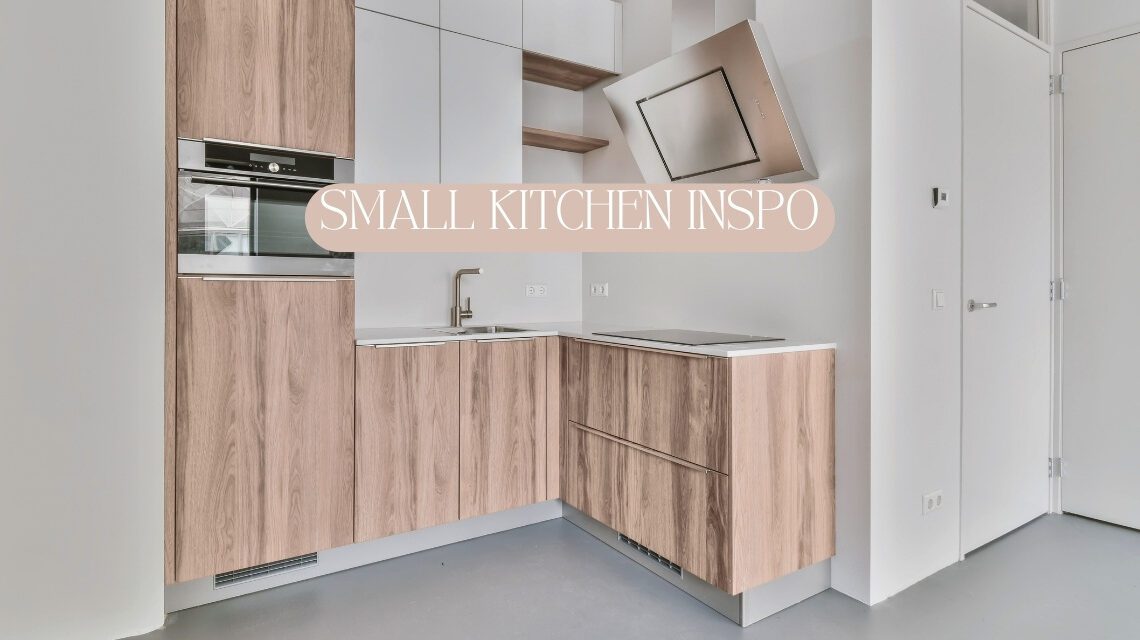
Small kitchen ideas work best when they solve the real problem first: not enough clear counter space, awkward storage, difficult mornings, too many things on show or a layout that makes cooking feel harder than it should. The fastest way to improve a small kitchen is to clear the worktops, use the walls properly, choose storage that hides daily clutter and make every visible item earn its place.
A small kitchen does not need to feel cramped, dull or temporary. It can feel warm, practical and personal, even if the square footage is not generous.
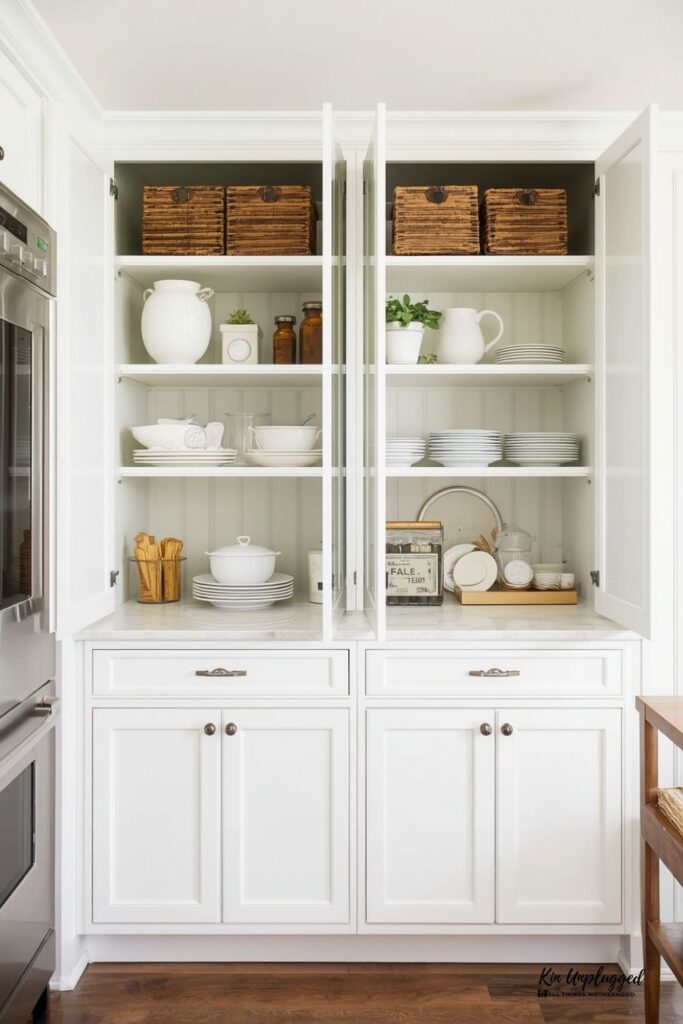
For busy moms, the kitchen is rarely just a place to cook. It is where breakfast happens too fast, lunchboxes are packed, snacks are negotiated, homework lands, water bottles vanish and someone always needs a clean spoon at the exact moment every spoon has disappeared.
That is why small kitchen design cannot only be about pretty cabinets. It has to help the day move better.
READ: 29 Sweet Cottage Kitchen Ideas that make your home …
Start With The Real Problem In The Kitchen
Before buying shelves, baskets or paint, work out what is actually making the kitchen feel small. Sometimes it is not the size of the room. Sometimes it is the way the room is being asked to hold too many jobs at once.
READ: White kitchen ideas: 35+ ways to make yours …
A tiny kitchen with clear zones can feel easier than a bigger kitchen with cluttered counters and no system. A narrow kitchen can work beautifully if the walkway stays clear, the daily items are easy to reach and the storage goes upwards instead of spreading out.
| Small kitchen problem | Best first fix |
|---|---|
| No counter space | Remove rarely used appliances and add wall storage |
| Too many visible items | Use closed storage, trays and cupboard organisers |
| Hard to cook in | Keep prep, cooking and washing zones clear |
| Awkward corners | Add pull-out storage or corner baskets |
| No pantry space | Use vertical cupboards, shelf risers and clear bins |
| Dark and cramped | Use warmer lighting, lighter surfaces and reflective details |
| Family clutter lands everywhere | Add one command zone away from the cooking area |
| No dining space | Try a fold-down table, wall ledge or slim breakfast bar |
The goal is not to make the kitchen look empty. The goal is to make it easier to use at the busiest points of the day.
1. Clear The Counters Before Adding More Storage
Small kitchens often feel tight because the worktops have become storage. The kettle, toaster, air fryer, fruit bowl, knife block, bottles, vitamins, mail, school papers and random cups all end up competing for the same small area.
Start by removing anything that is not used every day. If an appliance comes out once a week, it may deserve cupboard space more than counter space. If a decorative item is taking up the only good prep corner, it is not helping the kitchen.
This one change can make the room feel bigger before anything new is bought. A small kitchen usually needs fewer visible things, not more clever containers on already busy surfaces.
Counter space is not just space. It is breathing room for the whole kitchen.
2. Use The Walls Like Storage, Not Decoration
A blank wall in a small kitchen is an opportunity. Wall rails, pegboards, shallow shelves, magnetic knife strips, spice racks, mug hooks and slim wall baskets can take pressure off drawers and counters.
This works especially well for items used often. Mugs, measuring spoons, chopping boards, pans, aprons, utensils, tea towels and small baskets can all go up instead of spreading across the room.
The key is not putting everything on show. Choose the items that look tidy and get used regularly. A wall full of random kitchen bits can make the room feel busier but a small rail with hooks and a shelf can feel very intentional.
IKEA’s kitchen storage guidance focuses on smart organisation that makes mealtimes easier and more enjoyable, which is exactly the kind of thinking a small family kitchen needs: IKEA kitchen storage and organisation.
3. Add A Rail Instead Of Another Shelf
Shelves are useful but a rail can be better in a very small kitchen. It takes up less visual space and can hold more than expected.
Use a simple kitchen rail for utensils, measuring cups, mini baskets, mugs, scissors or oven gloves. Place it near the prep area, not randomly on the prettiest wall. The rail should make cooking easier.
A rail under a wall cupboard can also work well because it uses space that often goes unnoticed. For a family kitchen, keep sharp tools out of reach of younger children and use lower hooks for safer items like tea towels or children’s aprons.
A rail is one of those small kitchen ideas that feels small but changes the daily flow.
4. Try A Pegboard For A Flexible Family Kitchen
A pegboard can be brilliant in a small kitchen, especially if storage needs keep changing. It can hold pans, baskets, notes, utensils, herbs, lunchbox supplies, cleaning cloths or kids’ snack baskets.
The best part is flexibility. Hooks and shelves can move around as the family’s needs change. Baby bottles may become snack tubs. Snack tubs may become school lunch supplies. School lunch supplies may become sports water bottles and keys.
Choose a pegboard colour that suits the kitchen rather than defaulting to plain white. Soft black, olive, blue-grey, warm wood or even a bold colour can make the wall feel more designed.
This is especially good for renters because some pegboards can be installed in ways that are easier to reverse than fitted cabinetry.
5. Use Closed Storage For The Messy Stuff
Open shelves can look lovely but small family kitchens need closed storage too. Not every item deserves to be seen.
Lunchboxes, plastic cups, snack packets, cleaning products, spare water bottles, kids’ plates and bulky appliances are usually better behind doors or inside baskets.
Closed storage lowers the visual noise of the kitchen. It also makes the room feel calmer even when the cupboards are doing a lot of work behind the scenes.
This is a creator economy truth as much as a home truth. Online, open shelving photographs beautifully. In real family life, closed storage often does more for the room.
A small kitchen should not depend on everyone being tidy at all times. It should have places that absorb normal family use.
6. Make One Cabinet Work Much Harder
In a small kitchen, one well-organised cabinet can change the whole room. Pick the cupboard causing the most daily irritation and fix that first.
Use shelf risers for plates and bowls. Use clear bins for snacks. Use a turntable for oils or sauces. Use drawer dividers for utensils. Use a pan rack if pans are stacked in a way that makes everyone avoid cooking.
Do not organise every cupboard at once. That often becomes too big and then nothing gets finished. Start with the cupboard that slows the day down most.
A small kitchen gets better when the worst cupboard stops being annoying.
That is not glamorous but it is the kind of change that actually sticks.
7. Choose A Slim Pantry Instead Of Wishing For A Bigger One
Not every kitchen has space for a full pantry. A slim pantry can still do a lot.
Look for a narrow cabinet, pull-out trolley, shallow wall cupboard, over-door rack or tall freestanding unit. The best pantry setup lets everyone see what is already there, so fewer duplicate boxes get bought.
Keep breakfast items together. Keep lunchbox items together. Keep baking things together. Keep dinner basics together. A small kitchen becomes harder when every meal starts with searching.
Clear containers can help but they are not always necessary. Sometimes labelled baskets are enough.
The best pantry is not the prettiest one. It is the one that makes food easier to find on a busy weekday.
8. Let The Fridge Door Work Smarter
The fridge door often becomes a messy noticeboard. School letters, party invites, magnets, takeaway menus and half-finished lists can make the whole kitchen feel more cluttered.
Instead, make the fridge door more controlled. Use one magnetic weekly meal planner, one small clip for urgent school papers and one magnetic pen holder. Everything else needs another place.
If the fridge is stainless steel or not magnetic, use the inside of a cupboard door for notes instead. That keeps the kitchen calmer while still keeping important reminders nearby.
Family kitchens need information zones. They just do not need every piece of information spread across the room.
9. Add A Tiny Command Zone Away From The Hob
A small kitchen often becomes the family admin area because everyone passes through it. That can work but only if the admin zone does not sit on the cooking surface.
Use a narrow wall pocket, clipboard, small peg rail, magnetic board, drawer tray or basket near the entrance of the kitchen. Store school notes, keys, pens, meal plans and permission slips there.
This is useful because it keeps family admin from leaking into the cooking zone. A kitchen cannot function well if the chopping board area is also the paperwork area.
The command zone should be small. If it gets too big, it becomes another dumping ground.
10. Use Light Carefully, Not Automatically
Small kitchen advice often says to paint everything white. That can work but it is not the only answer.
A small kitchen can handle colour if the layout and lighting are good. Soft blue, warm cream, olive, clay, pale yellow, mushroom, deep green lower cabinets or navy accents can all work.
White can make a small kitchen feel brighter but stark white can also feel cold if the room has poor light. Warm white, ivory, soft stone or pale wood can be more forgiving.
Dark colours can work beautifully on lower cabinets because they ground the room while the upper part stays lighter. This can make the kitchen feel designed instead of just small.
The best colour is the one that makes the room feel clearer at the time you use it most.
11. Add Under-Cabinet Lighting
Under-cabinet lighting is one of the most useful small kitchen upgrades. It makes prep easier, reduces shadows and helps the room feel warmer in the evening.
This is especially important in kitchens with wall cupboards above the main counter. Those cupboards can cast shadows exactly where food prep happens.
Plug-in, battery and rechargeable options can work when hardwiring is not possible. Choose warm light rather than harsh bright light if the kitchen already feels cold.
Good lighting makes a small kitchen feel more intentional. It also makes cleaning and cooking easier, which matters more than most decorative changes.
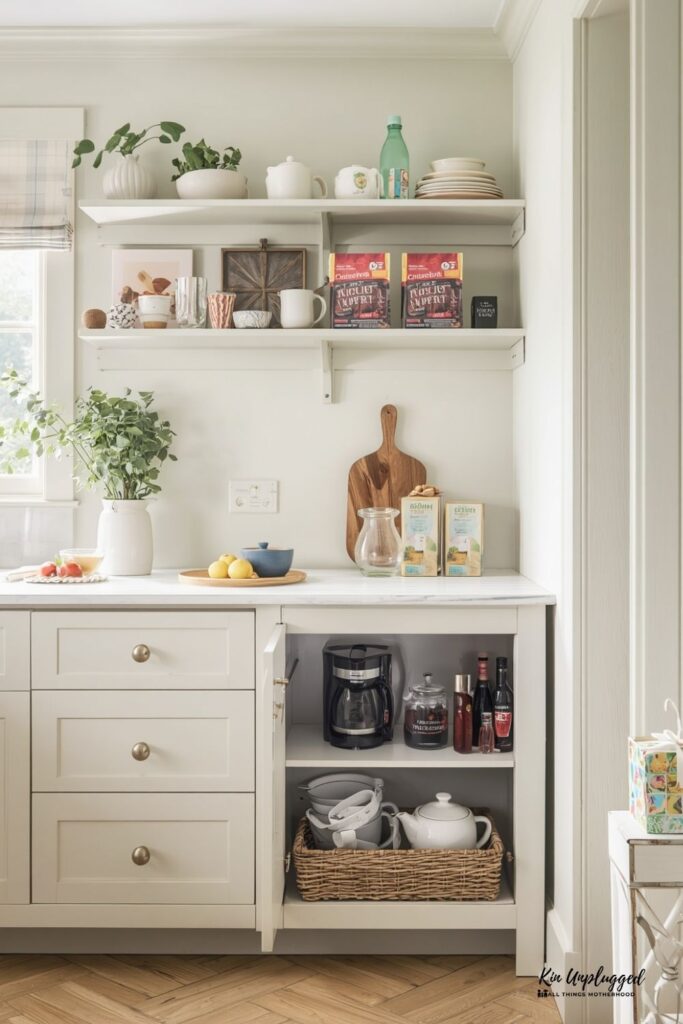
12. Choose A Bigger Rug Than Expected
A rug in a small kitchen can sound risky but a washable runner can make a narrow kitchen feel more finished.
Use a runner in a galley kitchen or a small rug near the sink if the floor feels cold or plain. Choose a pattern that hides marks and a material that can handle real use.
A rug can add colour without painting. It can also soften a kitchen that has lots of hard surfaces.
For family kitchens, skip anything too delicate. A kitchen rug needs to handle crumbs, water, shoes and ordinary mess without becoming another thing to worry about.
13. Use The Inside Of Cupboard Doors
The inside of cupboard doors is hidden storage waiting to be used.
Add hooks for measuring spoons. Add a slim rack for chopping boards. Add a spice rack. Add a small basket for wraps and foil. Add a clipboard for meal ideas or cleaning lists.
This works especially well under the sink, inside pantry doors and inside cleaning cupboards.
The trick is checking that the door still closes properly. Measure before buying anything. A clever organiser that stops the cupboard from closing is not clever.
This is one of the best small kitchen ideas because it gives storage without taking up new space.
14. Think Vertically With Cabinets
If new cabinets are an option, taking storage closer to the ceiling can make a small kitchen much more useful.
Tall cabinets give more storage without using more floor space. Use the top shelves for items needed less often, such as party dishes, serving bowls, spare vases or seasonal pieces.
If the cabinets do not go to the ceiling, use that upper area carefully. Matching baskets or closed boxes can work but only if they are easy enough to access and not collecting dust.
Vertical storage works best when it is planned. Random items on top of cabinets can make a kitchen feel busier, not bigger.
15. Use A Fold-Down Table
A fold-down table can be a strong solution in a small kitchen with no dining space.
It can work as a breakfast spot, homework surface, extra prep area or coffee corner. When not in use, it folds away and gives the floor back to the room.
This is useful for flats, narrow kitchens and family homes where the dining table lives elsewhere but a small daily surface would still help.
Pair it with folding chairs, stackable stools or one slim bench. The seating matters as much as the table because bulky chairs can block the room.
A fold-down table is not just a space-saving idea. It gives the kitchen another job without permanently taking over the floor.
16. Add A Slim Breakfast Ledge
If a fold-down table feels too much, try a slim ledge.
A narrow counter along one wall or under a window can work for breakfast, coffee, homework, chopping vegetables or writing a shopping list.
Keep it shallow so it does not block movement. Add two stools that tuck right underneath.
This works particularly well in kitchens where everyone gathers anyway. Instead of fighting that habit, give it a small place to happen.
A family kitchen often needs a landing spot. A ledge can give one without turning the kitchen into a dining room.
17. Keep The Sink Area Clear
The sink area can make a small kitchen feel messy very quickly.
Use a small tray for washing-up liquid, hand soap and sponge. Add a rail or hook for the dishcloth. Use a compact drying rack that can be folded away or placed over the sink.
If the sink area looks tidy, the whole kitchen feels better.
For families, avoid too many bottles around the sink. Decanting is not required but grouping helps. A tray makes ordinary items look more controlled.
The sink is not a styling area. It is a working area. The best setup is the one that makes cleaning up faster.
18. Use One Tray To Control Daily Items
A tray can make a small kitchen feel more organised in seconds.
Use one tray for tea and coffee. One for oils near the hob. One for vitamins and breakfast items. One for lunchbox supplies if they need to stay out in the morning.
A tray gives loose items a boundary. That boundary matters because small kitchens look messy faster than large ones.
Keep the tray small enough that it cannot become a new dumping ground.
If something does not fit, it probably needs another home.
19. Make The Most Of Awkward Corners
Awkward corners are common in small kitchens. They often become dark spaces where pans and old containers disappear.
Use pull-out corner storage if renovating. If not, use large baskets, turntables or stackable bins. Keep the least-used items at the back and daily items in easier spots.
Corner shelves can also work if they are shallow and well-edited. A corner shelf with a plant, cookbooks and one bowl can make an odd gap feel intentional.
The worst thing to do with an awkward corner is ignore it. In a small kitchen, every awkward bit has potential.
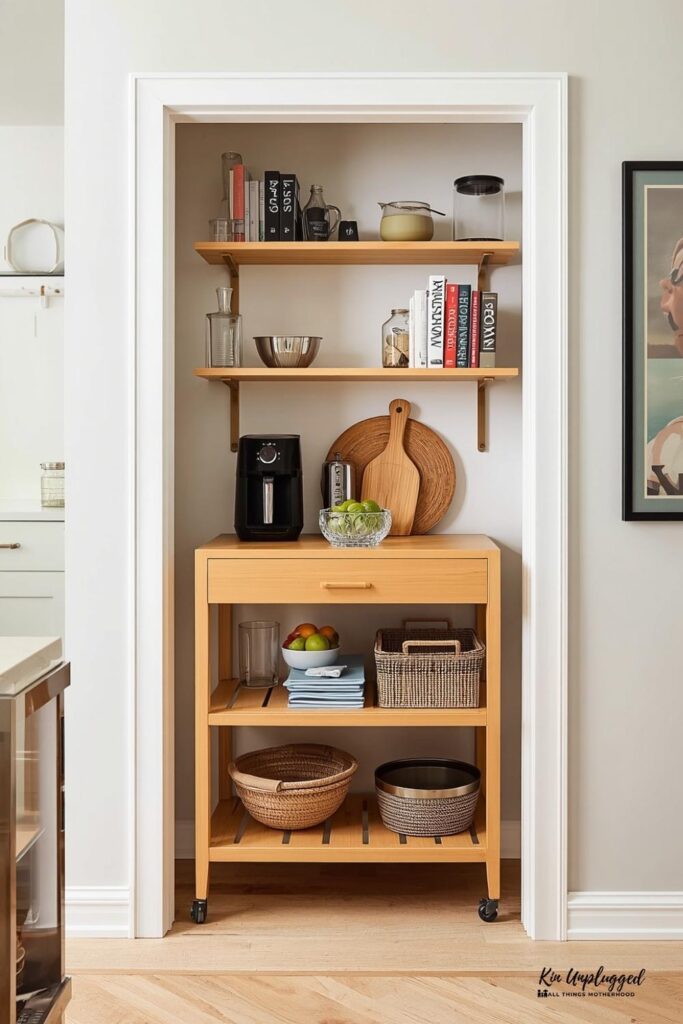
20. Use Fewer, Better Countertop Appliances
Small kitchens cannot hold every appliance on the worktop.
Choose the appliances that earn daily space. For many families, that might be the kettle, toaster, coffee machine or air fryer.
Everything else needs a cupboard, shelf or appliance garage.
If an appliance is too awkward to move and too rarely used to stay out, it may be worth questioning altogether. Small kitchens force honesty.
That can be a good thing.
A kitchen with fewer appliances on show often feels bigger, cleaner and easier to cook in.
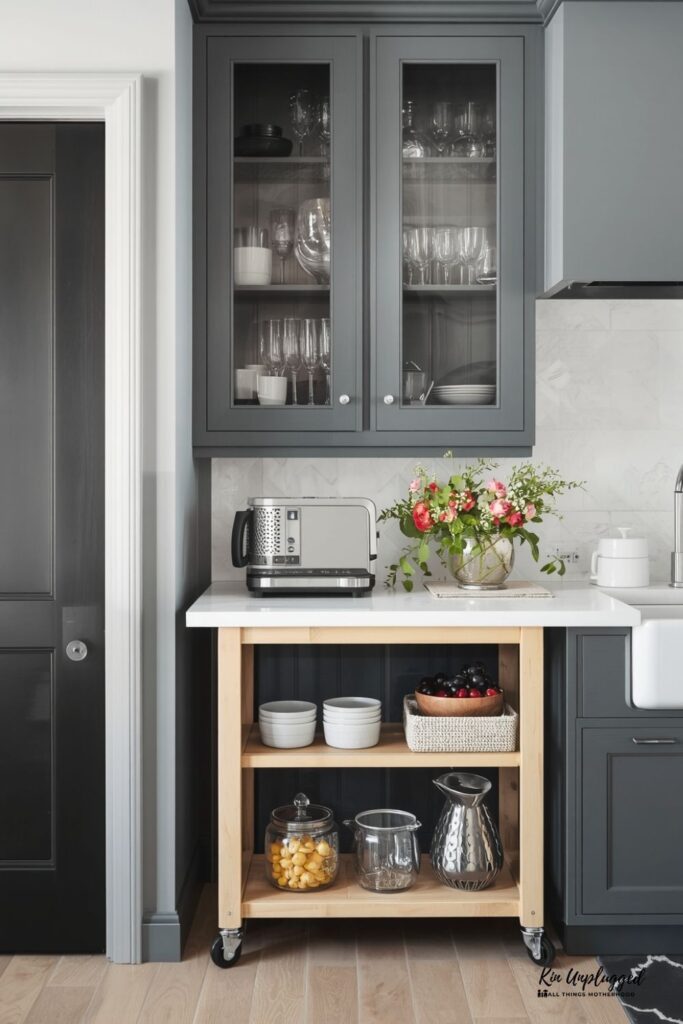
21. Add A Rolling Cart If Cabinets Are Limited
A slim rolling cart can work as a mini pantry, coffee station, lunchbox station, baking station or produce holder.
The benefit is movement. It can roll out when needed and tuck away when not in use.
Choose one with edges so things do not slide off. If the kitchen is very visible, pick a cart that matches the room’s style.
Rolling carts are especially useful in rentals and older kitchens where built-in storage is limited.
They are not a replacement for good cabinets but they can take pressure off the room quickly.
22. Use Open Shelving In Small Doses
Open shelving can be useful in a small kitchen but it needs discipline.
Use it for items that look good and get used often. Plates, bowls, glasses, mugs, cookbooks, jars and pretty serving pieces can work.
Avoid putting random pantry packets, too many mugs or rarely used items on open shelves. They will gather dust and make the kitchen look busier.
Open shelving works best when there is also closed storage nearby.
The balance is important. Show a little. Hide a lot.
23. Choose Clear Or Matching Containers For Visual Calm
A pantry or shelf does not need to look perfect but it does need to be easy to understand.
Clear containers can help with dry goods, snacks and baking supplies. Matching baskets can help with packets, lunchbox items and children’s snacks.
The point is not perfection. The point is being able to find things quickly.
For family kitchens, make snack storage child-friendly if that suits the household. Lower baskets for approved snacks can reduce repeated asking and help children become more independent.
Labels can help but only if the system is easy to maintain.
A beautiful system that nobody follows is just decoration.
24. Use A Mirror Or Reflective Detail
A mirror is not common in kitchens but it can work in the right small space.
A small mirror above a shelf, a mirrored backsplash, glass cabinet fronts or glossy tiles can bounce light around the room.
Use reflective details carefully. Too many shiny surfaces can feel harsh.
A mirror works best in a kitchen that lacks natural light or has a dark corner. It can make the room feel more open without changing the layout.
If a mirror feels too unusual, try glass jars, pale tile, brass, chrome or a glossy ceramic lamp instead.
A little reflection can help a small kitchen feel less closed in.
25. Make The Backsplash Work Harder
A backsplash can do more than protect the wall.
Use it to add light, pattern, colour or texture. White tile can brighten the room. Zellige-style tile can add movement. Small patterned tile can bring personality. A single slab backsplash can make the kitchen feel cleaner and simpler.
If the kitchen is rented, peel and stick tile can be an option if allowed and removable.
A backsplash is useful because it sits in the sightline. Changing it can alter the feel of the whole kitchen without touching the cabinets.
For small kitchens, avoid patterns that are too busy if the counters already hold a lot.
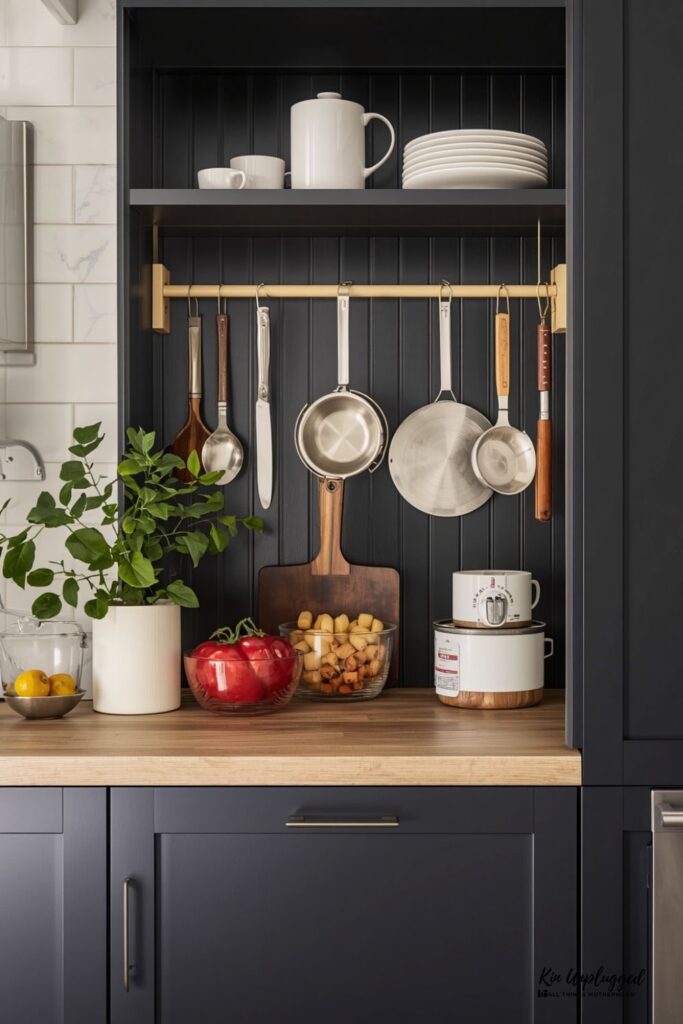
26. Keep The Work Triangle In Mind but Do not Obsess Over it
Kitchen planning often talks about the work triangle between the sink, cooking area and fridge. The National Kitchen and Bath Association offers planning guidelines used by kitchen and bath professionals and these can be useful when thinking about layout and clearances: NKBA planning guidelines.
In a small kitchen, the triangle may not be perfect. That is fine. The bigger question is simple: can food move from fridge to prep to cooking to clean-up without crossing too many obstacles?
If the answer is no, look at what is blocking the path. A bin in the wrong place, a stool that sticks out, a drying rack that eats prep space or a cart that blocks a cupboard can all make the kitchen feel smaller.
A good layout helps the body move naturally. That matters more than following a rule perfectly.
27. Use The Top Drawer For The True Daily Items
The top drawer in a small kitchen should not be wasted on things used twice a month.
Keep the daily items there. Cutlery, a sharpie, measuring spoon, bottle opener, scissors, peeler, bag clips or whatever the household grabs constantly.
Move the extras somewhere else.
This sounds small but it reduces daily friction. In a small kitchen, opening three drawers to find one thing gets annoying quickly.
The most accessible storage should belong to the most used items.
That simple rule can improve the whole kitchen.
28. Add A Pot Rack Only If It Looks Tidy
Pot racks can be brilliant in small kitchens but they are not always the answer.
They work best when the pans match reasonably well, are used often and can hang without blocking heads, light or cupboard doors.
If the pans are scratched, mismatched or rarely used, a pot rack may make the kitchen feel more crowded.
A wall rail for two or three good pans can be better than a ceiling rack filled with everything.
This is the difference between useful storage and visual clutter.
A small kitchen needs the first one.
29. Use Colour To Mark Zones
In a small kitchen, colour can help define zones.
A darker cabinet colour can mark the cooking area. A painted shelf can mark the coffee area. A tile change can mark the sink. A warm rug can mark the standing zone.
This gives the kitchen more structure without adding walls.
For open-plan homes, colour can also help the kitchen feel connected to the living area. Pull one colour from the living room into the kitchen through a rug, vase, blind or small appliance.
The room will feel more intentional.
Small kitchens look better when they feel like part of the home, not an afterthought.
30. Give Children One Kitchen Zone
If children use the kitchen often, give them one small zone.
This might be a low drawer for cups and bowls. A snack basket. A lunchbox shelf. A water bottle spot. A breakfast cereal area. A hook for aprons.
When children know where things live, the kitchen becomes easier for everyone.
Keep the zone realistic and safe. Avoid putting anything breakable or sharp in reach of young children.
This is one of the most practical small kitchen ideas for family homes. It reduces repeated questions and makes the kitchen feel less like one person is managing every tiny request.
31. Make A Tiny Coffee Or Tea Station
A small coffee or tea station can make mornings smoother.
Use a tray, narrow shelf, cupboard section or small cart. Keep mugs, tea bags, coffee, sugar and spoons together.
This stops the morning routine from spreading across the entire kitchen.
If counter space is very limited, put the station inside a cupboard instead. Open the door, make the drink, close the door.
That is often better than leaving everything out.
A small kitchen feels bigger when daily routines have clear homes.
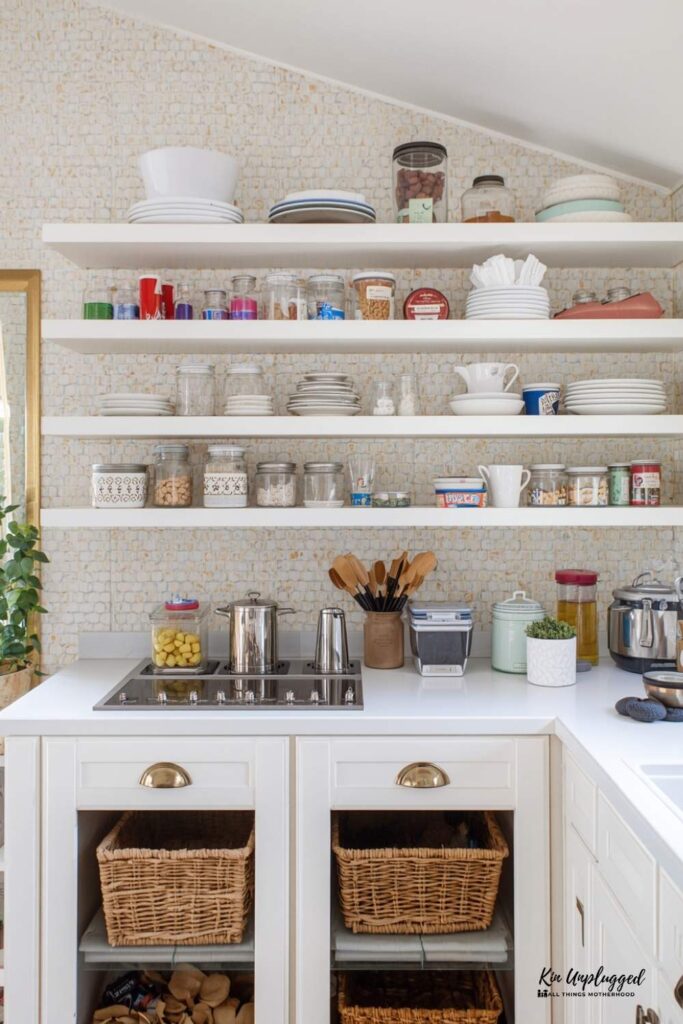
32. Let One Pretty Thing Stay Visible
A small kitchen should not become all function and no feeling.
Let one pretty thing stay visible.
A ceramic jug. A small lamp. A framed print. A plant. A bowl of lemons. A vintage plate. A vase of flowers. A beautiful chopping board.
Just choose one or two, not ten.
The kitchen should still feel like part of a home. This is where ownership comes in. A practical kitchen can still have taste, memory and warmth.
Pretty things matter more when there are fewer of them.
33. Use A Small Lamp If There Is Space
A lamp in a kitchen can sound unusual but it can make the room feel much softer in the evening.
Use a tiny lamp on a shelf, counter corner, windowsill or dining ledge. Choose a safe spot away from water and heat.
This works especially well in kitchens that feel harsh under ceiling lights.
A small lamp gives the kitchen another mood after dinner. It also makes late-night water, snacks or tidying feel less clinical.
Not every small kitchen has space for this but when it works, it really works.
34. Think About What People See First
Stand at the kitchen entrance and notice what is visible first.
Is it the bin? The drying rack? Piles of paper? A messy counter? A beautiful shelf? A clean sink? A framed print?
The first view changes how the whole kitchen feels.
If the first view is messy, move or contain that area first. If the first view is blank, add one intentional detail.
This is audience psychology in home form. People make quick judgements based on the first thing they see.
Make the first view work harder.
35. Small Kitchen Ideas By Layout
Different small kitchens need different fixes.
| Kitchen layout | Best idea |
|---|---|
| Galley kitchen | Use wall rails, runners and tall storage |
| L-shaped kitchen | Make the corner storage work harder |
| One-wall kitchen | Use vertical storage and slim appliances |
| U-shaped kitchen | Keep counters clear and avoid bulky stools |
| Open-plan kitchen | Use colour and lighting to define the zone |
| Rental kitchen | Use removable shelves, carts, rugs and art |
| Kitchen with no pantry | Add a slim pantry or over-door storage |
| Kitchen with no dining spot | Add a fold-down table or slim ledge |
There is no single best small kitchen solution.
The best idea is the one that solves the specific layout problem.
36. What To Buy First For A Small Kitchen
If the kitchen feels difficult but a renovation is not happening, buy in this order.
| Buy first | Why it helps |
|---|---|
| Drawer dividers | Stops daily tools getting lost |
| Shelf risers | Doubles useful cabinet height |
| Clear bins or baskets | Groups snacks and pantry items |
| Wall rail and hooks | Frees counter and drawer space |
| Under-cabinet light | Makes prep easier |
| Washable runner | Adds softness and hides tired flooring |
| Slim cart | Adds flexible storage |
| Better bin | Removes one daily irritation |
Start with the item that fixes the most annoying part of the day.
A prettier kitchen is nice.
An easier kitchen is better.
37. Small Kitchen Ideas That Do Not Help Much
Some ideas look good but do not solve much.
Tiny decorative jars that take up counter space. Open shelves filled with items used once a year. A fruit bowl in the only prep spot. A huge plant where a toaster needs to be. Matching containers for food nobody can identify. A pot rack that makes the room feel crowded. A white paint job without fixing storage.
Small kitchens need honest choices.
If something does not make the room easier or more personal, it may not deserve the space.
That sounds strict but it is freeing.
Every inch gets to matter.
38. The Best Small Kitchen Formula
Use this formula when the kitchen feels stuck.
| Layer | What to choose |
|---|---|
| Clear surface | Keep one prep area open at all times |
| Hidden storage | Use cabinets, drawers and baskets for messy items |
| Wall storage | Add rails, pegboards or shallow shelves |
| Light | Use under-cabinet lighting or a small lamp |
| Softness | Add a runner, blind, curtain or warm wood |
| Family system | Add snack, lunchbox or paper zone |
| Personal detail | Add one print, vase, jug or plant |
This formula works because it balances function and feeling.
A small kitchen cannot only be storage.
It also cannot only be pretty.
It needs both.
FAQ: Small Kitchen Ideas
How do I make a small kitchen look bigger?
Make a small kitchen look bigger by clearing counters, using vertical storage, choosing lighter upper areas, adding good lighting and keeping the floor as open as possible. A washable runner, simple wall shelves and closed storage can also help the room feel more organised.
The biggest change is often removing items from the worktops.
Clear counter space makes the whole kitchen feel larger.
What is the best layout for a small kitchen?
The best layout depends on the shape of the room.
Galley kitchens work well when the walkway stays clear. One-wall kitchens need strong vertical storage. L-shaped kitchens need good corner solutions. U-shaped kitchens need clear counters and careful appliance placement.
The best layout lets food move easily from fridge to prep to cooking to clean up.
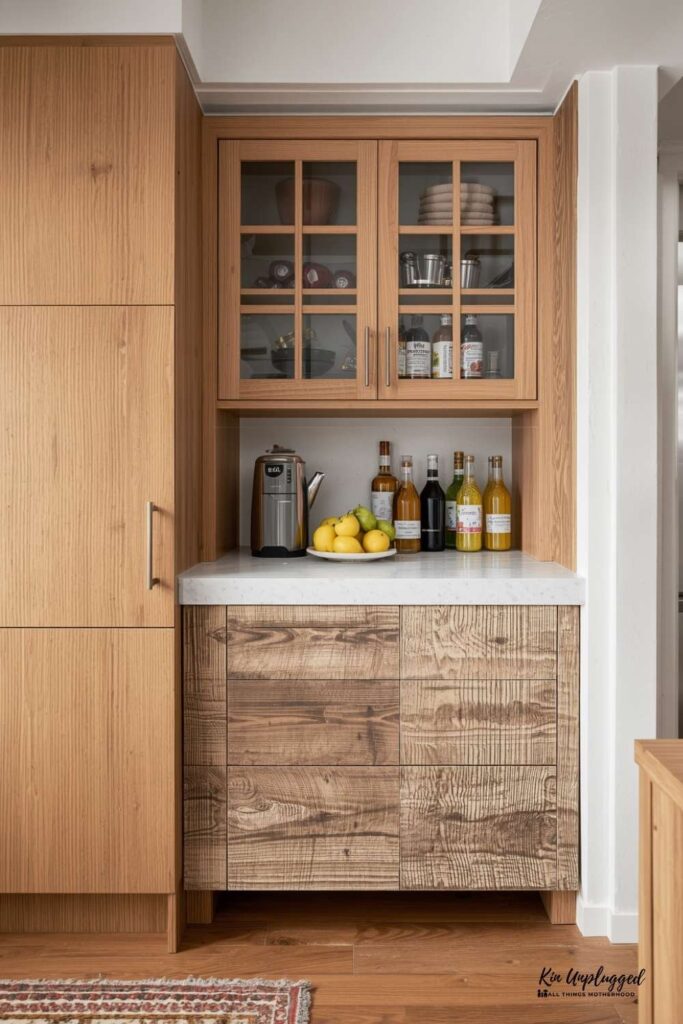
How do I add storage to a tiny kitchen?
Use wall rails, shelf risers, drawer dividers, over-door racks, pegboards, slim carts, stackable bins, pull-out organisers and the inside of cupboard doors.
Start with the most annoying storage problem first.
Do not buy organisers for every area at once.
What colours are best for a small kitchen?
Warm white, cream, pale blue, soft green, mushroom, light wood, stone and gentle neutrals can all work well.
Dark colours can also work in small kitchens if used carefully, especially on lower cabinets, a backsplash, a small island or one wall.
The best colour depends on the light and how much visual clutter the kitchen already has.
Should small kitchens have open shelves?
Small kitchens can have open shelves but they work best in small doses. Use them for items that look tidy and are used often, such as plates, bowls, mugs or jars.
Use closed storage for snacks, plastic containers, lunchboxes and anything that looks messy quickly.
How can I make a small kitchen work for a family?
Give daily items clear homes.
Use a child-friendly drawer or snack basket, keep lunchbox supplies together, add a paper zone, clear the prep counter and use closed storage for family clutter.
A family kitchen does not need to be perfect.
It needs to reset quickly.
How do I organise a small kitchen on a budget?
Start by removing what is not used, then add low-cost organisers like shelf risers, hooks, baskets, drawer dividers, clear bins and a wall rail.
A small kitchen often improves more from better organisation than from expensive changes.
Fix the worst cupboard first.
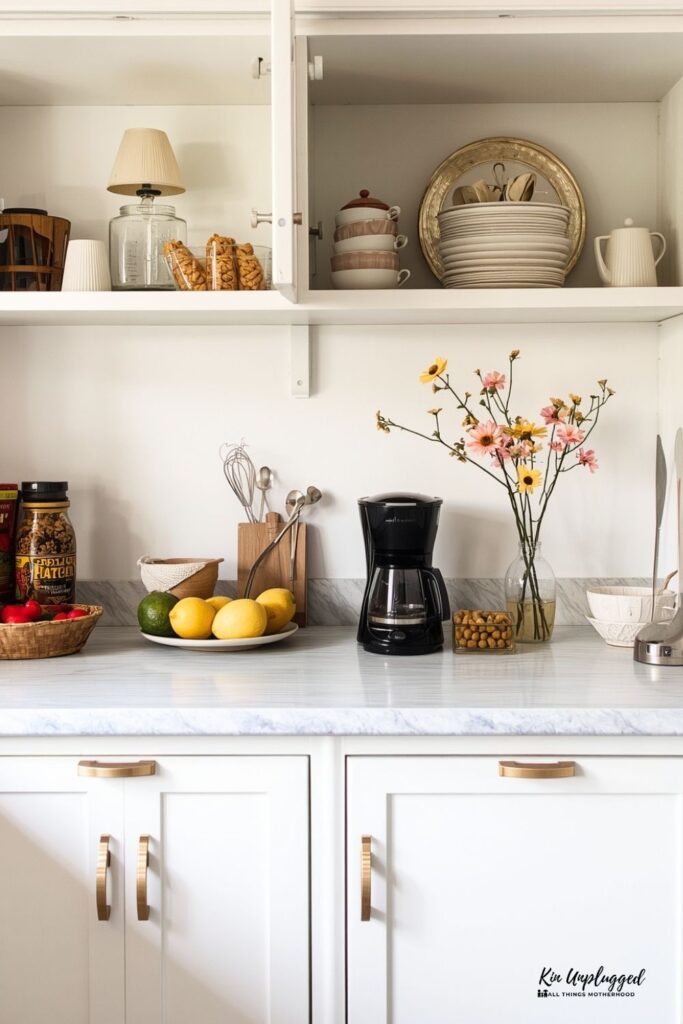
What should not be stored on small kitchen counters?
Avoid storing rarely used appliances, piles of paper, extra mugs, too many bottles, bulky decor, snack packets and anything that blocks prep space.
Keep only daily-use items on the counter.
Everything else should have another home.
Finally…
Small kitchen ideas are most useful when they make the room easier to use, not just nicer to look at.
A family kitchen has to work hard. It holds meals, mornings, snacks, school bits, conversations, spills and all the small routines that keep the day moving.
Start with clear counters, better storage and good lighting. Then add warmth, colour and one personal detail so the kitchen still feels like home.
A small kitchen does not need to be perfect or large to work well.
It needs clear zones, honest storage and choices that make everyday family life feel a little less difficult.
 0
0

 278
278