
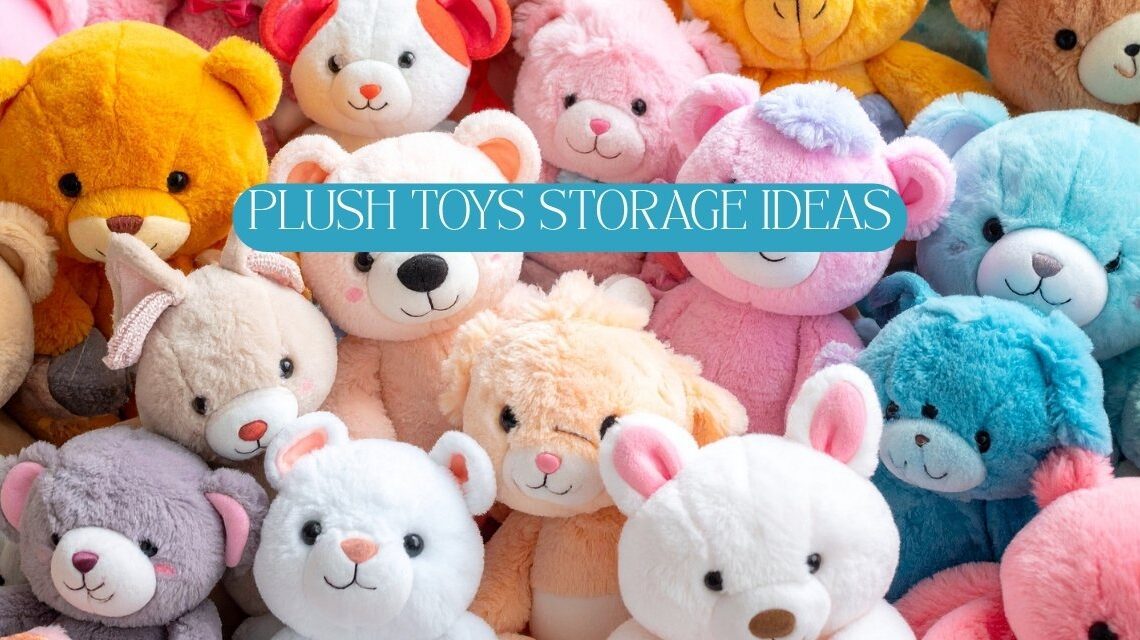
If plush toy storage ideas have started to feel less like home organisation and more like negotiating with a fluffy army, the quickest fix is this: separate the soft toys into daily favourites, display-worthy favourites, sentimental keepsakes, and extras that can leave the main living space. Once every plush has a job, storage gets much easier.
READ: The Only educational toys we actually use
Stuffed animals are not just toys. They are bedtime politics, car companions, birthday evidence, holiday souvenirs and sometimes tiny emotional support employees with button eyes.
That is why shoving them all into one giant bin rarely works for long.
SHOP SOFT TOY STORAGE BASKETS
SHOP PLUSH TOY HAMMOCKS
SHOP KIDS ROOM STORAGE CUBES
SHOP PRINTABLE TOY LABELS
The real trick is not buying the biggest basket and hoping for a personality transplant from everyone in the house.
The real trick is building a system that matches how kids actually use soft toys.
Because a toddler does not think, “Let me maintain the integrity of this storage zone.”
A toddler thinks, “Where is Bunny?”
And if Bunny is at the bottom of a stuffed-animal landfill, congratulations, everybody is late.
Why Plush Toys Take Over So Fast
Plush toys multiply in a very specific way.
One comes from a birthday. One comes from a grandparent. One comes from a fair. One comes from a hospital visit. One comes from a sibling who suddenly decides they are emotionally bonded to a dinosaur they ignored for eight months.
Then one day, there are 47 soft toys on the bed and the actual child is sleeping diagonally in a 12-inch gap like a Victorian orphan.
Plush toys are harder to organise than blocks or craft supplies because they carry emotion. A missing stuffed animal can feel like a small family emergency.
So the storage system has to respect two things at once: access and attachment.
Children need to reach the favourites without emptying the entire room. Parents need a way to reduce visual mess without starting a courtroom drama about why Panda is in storage.
The Best Plush Toy Storage System Starts With Four Categories
Before buying anything, sort the plush toys into four groups.
This part makes every other idea work better.
| Category | What goes here | Best storage |
|---|---|---|
| Everyday favourites | Bedtime animals, comfort toys, current obsessions | Bed basket, low bin, bedside trolley |
| Display favourites | Pretty, themed, collectible, Squishmallow-style toys | Shelves, wall pockets, hammock, cube unit |
| Sentimental keepsakes | Baby’s first teddy, gifts from special people, memory toys | Lidded box, memory bin, top shelf |
| Extras and overflow | Doubles, old favourites, random party prizes | Rotation bin, donation bag, seasonal storage |
This is the difference between storage and denial.
A single huge basket says, “Good luck in there.”
A category-based system says, “The bunny has a place, the giant unicorn has a place, and the suspicious carnival bear has a short-term residency pending review.”
1. The Bedtime Basket
Best for: daily comfort toys
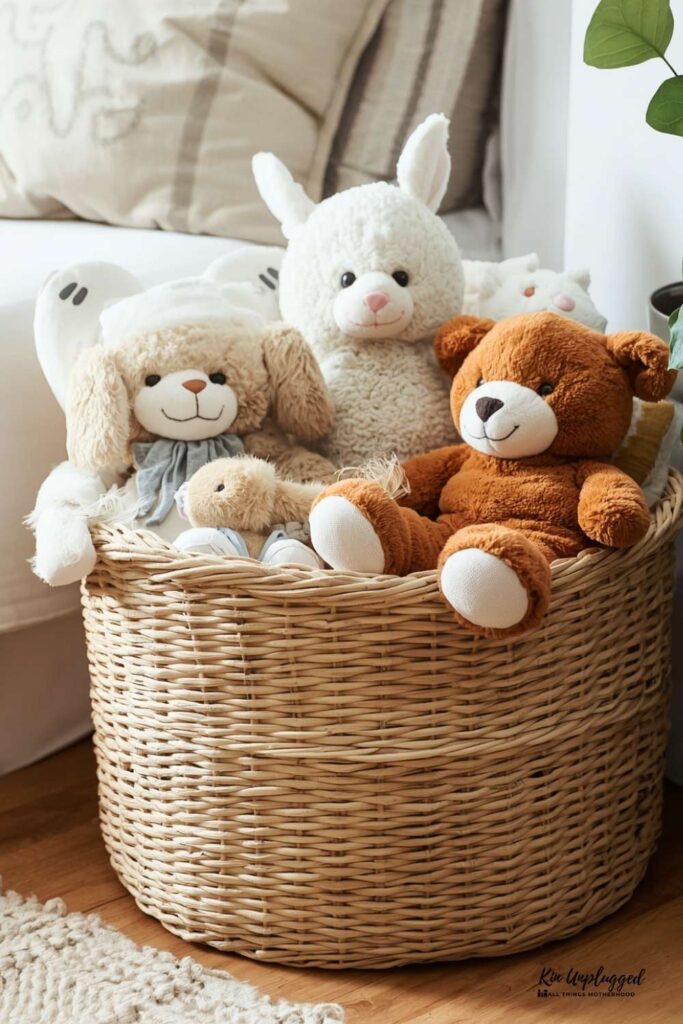
Put a soft basket beside the bed and only allow the true bedtime favourites to live there.
This is not for every soft toy the child has ever made eye contact with. This is for the chosen few.
A bedtime basket keeps the bed from becoming a plush toy conference centre. It also helps younger children understand that special sleep toys have a home near the bed, not under the duvet, under the pillow, behind the pillow, and somehow inside the pillowcase.
For babies and younger toddlers, keep safety in mind. The American Academy of Pediatrics gives guidance on age-appropriate toys and safe toy choices, and soft items in sleep spaces need extra care for babies.
2. The “One Animal on the Bed” Rule
Best for: kids who sleep with too many soft toys
This rule is simple enough for a tired parent and an overtired child.
One animal sleeps in the bed. The rest sleep in the basket.
It still gives the child ownership. They get to choose who stays.
This can work especially well for children who use soft toys as comfort objects but then wake up cranky because they spent the night wedged between a llama, a whale, and something with sequins.
3. The Plush Toy Hammock
Best for: bedrooms with unused corners
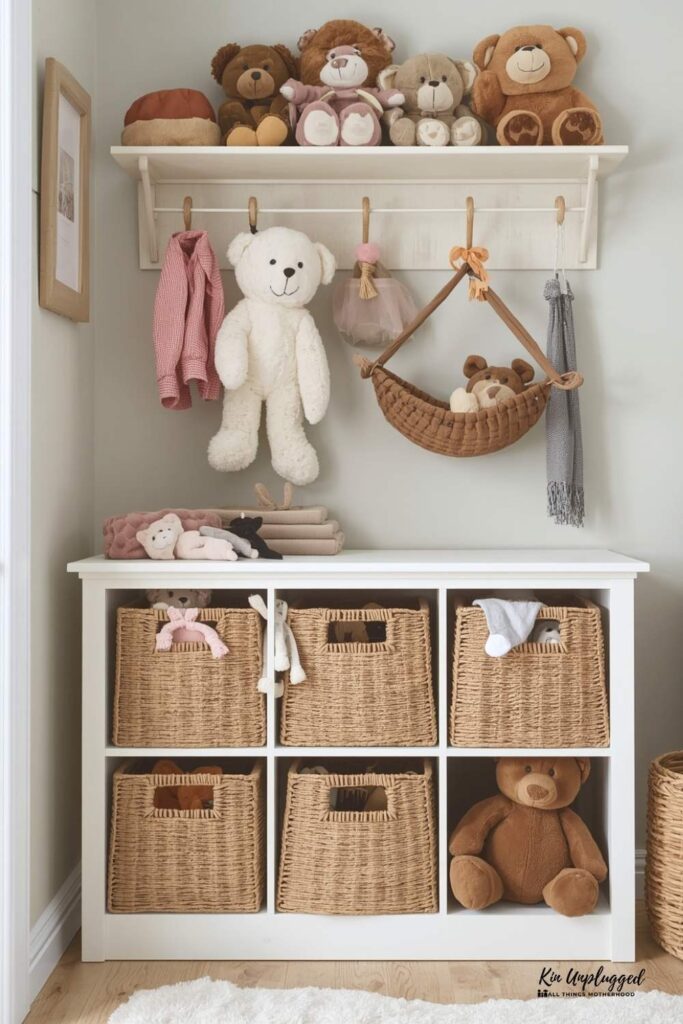
A plush toy hammock is one of the classic plush toy storage ideas because it uses vertical space and keeps soft toys visible.
It works best for lightweight stuffed animals that are loved but not needed every hour.
The danger is letting the hammock become a decorative ceiling swamp. Keep it for medium and large plush toys, not every tiny teddy in the house.
A hammock also has a nice little theatre to it. The animals are up there like they have balcony seats.
Very refined. Very unnecessary. Somehow still helpful.
4. Wall Baskets for “Soft Toy Parking”
Best for: small bedrooms and shared rooms
Wall-mounted baskets can turn empty wall space into proper storage without stealing floor space.
Use shallow baskets so children can still see the toys. Deep wall baskets look lovely for one week and then become mystery pits.
This is where you can put animals by theme.
One basket for woodland animals. One for dolls and soft babies. One for sea creatures.
A child may not care about the taxonomy of plush seals versus plush foxes, but visual grouping helps them find what they want faster.
5. A Stuffed Animal Zoo
Best for: larger collections
A stuffed animal zoo is usually a tall wooden frame with elastic cords or bars that keep plush toys contained while letting kids pull them out.
It works well for families with a lot of medium-sized plush toys.
The best part is that kids can shove toys back in without needing perfect folding, stacking, or bin discipline. Nobody needs a five-year-old to understand vertical filing.
This one gives “contained but accessible,” which is the goal.
Not hidden. Not dumped. Contained.
6. Cube Storage With One Plush Per Cube
Best for: display and independence
Cube storage is useful because it gives soft toys little homes.
You can put one large plush in each cube or use baskets inside the cubes for smaller animals.
For younger kids, picture labels help. For older kids, categories can work better: favourites, animals, dolls, tiny plush, seasonal plush.
The key is leaving breathing room.
A cube packed until the toys look like they are being smuggled across a border is not storage. It is compression with furniture.
7. Over-the-Door Shoe Organisers
Best for: tiny plush toys and Squishmallows
An over-the-door shoe organiser is brilliant for small stuffed animals because each pocket acts like a little display window.
It is also good for bedrooms where floor space has already surrendered.
Use it for Beanie Boo-size toys, mini Squishmallows, small dolls, finger puppets, soft keyrings, and plush animals from party bags.
For younger children, use the lower pockets for current favourites and the upper pockets for less-used toys. That way the door does not become a daily climbing invitation.
8. The “Plush Library” Shelf
Best for: children who like choosing
Set up a low shelf like a library.
Soft toys sit facing forward. The child picks one or two for play, then returns them when finished.
This sounds very wholesome, and yes, some days it will be.
Other days someone will remove every animal because the shelf is apparently “a shop,” “a hospital,” or “a cave.”
Still, this system works because it gives children a visible limit. When the shelf is full, the collection is full.
That one visual boundary can save a lot of future negotiation.
9. The Rotation Bin
Best for too many plush toys without forcing a big goodbye
Put half the soft toys into a labelled rotation bin and bring them out every month or season.
This is not punishment. This is toy tourism.
Children often get excited when old plush toys come back because absence makes the dinosaur interesting again.
Toy rotation also helps reduce the number of toys in daily circulation. Fewer toys can make tidying easier and play choices calmer.
Research in early childhood settings often points to clear routines, simple expectations, and visible cues as helpful for children during clean-up time. This tidy-up guidance for early learning families highlights how visual cues and consistency can support children in daily routines.
10. The Sentimental Keepsake Box
Best for memory toys
Some soft toys do not need daily access.
They need protection.
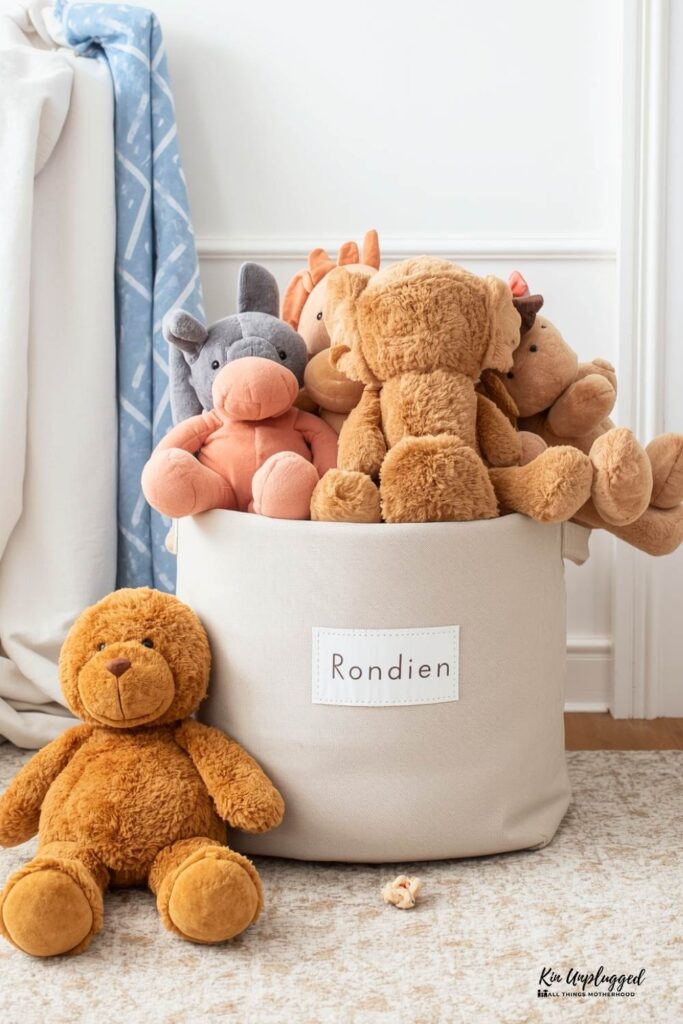
Put baby’s first teddy, hospital gifts, handmade toys, and special family gifts in a keepsake box.
This is where ownership matters. A sentimental plush toy does not need to prove it still gets played with to deserve a place.
It just needs the right place.
Use a lidded fabric box or a clear storage tub, then label it with the child’s name and year. Keep it in a wardrobe, under a bed, or on a high shelf.
11. The “Photo Before Goodbye” Method
Best for children who struggle to let toys go
Some kids can part with soft toys if the memory is kept.
Take a photo of the child with the plush toy before donating it. Add the photo to a little digital folder or printed memory book.
This works well for toys linked to trips, parties, school fairs, or gifts from people they barely remember but somehow cannot emotionally release.
The photo says, “This mattered.”
The donation says, “This does not need to live in the living room forever.”
Both can be true.
12. The Giant Floor Basket
Best for fast end-of-day resets
A large soft-sided basket is perfect for shared family spaces.
The secret is to keep it beautiful enough that it can sit in the living room without shouting daycare lobby.
Woven baskets, quilted bins, fabric tubs, and felt baskets work well. Choose something with soft edges so kids can use it safely and without scratching floors.
The basket should be easy to carry and easy to empty.
If a storage item requires adult-level architecture to use, children will avoid it and adults will resent it.
13. The “Living Room Visitors Only” Basket
Best for stopping toys from spreading everywhere
Keep one small plush toy basket in the living room.
Only visiting plush toys go there.
That means a child can bring soft toys downstairs, but the basket sets the limit. Once it is full, no more animals move in.
This gives children freedom without letting the living room become a wildlife reserve.
It also helps at bedtime because the downstairs toys can be carried back up in one trip.
14. Under-Bed Plush Drawers
Best for bedrooms with no spare wall space
Under-bed storage works well for plush toys that are not used every day.
Use shallow drawers or zip storage bags so children can see what is inside.
The downside is that under-bed storage can become a place where forgotten toys go to become folklore. So use it for rotation, not daily favourites.
Label the drawer clearly.
“Soft toys not in use” is better than “Miscellaneous,” which is where organisation systems go to die.
15. A Rolling Plush Cart
Best for kids who move toys between rooms
A small rolling cart can work beautifully for plush toys that travel from bedroom to living room to playroom.
Put bedtime favourites on the top shelf, smaller animals in the middle, and dress-up or doll accessories at the bottom.
The cart can roll back to the bedroom at night.
This is especially helpful for families without a dedicated playroom.
Also, kids love pushing carts. This is not always useful, but sometimes it is.
16. A Clear Bin for “Find It Fast” Plush Toys
Best for children who panic when they cannot see the toy
Clear bins are not always the prettiest, but they are very practical.
They work well for children who need visual reassurance.
Use them for themed collections, small plush toys, or animals that are played with in sets.
The downside is that clear bins show everything. So use them inside cupboards, wardrobes, cube units, or under beds if visual mess bothers you.
17. A Display Rail With Clip Rings
Best for plush keyrings and small soft toys
Install a small rail and add clip rings.
This is great for plush keyrings, tiny bag charms, mini animals, and soft accessories.
It turns little plush toys into a display instead of a drawer full of fluff.
Older kids may like this for cute collectibles. Younger kids may just yank everything off the rail and declare victory.
Use age and temperament as your guide.
18. The Soft Toy “Hotel”
Best for imaginative kids
Set up a small shelf or basket as a soft toy hotel.
Each animal gets a place to sleep.
This turns clean-up into pretend play, which is often more effective than saying, “Put that away,” while everyone pretends not to hear.
You can label shelves as rooms, suites, or kennels.
If a child likes role play, the toy hotel makes storage part of the game.
And honestly, some of these plush toys have better accommodation standards than adults after a family holiday.
19. The Birthday Basket Reset
Best for stopping plush toys from growing endlessly
Before birthdays, Christmas, Eid, holidays, or big family visits, do a soft toy reset.
Not a massive emotional purge. Just a basket review.
Ask:
- Which soft toys are still played with?
- Which ones are only being kept out of guilt?
- Which ones belong in the keepsake box?
- Which ones can move to another child, charity shop, or family friend?
This works because new toys are often coming anyway.
A pre-gift reset makes space before the next wave arrives.
20. The “One In, One Resting” Rule
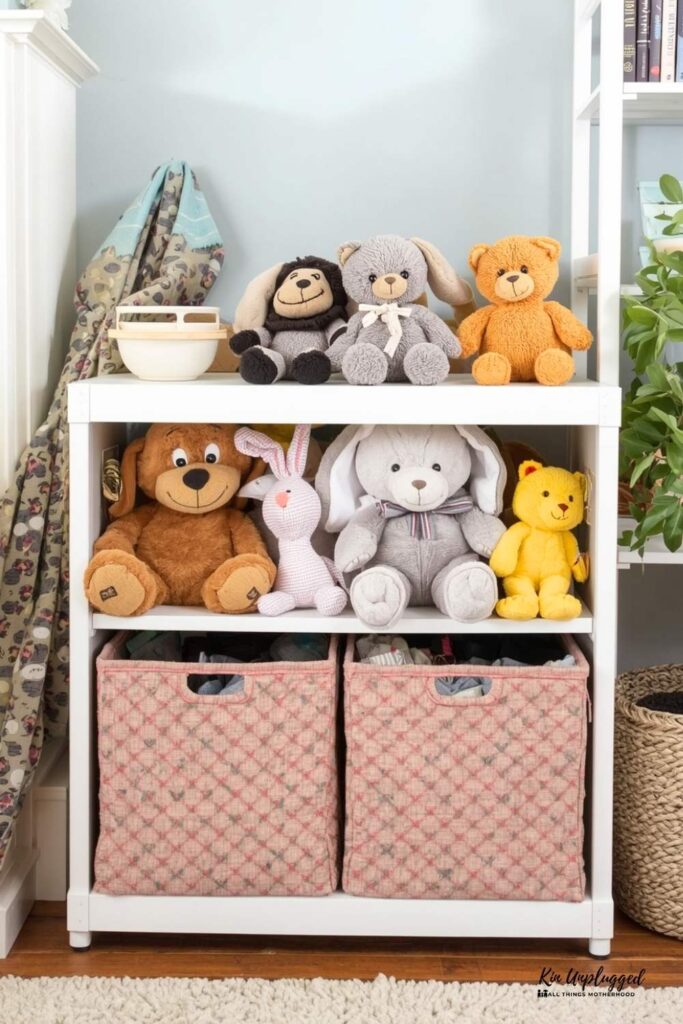
Best for kids who hate giving things away
Instead of one in, one out, try one in, one resting.
When a new plush toy arrives, another one moves to the rotation bin.
This feels less final.
It also teaches that space is a real thing, not a magical concept that parents invented because they hate fun.
The resting toy can come back later.
That tiny difference can make the rule much easier for sensitive children.
21. Theme-Based Plush Storage
Best for kids with lots of categories
Group toys by theme rather than size.
Try:
- Farm animals
- Zoo animals
- Sea animals
- Dinosaurs
- Dolls and babies
- Characters
- Seasonal plush
- Mini plush
- Giant plush
This works well because kids often play by story.
If the child is building a zoo, they need the animals together. If they are making a school, dolls and character toys may need to live together.
Storage should follow play, not adult Pinterest fantasies.
22. The Giant Plush Chair Bag
Best for soft toys that are rarely used but still wanted
A stuffed animal chair bag is a large zip-up fabric seat that gets filled with plush toys.
It turns storage into seating.
This can be useful in bedrooms, playrooms, reading corners, or family rooms.
The catch is that children may forget what is inside. So only use it for overflow toys, not the special bear that is required at 9:42pm with tears.
Also, do not overfill it until it becomes a hard boulder with ears.
23. The “Favourite Five” System
Best for younger children
Let each child choose five soft toys to keep easily accessible.
The rest go into display, rotation, or keepsake storage.
Five is small enough to manage and big enough to feel fair.
For younger kids, take a picture of the Favourite Five and stick it near the basket. That gives them a visual reset at clean-up time.
This is simple, and simple survives real family life.
24. Plush Toy Storage by Child
Best for siblings
Do not store all plush toys together if siblings are constantly arguing over ownership.
Give each child a separate basket, shelf, or cube.
Use names, colours, photos, or simple labels.
This avoids the classic family argument where one child suddenly claims emotional ownership of a penguin they have not touched since Easter 2023.
Separate storage also makes clean-up more accountable.
Not perfect. Just clearer.
25. The “Downstairs Basket, Upstairs Basket” System
Best for homes with toys on every floor
Place one basket upstairs and one downstairs.
At the end of the day, toys return to their floor or travel back to bedrooms in one sweep.
This works better than trying to ban soft toys from family spaces entirely.
Because that ban will last about eight minutes.
Children bring comfort items with them. The system should make that easier to manage, not turn every teddy into contraband.
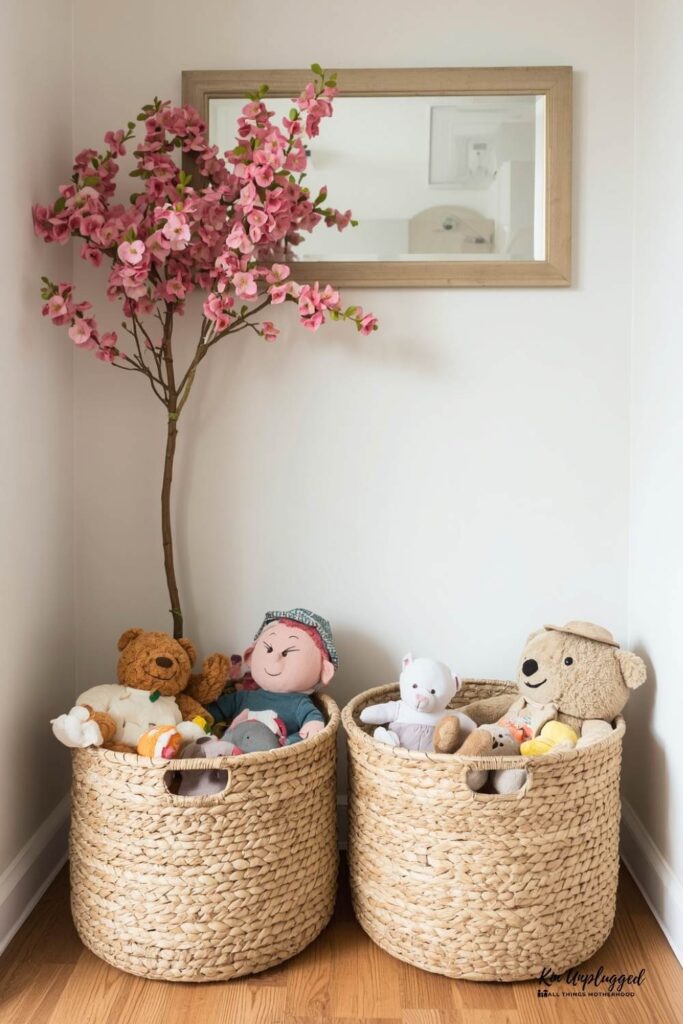
26. The Plush Toy Gallery Wall
Best for older kids and collectors
A gallery wall can be made with small floating shelves, acrylic ledges, wall cubbies, or shadow-box style shelves.
This is lovely for older children who collect certain plush toys and want them visible.
It gives the collection dignity.
Yes, dignity. For plush frogs.
The gallery wall also helps older kids decide what earns display space. That kind of decision-making matters.
A collection that is seen and cared for feels different from a pile that keeps falling behind the bed.
27. Seasonal Plush Storage
Best for holiday stuffed animals
Holiday plush toys are adorable for about three weeks and then deeply annoying.
Put Christmas, Halloween, Easter, Valentine’s Day, birthday, and seasonal plush toys in a separate labelled box.
Bring them out only at the right time of year.
This makes them feel special again and reduces daily clutter.
It also stops the Easter bunny plush from staring at you in October like it knows something.
28. The Car Plush Box
Best for soft toys that travel
Keep a tiny basket or pouch in the car for travel soft toys.
Only car toys live there.
This stops the daily “Can I bring six animals?” debate before school, errands, clubs, appointments, and all the tiny journeys that somehow require emotional support from a giraffe.
Make it small.
One or two travel friends are enough.
If the car already looks like a snack-based archaeological site, it does not need a plush annex.
29. Plush Toy Storage for Babies and Toddlers
Best for safety and easy access
For babies and toddlers, focus on low, soft, visible storage.
Use fabric bins, open baskets, or small cube units.
Avoid storage with heavy lids, sharp corners, long cords, or high climbing temptation.
Check toys often for loose eyes, buttons, seams, ribbons, batteries, stuffing leaks, and small parts. The KidsHealth toy safety guidance notes that toys for young children should be large enough not to lodge in a child’s windpipe, and small-parts safety matters most with babies and toddlers who still mouth objects.
Soft toy storage is not just about looks at this age.
It is also about access, supervision, and keeping damaged toys out of reach.
30. Plush Toy Storage for School-Age Kids
Best for mixed collections and independence
School-age children can handle more involved systems.
Try labelled cube storage, wall pockets, under-bed drawers, or a favourite shelf.
This is also the age where children may start collecting by character, series, colour, size, or brand.
Let them help design the system.
Ownership matters here. If they choose the categories, they are more likely to use them.
Not always, obviously.
Children are still children. They will still leave a fox in the hallway and act shocked when asked why.
31. Plush Toy Storage for Tweens
Best for collectors and sentimental kids
Tweens may not play with plush toys the same way, but they may still care deeply about them.
This is where display becomes more important than access.
Try floating shelves, a bookcase display, a chair bag, a keepsake bin, or a curated bed arrangement.
Avoid treating older kids’ plush collections as babyish.
That can make them cling harder, because now the toys are not just toys. They are identity, memory, comfort, and a private little protest.
Give them a grown-up way to keep what matters.
32. The “Soft Toy Interview” Decluttering Game
Best for making choices without tears
Ask each plush toy a few questions, with the child answering.
- Do you still play here?
- Do you sleep here?
- Are you a memory toy?
- Would you like to live with another child?
- Do you need a rest in the rotation box?
It sounds silly because it is silly.
That is why it works.
The toy interview lets kids make decisions without feeling like an adult is stealing the cast of their childhood.
33. The Broken Plush Repair Station
Best for damaged favourites
Set aside a small box for plush toys that need repair.
Add a label like “waiting for stitches” or “toy hospital.”
This stops damaged toys from staying in normal circulation, especially if they have loose parts, leaking stuffing, or broken seams.
Set a rule: if a toy has been in the repair box for a month and nobody has fixed it, choose repair, keepsake storage, or goodbye.
The repair box should not become a retirement village.
34. A Plush Toy Inventory for Big Collections
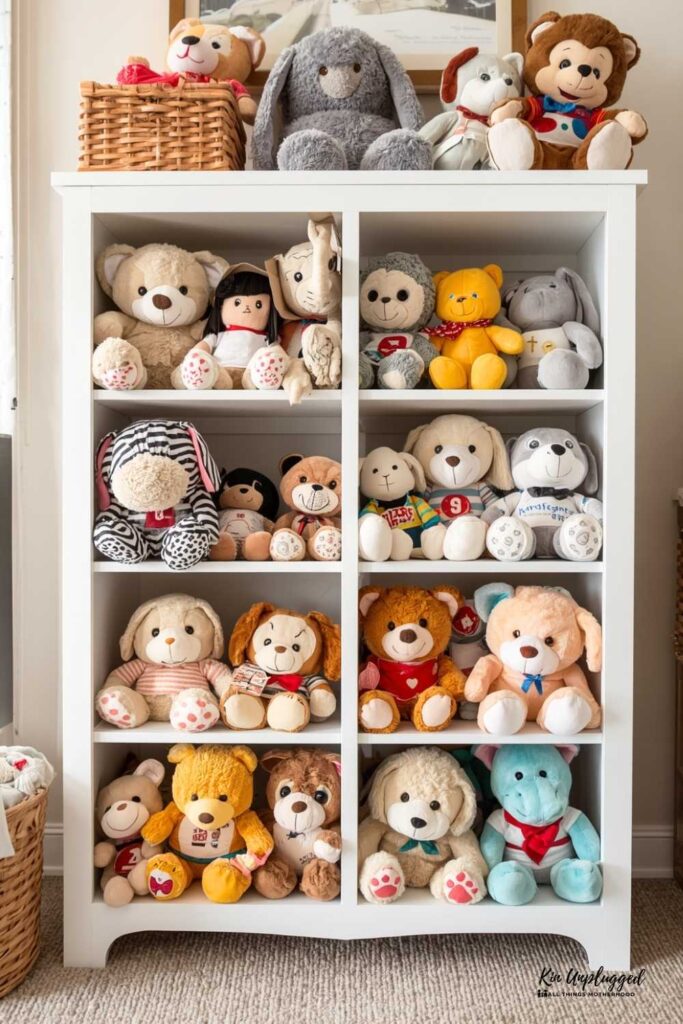
Best for collectors, neurodivergent kids, and very attached children
For some children, a simple photo inventory can be surprisingly helpful.
Take pictures of the plush toys and group them into folders:
- Bedtime
- Display
- Rotation
- Keepsake
- Donate
This can help children who worry that stored toys are “gone.”
It can also help with toy rotation because they can choose from photos instead of emptying boxes.
This idea is especially useful for kids who love collections, lists, images, and categories.
Also, it is helpful for adults who cannot remember the name of the purple owl and are tired of being treated like they have betrayed the family.
35. The “Room Reset” Plush Plan
Best for the end of the day
A room reset should not take 40 minutes.
Try this:
| Time | Task |
|---|---|
| 2 minutes | Put bedtime favourite in the bed basket |
| 3 minutes | Put display plush toys back on shelves |
| 3 minutes | Put extras in the main basket |
| 2 minutes | Move downstairs toys back upstairs |
| 1 minute | Check for damaged or dirty toys |
That is about 11 minutes.
Not a life overhaul. Just enough to stop the room from looking like a teddy bear evacuation zone.
How to Decide Which Plush Toy Storage Idea Is Right for Your Home
The best plush toy storage depends on three questions.
How often does the child use the toy?
Daily favourites need open, easy access.
Occasional toys can go higher, deeper, or into rotation.
Sentimental toys can go away safely.
Where do the toys actually get used?
If soft toys are always in the living room, put a basket in the living room.
If they travel between floors, use a cart or two-basket system.
If they are mostly bedtime toys, keep storage near the bed.
Storage fails when it is placed where adults wish the toys were used instead of where the toys actually land.
Does the child need to see the toys?
Some children need visible storage. Use shelves, clear bins, pockets, or open baskets.
Some children are fine with hidden storage. Use lidded bins, drawers, and rotation boxes.
The storage should match the child’s brain, not the room photo in someone else’s house.
A More Thoughtful Way to Think About Plush Toys
Soft toys are often one of the first ways children practise care.
They feed them imaginary soup. They tuck them in. They tell them secrets. They blame them for messes with astonishing confidence.
This is why plush toy storage works best when it does not treat every stuffed animal like junk.
At the same time, family homes need limits.
The sweet spot is respect plus boundaries.
The child gets to keep meaningful toys. The home gets systems that prevent soft toys from filling every chair, shelf, bed, and laundry basket.
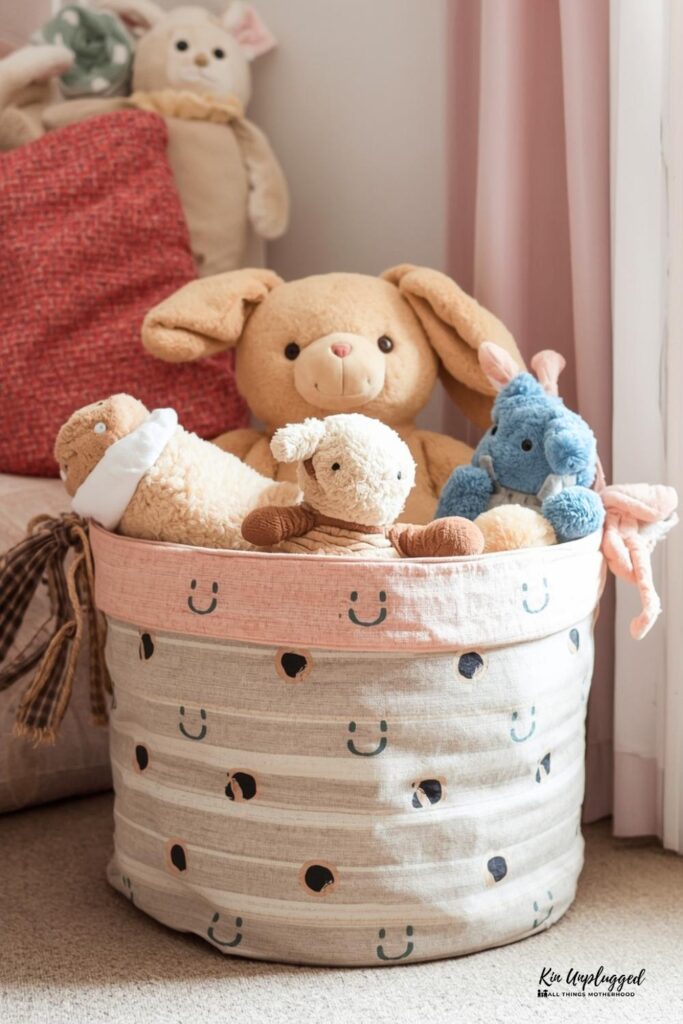
How to Keep Plush Toy Storage From Falling Apart Again
Storage systems fail for three main reasons.
The container is too full
Leave space.
A bin should not be packed to the point where a child has to excavate a rabbit with both hands and a prayer.
A good rule is 80% full maximum.
The system is too adult
If a child cannot understand it, they will not use it.
Use pictures, colours, categories, or obvious homes.
Tiny labels in cursive may look nice, but most kids are not running a boutique.
There is no reset rhythm
Pick one reset time.
After dinner. Before bath. Before bed. Sunday afternoon.
Ten minutes is enough.
Consistency does more than fancy storage.
How to Talk to Kids About Giving Away Plush Toys
This is where tone matters.
Avoid saying, “You have too many.”
Try:
- “Which ones are still part of your day?”
- “Which ones are memory toys?”
- “Which ones could make another child happy?”
- “Which ones should rest for a bit?”
- “Which ones do you want to see every morning?”
This keeps the child in the decision.
It also teaches that care includes choosing well, not keeping everything forever.
For very attached children, start with the easiest category: broken toys, duplicates, party bag toys, or plush toys they cannot name.
Do not start with the bear from babyhood unless you enjoy emotional explosions before breakfast.
How to Clean Plush Toys Before Storing Them
Before putting soft toys into long-term storage, check the care label.
Many plush toys can be surface-cleaned, and some can go in the washing machine on a gentle cycle inside a laundry bag or pillowcase.
Air drying is often safer than heat drying, especially for delicate toys, battery-free sound toys, or plush with special textures.
Never store damp plush toys.
That is not storage. That is a mildew invitation wearing ears.
For delicate keepsakes, use a soft cloth, mild soap, and careful drying. If a plush toy has batteries, lights, sounds, or smart features, follow the manufacturer’s cleaning instructions.
Smart Plush Toys Need Different Storage
Some plush toys now include batteries, speakers, microphones, sensors, or app connections.
These should not be tossed into a mixed bin with regular stuffed animals.
Store smart toys separately, remove batteries if the toy will not be used for a long time, and keep charging cables away from younger children.
Research on connected toys has raised privacy and security concerns around some smart toys and companion apps. This smart toy privacy and security research is a useful reminder that connected toys deserve more thought than ordinary plush animals.
A normal teddy can live in a basket.
A connected toy needs a little more adult attention.
FAQs: Plush Toy Storage Ideas
What is the best way to store lots of plush toys?
The best way to store lots of plush toys is to split them into daily favourites, display toys, keepsakes, and rotation toys. Use low baskets for daily toys, shelves or hammocks for display toys, lidded boxes for keepsakes, and labelled bins for rotation.
This stops every soft toy from competing for the same space.
How do you store stuffed animals in a small room?
Use vertical storage first. Plush hammocks, wall baskets, floating shelves, over-the-door organisers, and cube units help store soft toys without taking over the floor.
Under-bed drawers are also useful for rotation toys or seasonal plush.
How do you store stuffed animals without a playroom?
Keep one small plush basket in each main zone where the toys naturally appear. A bedroom basket, living room basket, and bedtime basket can work better than trying to force all toys into one room.
The goal is to make clean-up possible where life actually happens.
How do you display plush toys without making the room messy?
Use shelves, cube units, wall pockets, or a plush toy hammock and limit each display area. Display works best when there is space around the toys.
If every shelf is packed, it stops looking intentional and starts looking like the toys are plotting.
How many stuffed animals should a child keep on the bed?
One to five is usually enough for most children, depending on age and sleep habits. Babies need safer sleep spaces, so soft items in sleep areas require extra caution.
For older children, a bedtime basket beside the bed can hold extra favourites without filling the sleep space.
How do you get kids to put stuffed animals away?
Make the storage obvious, low, and easy. Open baskets, picture labels, toy hotels, and short clean-up routines work better than complicated systems.
Turning clean-up into a small game can also help, especially for younger children.
What can I do with stuffed animals my child no longer uses?
Sort them into donate, keepsake, rotate, and repair categories. Some can go to charity shops, family friends, community groups, or local donation drives if they are clean and in good condition.
Special memory toys can go in a labelled keepsake box instead of staying in daily play space.
Are stuffed animal hammocks a good idea?
Yes, plush toy hammocks are useful for lightweight toys that children do not need constantly. They are especially good for unused corners and small bedrooms.
Keep daily favourites lower so children do not climb to reach them.
How do you store giant plush toys?
Use a chair-style stuffed animal bag, a large floor basket, a dedicated shelf, or a corner display. Giant plush toys need fewer storage companions because they take up so much visual and physical space.
If a giant plush is not loved enough to earn that much room, it may belong in rotation or donation.
The Soft Toy System That Lasts
Plush toy storage does not need to be perfect to work.
It needs to be visible enough for kids, simple enough for tired adults, and flexible enough for all the emotional nonsense attached to one small bear with a missing bow.
Start with the favourites. Give them the easiest home.
Then move the display toys, keepsakes, seasonal toys, and extras into places that match how often they are used.
That is how a room starts to feel calmer without turning childhood into a storage project.
And if one suspicious little teddy still ends up on the stairs every night, fine.
Every system has one employee who refuses to follow policy.
 0
0

 278
278