


Some bathrooms feel strangely loud even when nobody is inside them.
Too many bottles. Too many shiny surfaces. Too many things balancing on the side of the sink like the room gave up halfway through organising itself. And once family life enters the chat, bathrooms can quickly start looking like a tiny convenience store attached to a laundry room.
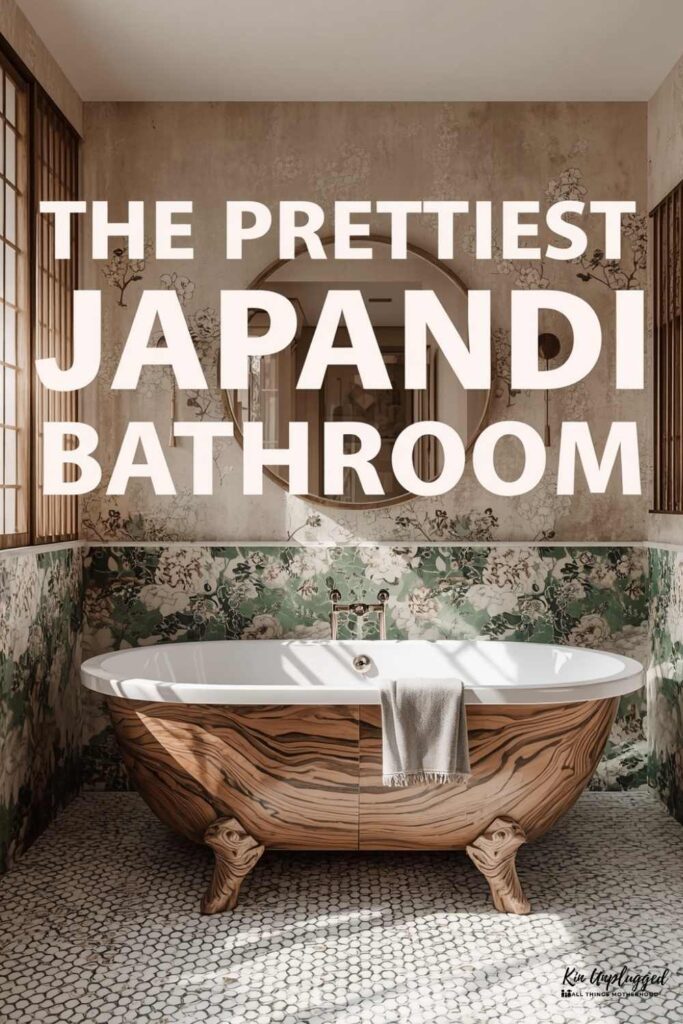
That is partly why Japandi bathroom design ideas have exploded recently.
They’re just softer. Simpler. More intentional. Like the room finally exhaled after years of holding tension in its shoulders.
READ: 59+ Hidden Storage ideas for instant home declutter
Japandi style combines Japanese simplicity with Scandinavian warmth. The result is a bathroom that feels practical but still beautiful enough to make brushing your teeth at night feel slightly less emotionally exhausting.
And thankfully, achieving the look does not require tearing down walls or importing handcrafted cedar tubs from a remote mountain village.
READ: Bathroom Decor Ideas for Different Family Styles
A few thoughtful changes can completely shift how the room feels.
If the bathroom currently feels cluttered, visually noisy or permanently damp no matter what happens, these ideas make a huge difference surprisingly quickly.
Keep colours soft enough that the room stops shouting
Japandi bathrooms work because the colours are gentle on the eyes.
Nothing competes aggressively for attention.
Think:
- warm whites
- oat tones
- muted taupe
- soft charcoal
- pale clay
- sandy beige
- natural wood
Not:
- icy grey everything
- bright white glare
- trendy neon accessories pretending to be personality
The goal is visual quietness.
Especially in family homes where the rest of the house already contains:
- noise
- movement
- questions being shouted through doors
A softer bathroom becomes a surprisingly important reset point during busy days.
Replace shiny finishes with textures that feel grounded
One of the biggest shifts in Japandi bathroom design ideas is reducing overly reflective surfaces.
Too much shine can make small bathrooms feel colder and busier.
Instead:
- matte tiles
- brushed metals
- unfinished wood textures
- linen shower curtains
- stone accessories
make the room feel calmer immediately.
And honestly, matte finishes also hide fingerprints better.
Which feels deeply relevant in homes containing children who somehow touch every surface simultaneously.
Use wood tones carefully so the bathroom does not start looking like a sauna
Japandi bathrooms love natural wood.
But there is a very fine line between:
peaceful spa energy
and:
Scandinavian woodland cabin where someone definitely owns an axe.
Balance matters.
The best approach is usually:
- one or two wood tones only
- lighter woods for smaller bathrooms
- darker woods sparingly
Oak, ash and bamboo work especially well.
Especially against softer neutral walls.
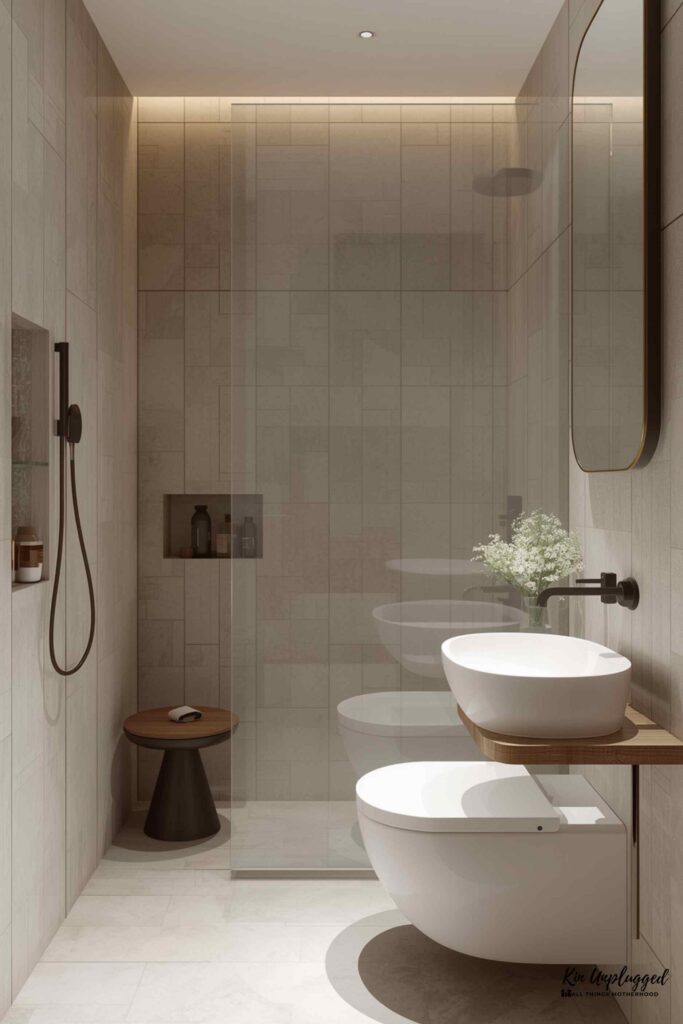
Let empty counter space exist
This sounds tiny. It is not tiny.
Most bathrooms feel stressful because every surface is carrying:
- skincare bottles
- electric toothbrushes
- mystery clips
- cotton pads
- abandoned hair ties
Japandi style works partly because surfaces breathe.
According to research published by the Princeton University Neuroscience Institute, visual clutter competes for attention and can increase feelings of overwhelm.
Even clearing 40 percent of visible countertop items changes the emotional feel of the room dramatically.
The bathroom starts looking more expensive immediately too.
Which is slightly annoying considering how much money people spend chasing that exact effect.
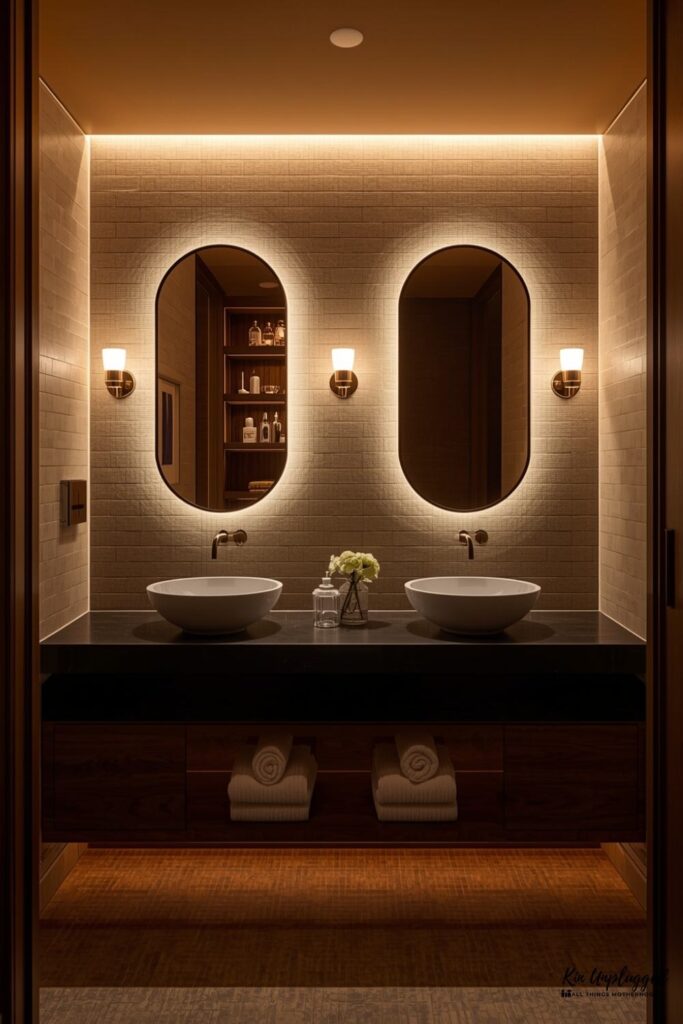
Use lighting that feels soft at night
Bright white bathroom lighting feels medically aggressive after 8pm.
Japandi bathrooms work best with layered softer light.
Try:
- warm LED bulbs
- wall sconces
- dimmable mirrors
- small lamps on shelves if space allows
Bathrooms should not feel like supermarket changing rooms.
Especially during:
- nighttime skincare
- early mornings
- exhausted parenting evenings
- Soft lighting changes the entire atmosphere.
Choose one beautiful everyday object and let it stand out
Japandi design is less about filling rooms with decor and more about allowing fewer things to matter visually.
One beautiful object has more impact than twenty random accessories.
This could be:
- a stone soap dispenser
- a wooden stool
- a sculptural vase
- a textured bath mat
- a handmade tray
The room feels more intentional instantly.
And there is less visual noise fighting for attention.
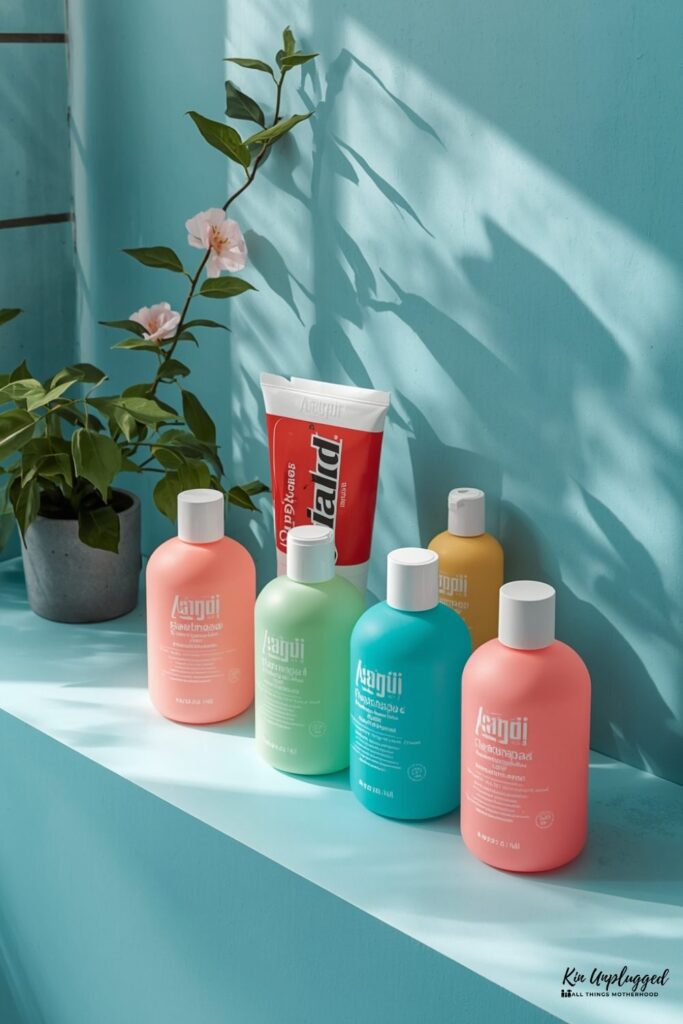
Stop storing products in their original packaging
This one changes bathrooms immediately.
Bright packaging destroys calm bathrooms faster than people realise.
Especially:
- neon cleaning bottles
- mismatched shampoo colours
- giant toothpaste boxes
Decanting products into matching containers makes a huge visual difference.
The eye stops processing twenty different colours and fonts every morning.
Floating vanities make bathrooms feel larger
Floating furniture creates visual breathing room underneath.
This matters especially in small bathrooms.
According to the National Kitchen and Bath Association, floating vanities are increasingly popular in compact bathrooms because they improve both storage efficiency and perceived spaciousness.
They also make cleaning easier.
Which matters deeply once you realise bathroom floors somehow collect:
- dust
- hair
- tiny damp sock lint colonies
at supernatural speed.
Use hooks instead of towel bars for family bathrooms
This sounds almost offensively practical.
But hooks work better for busy homes.
Children actually use hooks.
Towels dry faster too because they spread more naturally instead of becoming damp folded sadness tubes hanging beside the sink.
Wood or matte black hooks fit Japandi bathrooms especially well.
Add softness through fabric
Japandi rooms avoid excessive decoration.
But softness still matters.
The warmth comes through texture instead:
- waffle towels
- linen curtains
- woven baskets
- cotton bath mats
The room feels calmer without becoming sterile.
That balance is important.
Minimal bathrooms sometimes accidentally feel emotionally unavailable.
Japandi style avoids that beautifully.
Use closed storage whenever possible
Open shelving looks lovely online.
Then actual life arrives carrying:
- half-used toothpaste
- tangled chargers
- random medications
- approximately seventeen tiny child bath toys
Closed storage reduces visual fatigue dramatically.
Especially in smaller bathrooms.
A simple vanity cabinet often improves the entire room more than expensive decorative upgrades.
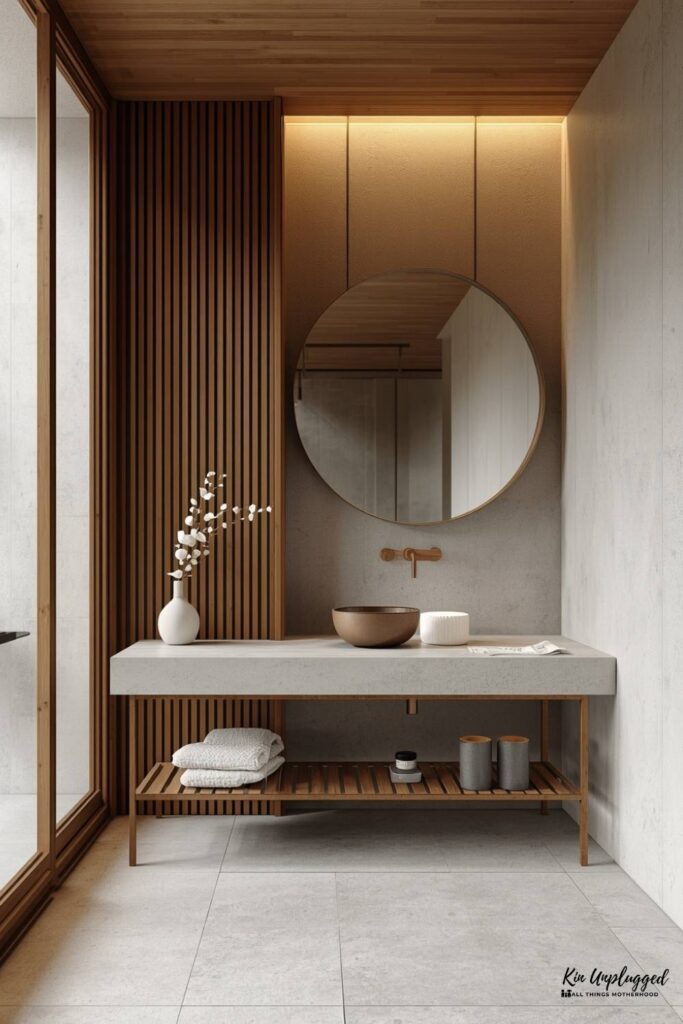
Let natural materials do the work
Japandi bathrooms rely heavily on texture and material instead of heavy decoration.
Think:
- stone
- wood
- ceramic
- linen
- concrete
- bamboo
These materials age beautifully too.
Which makes the bathroom feel more timeless instead of chasing trends that disappear faster than toddler socks in a tumble dryer.
Add a small stool even in tiny bathrooms
This is one of the most underrated Japandi bathroom design ideas.
A small wooden stool can become:
- towel storage
- bath-side surface
- child step stool
- decor moment
- practical seating
And visually, it softens the room beautifully.
Tiny furniture pieces with flexibility work extremely well in Japandi spaces.
Use mirrors that soften the room instead of dominating it
Large harsh mirrors can feel visually cold.
Japandi bathrooms tend to favour:
- rounded mirrors
- wood-framed mirrors
- pill-shaped mirrors
- softly curved edges
Curves matter because they visually soften smaller spaces.
Especially against tile and stone surfaces.
The room feels less rigid immediately.
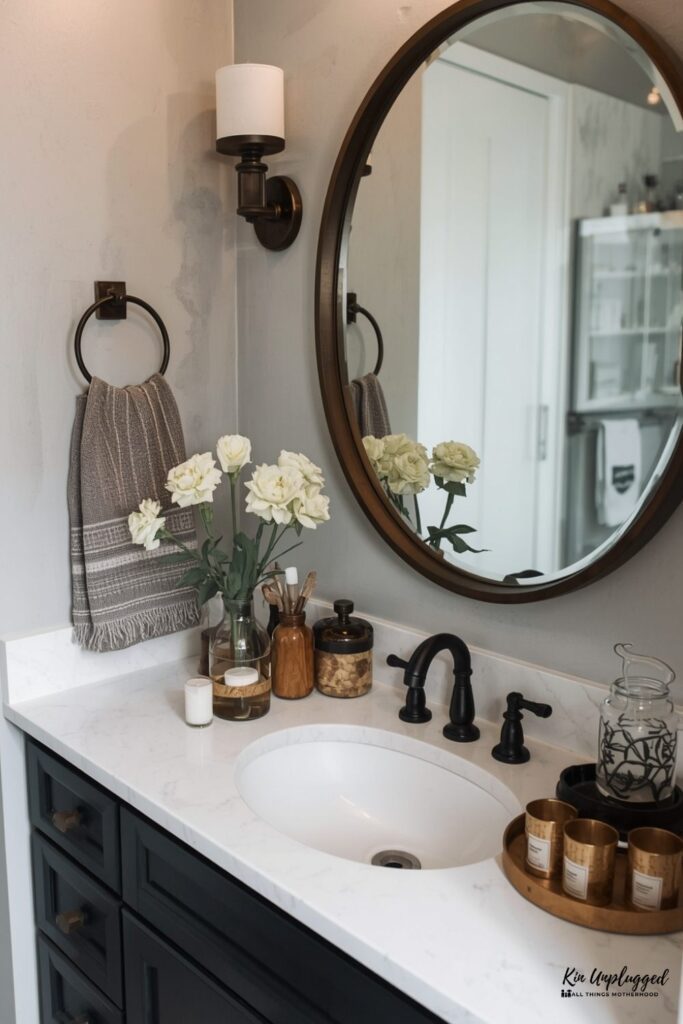
Hide daily clutter before buying more decor
This is where many bathrooms go wrong.
People buy:
- candles
- trays
- decorative jars
while the room still contains visible clutter everywhere else.
The result is visual traffic.
Hidden storage matters more than styling initially. Always.
Bring in one living thing if possible
Bathrooms can feel strangely lifeless sometimes.
A single plant changes that instantly.
Especially:
- eucalyptus
- pothos
- peace lilies
- bamboo
Humidity-loving plants work particularly well in bathrooms because they genuinely thrive there.
And visually, greenery softens hard surfaces beautifully.
Even one small plant near a sink changes the mood of the room.
Keep the floor as visible as possible
Small bathrooms feel cramped when the floor disappears under objects.
Too many:
- bins
- baskets
- scales
- stools
- storage towers
can visually shrink the room quickly.
Floating storage helps.
Wall-mounted pieces help.
Slim designs help.
The more visible floor space, the larger the bathroom feels psychologically.
Use one scent consistently
This sounds oddly specific but it works.
Hotels do this intentionally.
One consistent scent:
- eucalyptus
- cedar
- soft citrus
- hinoki wood
helps spaces feel calmer and more cohesive emotionally.
Often the calmest homes are not the biggest ones.
They are simply the ones designed around real life instead of visual perfection.
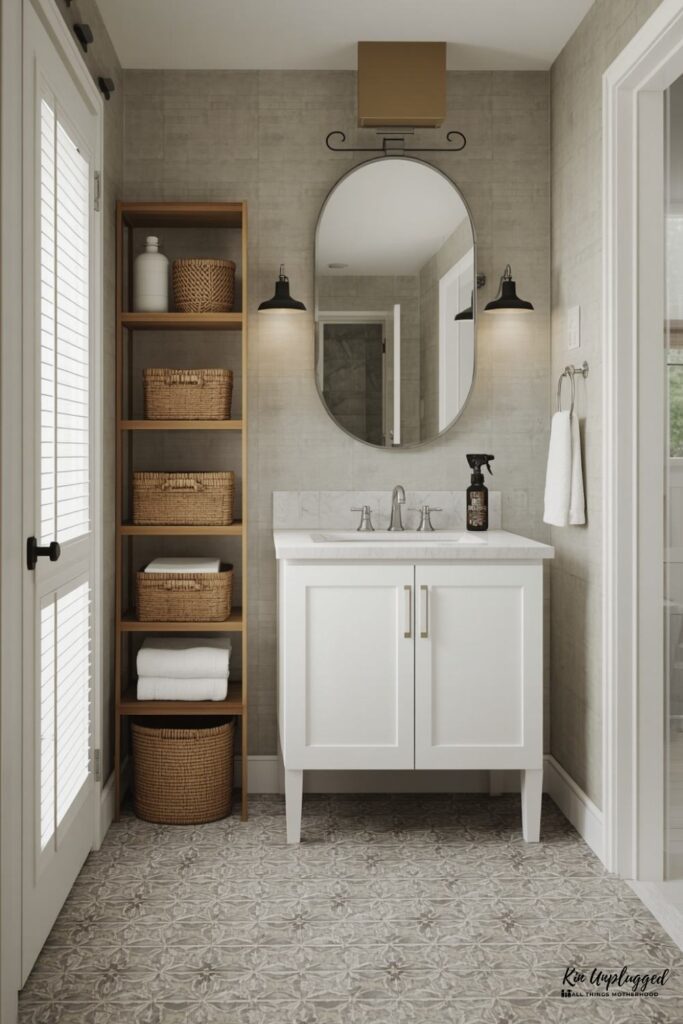
Frequently Asked Questions
What is Japandi bathroom style?
Japandi bathroom style combines Japanese simplicity with Scandinavian warmth. It focuses on natural materials, soft neutral colours, minimal visual clutter, practical storage and calming textures.
What colours work best in a Japandi bathroom?
Warm neutrals work best. Shades like beige, oat, soft white, clay, taupe, muted charcoal and natural wood tones help create the calm layered look associated with Japandi interiors.
Can Japandi style work in small bathrooms?
Yes. Japandi style actually works especially well in smaller bathrooms because it prioritises simplicity, visual calmness and space-saving functionality.
What materials are commonly used in Japandi bathrooms?
Wood, stone, bamboo, linen, ceramic and matte metals are all commonly used. Natural textures are important because they add warmth without adding visual clutter.
How do you make a bathroom feel more calming?
Reduce visual clutter, soften lighting, simplify colours, use natural textures and improve storage. Even small changes like matching containers and softer towels can significantly shift the atmosphere of a bathroom.
Bathrooms do not need to feel cold, cluttered or permanently mid-cleanup to function well for family life.
The best Japandi bathroom design ideas work because they quietly remove visual tension from the room. Things become softer. Simpler. Easier on tired eyes during busy mornings and long evenings.
And honestly, that matters more than trend perfection.
A calmer bathroom does not magically solve stress but it can make everyday routines feel slightly gentler around the edges.
Sometimes that tiny shift changes more than expected.
 0
0

 278
278