
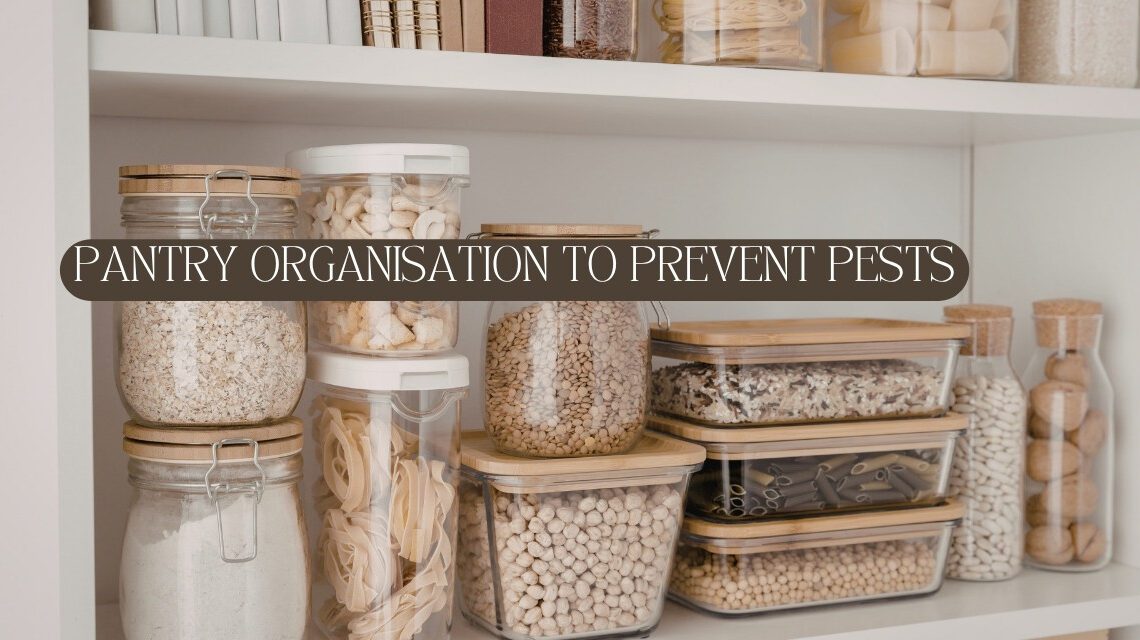
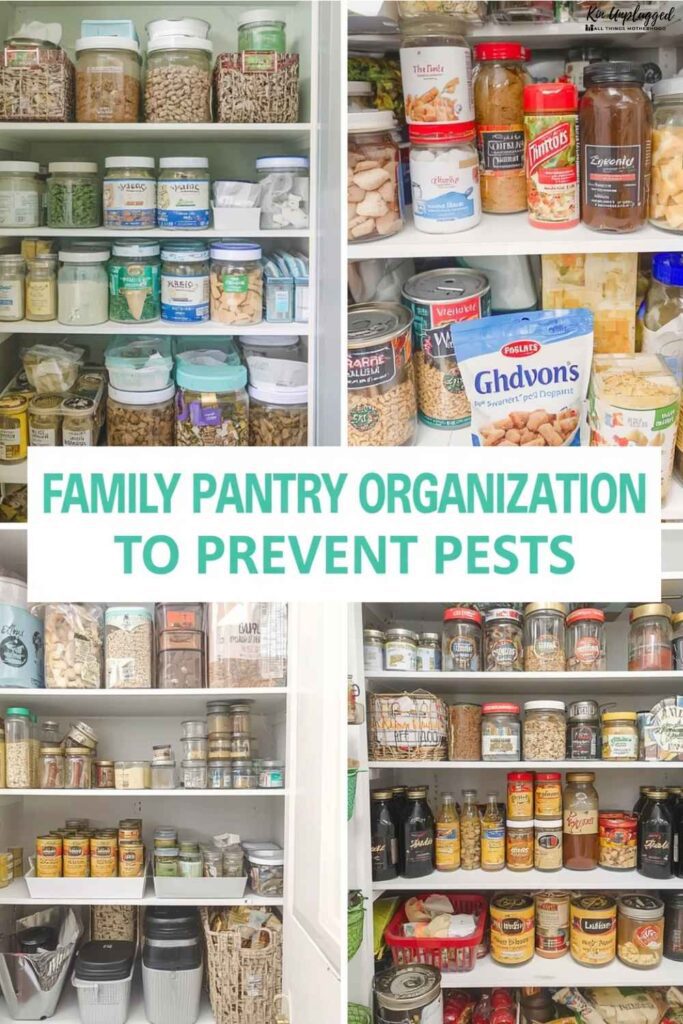
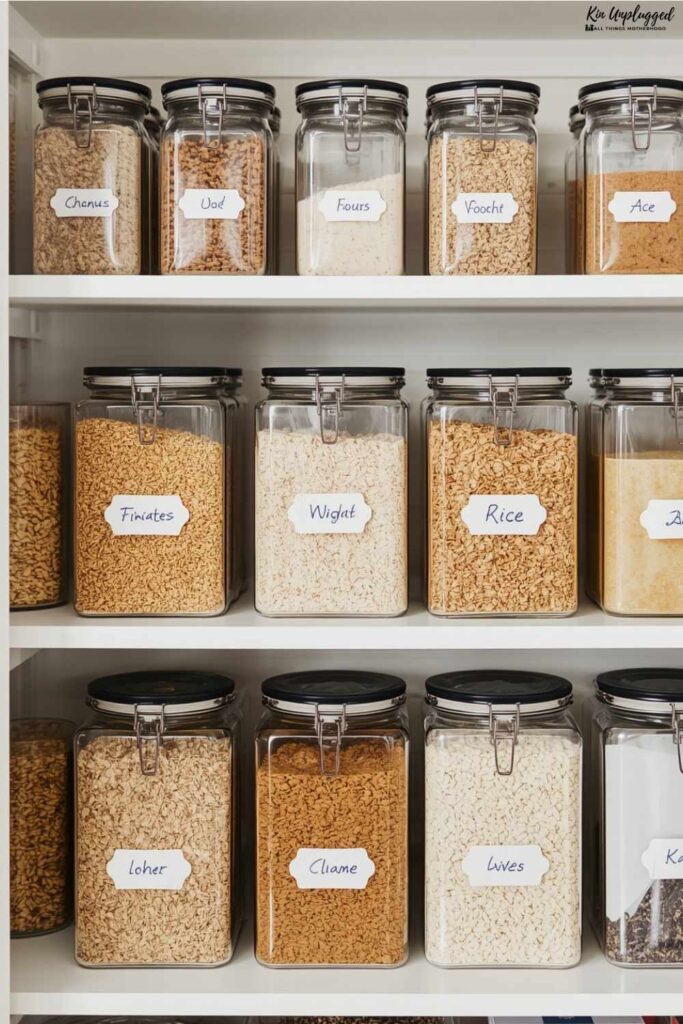
The best family pantry organization to prevent pests uses airtight containers for vulnerable food, labels that show what must be used first and shelving that leaves every package visible. Start with flour, cereal, rice, pasta, oats, nuts, dried fruit, baking ingredients, pet food and birdseed, because open packets and forgotten corners give pantry pests the easiest hiding places.
READ: 10 Pantry Organization Ideas That Look Like They’re From a Magazine
There is no need to decant every stock cube into a matching jar and begin living like the pantry has secured its own television deal. Protect the high-risk foods first, stop packets disappearing behind one another and make a five-minute inspection possible.
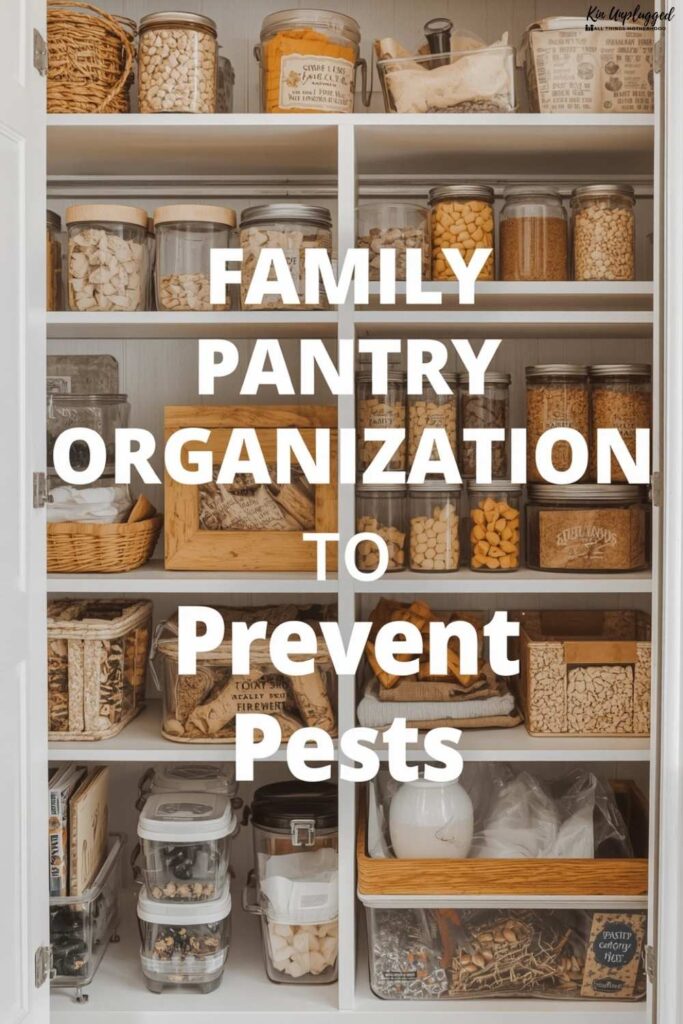
The buying order matters. Containers block access, labels support rotation and shelving exposes spills, damaged packaging and food that has quietly retired from active family life.
Some purchases may earn a commission at no extra cost to you.
Family Pantry Buying and Planning Table
A pest-resistant pantry is easier to build in stages than through one enormous order of containers selected at 11:40 p.m. because a woman on social media had seventeen identical jars and no visible cereal dust.
Measure the shelves first. Then count the foods that are already open, frequently used or sold in thin bags and cardboard boxes.
| Pantry problem | Best product to buy first | Useful feature | Good starting quantity | Skip this mistake |
|---|---|---|---|---|
| Open flour, oats and rice bags | Large airtight rectangular containers | Silicone gasket or locking lid | 3 to 5 | Buying containers too small for a full packet |
| Several half-used baking packets | Medium airtight containers | Wide opening and stackable shape | 4 to 8 | Using deep bins that hide small packets |
| Cereal boxes taking over a shelf | Tall cereal containers | Easy-pour lid with a proper seal | 2 to 4 | Buying tall containers before measuring shelf height |
| Snacks disappearing behind snacks | Clear handled bins | Low front or pull-out handle | 3 to 6 | Using opaque baskets for food rotation |
| Dates and ingredients forgotten | Label maker or waterproof labels | Easy-to-read print and removable tape | 1 system | Labelling only the food name |
| Double-stacked tins and jars | Expandable shelf risers | Stable feet and wipe-clean surface | 2 to 4 | Placing heavy glass on an unstable riser |
| Deep pantry shelves | Pull-out bins or drawers | Full extension and front handle | 2 to 5 | Installing a drawer that blocks the door hinge |
| Small jars and sauces | Turntable | Raised edge and non-slip base | 1 to 3 | Using it for tall, unstable glass bottles |
| Pet food or birdseed | Thick plastic, glass or metal container | Tight lid and easy scoop access | 1 per food | Leaving the original sack open beside the container |
| Family snack access | Low clear bins with category labels | Rounded edges and washable finish | 2 to 4 | Putting allergy-sensitive food in a shared loose bin |
The best first purchase is a set of rectangular airtight containers in several useful sizes, not twenty-four tiny matching pots. Rectangular containers use shelf space efficiently and line up without leaving the strange triangular gaps that apparently exist only to collect lentils.
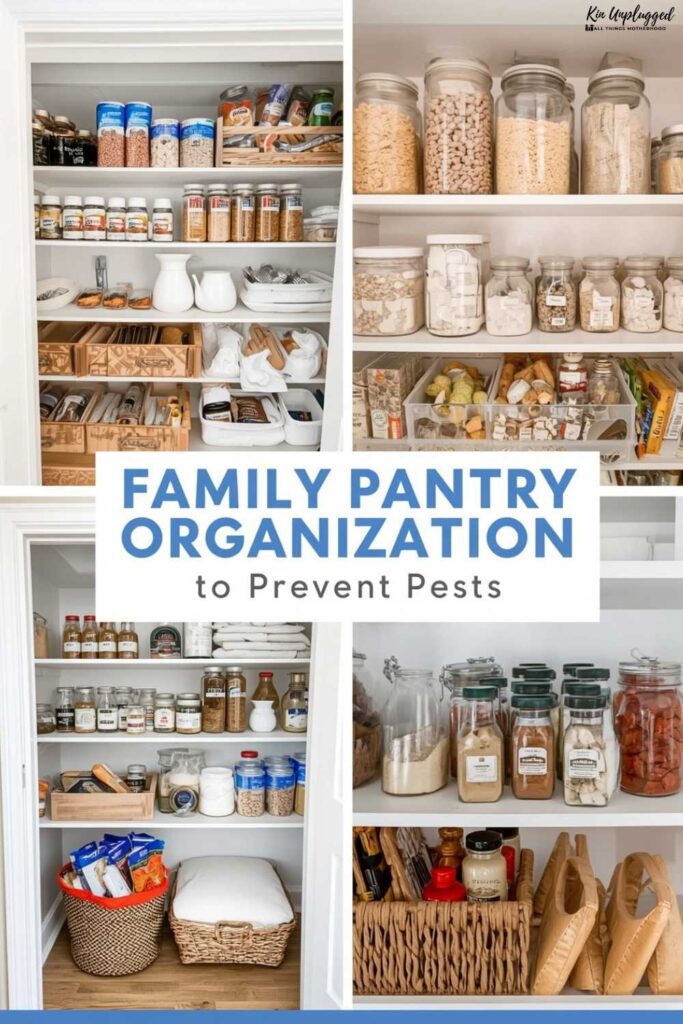
The Three-Part Pantry System That Prevents Problems
Containers, labels and shelving each solve a different problem. Buying only one category produces a pantry that looks organized for three days and then returns to its natural state, which is usually one open bag of pasta leaning against a jar of something nobody remembers purchasing.
Containers Protect the Food
Pantry moths and pantry beetles may arrive inside infested dry goods, so a clean home is not a guarantee against them. The goal of a sealed container is to isolate vulnerable food, limit spread and make signs of activity easier to spot.
The University of Minnesota Extension recommends tightly closed glass, metal or heavy plastic containers for insect-free dry foods. It also advises inspecting packages, using older products first and cleaning crumbs and spills promptly.
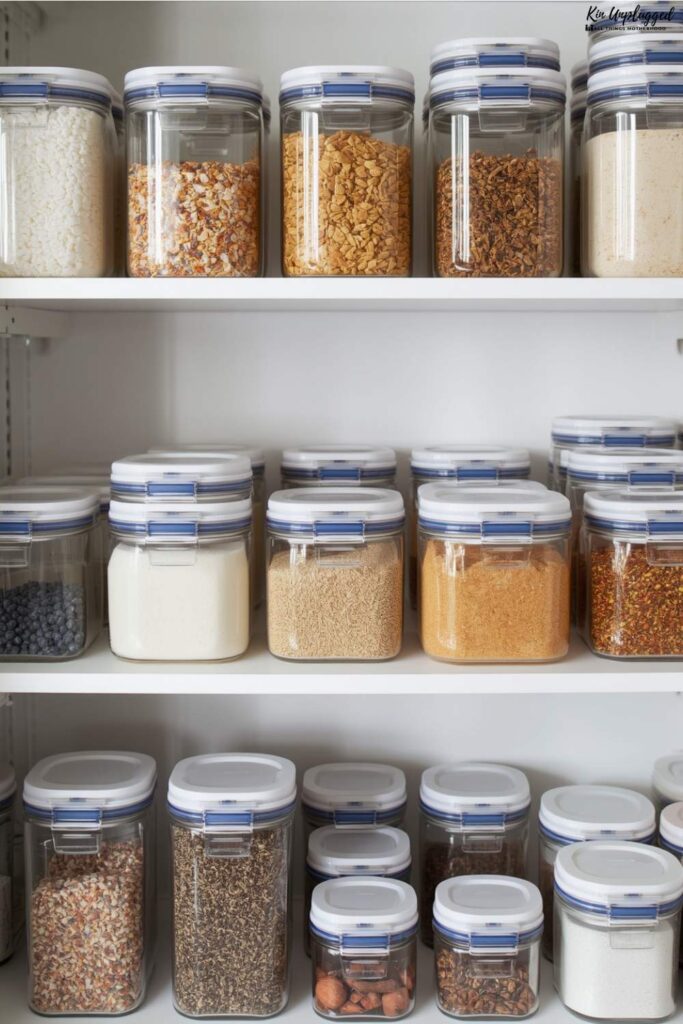
A lid that merely rests on top is not the same as a tight seal. Look for locking clips, a compression seal, a silicone gasket or another closure that remains secure after repeated family use.
Labels Control Rotation
A container without a date can become a very attractive retirement home for half a bag of couscous. Labels should reduce guessing, not just announce that flour is flour.
The U.S. Environmental Protection Agency recommends storing grains in airtight containers and labelling them with the contents and dates. A simple date system helps older stock move forward before new packets are opened.
For decanted food, record the product name and the date it was opened or transferred. Keep important allergen information, cooking directions, best-before details and batch information from the original package until the food is finished.
Shelving Makes Inspection Possible
Shelving does not stop insects by itself. It stops the hiding, forgetting and stacking patterns that allow spills and damaged packets to remain untouched.
A shelf riser turns one crowded level into two visible rows. A pull-out bin brings the back of a deep shelf forward, rather than requiring someone to kneel on the floor and reach behind three tins of tomatoes like a person disarming a small domestic device.
The best shelving leaves gaps visible and surfaces wipeable. Decorative storage that blocks the view of every corner may look calm, but pests are not known for respecting aesthetics.
Which Pantry Foods Need Airtight Containers First?
Not every item needs to leave its original packaging. Tins, unopened jars and sturdy sealed packs can usually remain as they are until opened.
The first containers should go to foods that are dry, frequently opened, kept for several weeks or sold in packaging that does not reseal well.
| Food category | Pest risk in normal pantry use | Best container style | Label details to keep |
|---|---|---|---|
| Flour and baking mixes | High after opening | Wide rectangular airtight container | Type, opening date, best-before date |
| Rice and grains | High after opening | Tall or medium locking container | Type, cooking ratio, date |
| Oats and cereal | High after opening | Tall easy-pour container | Product, date, allergen details |
| Pasta and noodles | Moderate to high | Tall container or sealed modular box | Cooking time and date |
| Nuts and seeds | Moderate | Small airtight container | Product, opening date, storage instructions |
| Dried fruit | Moderate | Medium airtight container | Product, date, allergen warning |
| Chocolate chips and baking decorations | Moderate | Small clear locking container | Type and date |
| Herbs and spices | Moderate over long storage | Small jars with tight lids | Name and purchase date |
| Crackers and biscuits | Moderate after opening | Medium shallow container | Product and date |
| Pet food and treats | High attraction value | Thick container with tight lid | Product, batch details, date |
| Birdseed | High attraction value | Thick container with tight lid | Product and purchase date |
| Unopened tins and glass jars | Low | Original packaging on risers | Best-before date facing forward |
Flour, cereal, rice and pet food deserve the first four containers in most family homes. These foods are opened often, produce crumbs and may sit long enough for a small problem to become a cupboard-wide announcement.
Keep New and Old Stock Separate
Do not pour a new packet directly on top of an older product. Finish the older food, wash and dry the container, then refill it.
Mixing batches removes the date trail and can spread a hidden problem into new food. It also produces the pantry equivalent of an archaeological site, with oats from several periods of family history occupying the same container.
How to Choose Airtight Pantry Containers
A product-led pantry plan should start with function, because a beautiful lid that stops sealing after six uses is just a decorative hat.
Look for a Reliable Seal
Check that the lid closes evenly on all sides. Locking clips and compression lids are useful because the closed position is obvious.
Push-button lids can be convenient, but the sealing parts must remain clean and correctly assembled. Read the care instructions before placing lids in a dishwasher.
Match Container Size to Packet Size
Measure common grocery packets before ordering. A container should hold the full packet with some headroom, or a new storage problem appears immediately: one mostly full jar and a small remainder bag wandering around without adult supervision.
Large containers suit flour, rice, cereal and pet food. Medium sizes suit pasta, oats, crackers and dried fruit, while small sizes suit nuts, seeds, baking decorations and spices.
Choose Clear Sides Where Possible
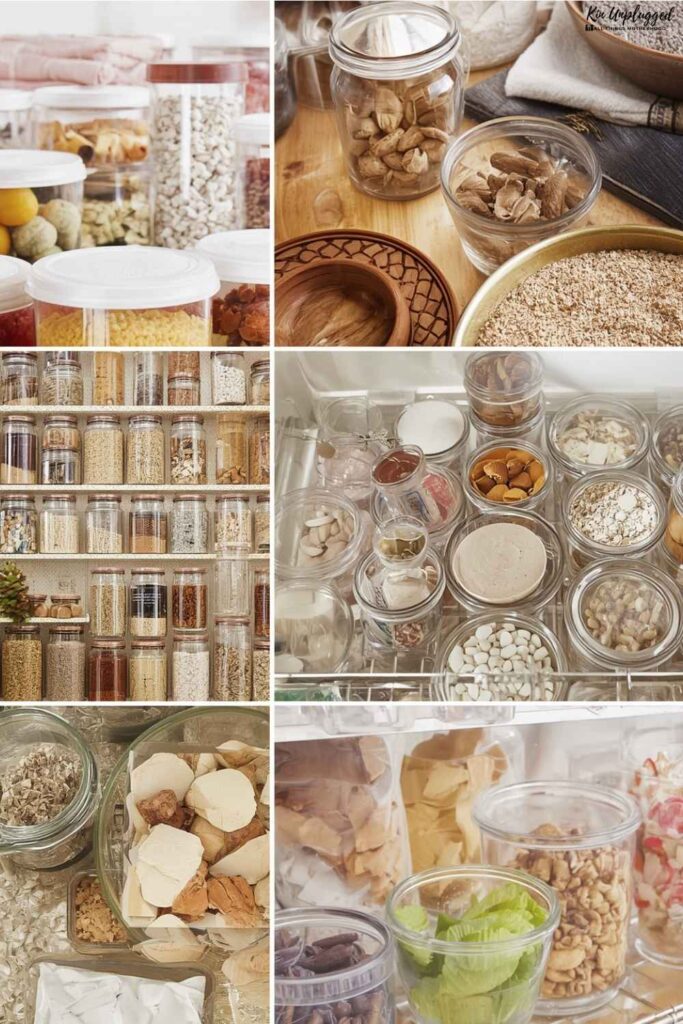
Clear containers show quantities, crumbs, webbing and movement sooner than opaque bins. Visibility also reduces duplicate purchases.
Opaque storage may still suit products affected by light, but the food manufacturer’s storage directions should lead that decision. The label and date need to remain visible from the normal standing position.
Use Glass Selectively
Glass is easy to inspect and does not retain odours easily, but it is heavy. It belongs on stable lower or middle shelves, especially in homes with young children.
Plastic is lighter and often more practical for cereal and high shelves. Metal can work well for animal food, bulk flour and areas with a history of gnawing, provided the lid closes tightly.
Buy Modular Shapes, Not Necessarily Matching Sets
A modular system uses a small number of footprints that stack safely. The heights can vary while the lids and bases align.
Matching every container is optional. A pantry can prevent pests while containing jars from more than one collection; nobody from the council is coming to inspect the visual continuity of the quinoa.
The Best Label System for a Busy Family Pantry
The label system needs to survive rushed breakfasts, grocery unloading and children who interpret “put it back” as a broad philosophical suggestion.
Use large text, predictable placement and no more information than the family will actually maintain.
Front Label: The Food Name
Place the food name on the front, close to the top. The wording should be readable without pulling the container out.
For similar foods, use exact names such as self-raising flour, plain flour and bread flour. “White powder” is not a useful household category and may lead to several uncomfortable explanations.
Back or Lid Label: The Date
Add the opening or transfer date on the back, lid or lower front corner. Removable label tape, a washable marker panel or a small date sticker all work.
Use one date format throughout the pantry. Day, month and year avoids arguments with imported packaging and the sudden discovery that nobody knows if 04/07 means April or July.
Preserve Safety and Cooking Information
A label maker does not replace the original food information. Keep a clipped section of the packet, photograph the back label or place the folded package behind the container.
This matters for allergens, preparation instructions, best-before information and product recalls. A gorgeous row of blank-sided containers is less useful when three family members are standing over a saucepan asking how much water the grains need.
Add One Family Use Label Where It Helps
A second category label can guide family routines: breakfast, lunchbox, baking, dinner, snacks or refill first. Use category labels on bins and exact food labels on containers.
Allergy-sensitive foods need a distinct zone and clear wording. A colour cue can support the text, but colour alone should not carry the full message.
Shelving Products That Improve Pest Prevention
The right shelving exposes the pantry rather than packing more food into it. Capacity is useful only when every item remains reachable, dated and inspectable.
Expandable Shelf Risers
Shelf risers work best for tins, jars and short containers. They keep the back row visible and reduce double stacking.
Choose sturdy, washable models with non-slip feet. Heavy glass should remain on the original shelf unless the riser is specifically designed for the weight.
Pull-Out Pantry Bins
Clear pull-out bins suit deep shelves, snack packets and small baking supplies. Handles make the entire group easy to inspect.
Use one category per bin. A bin labelled “things in packets” will eventually contain popcorn, stock cubes, birthday candles and the instruction booklet for the toaster.
Turntables
Turntables suit oils, sauces, spreads and small jars when the shelf has enough height. A raised edge reduces the chance of an item sliding off during rotation.
Keep tall glass bottles away from fast-spinning family members. The turntable should reveal products, not launch balsamic vinegar into a new phase of its career.
Under-Shelf Baskets
Under-shelf baskets can hold flat, light items such as wraps, spare labels or unopened snack bars. They use vertical space without requiring permanent installation.
Avoid placing loose flour bags or heavy tins overhead. Products above eye level should be light, secure and simple to lift down.
Door Racks
Pantry door racks suit light packets, wraps and small sealed products. Check that the door can close without crushing food against the shelf edge.
Avoid overloading the hinges. A door carrying the full weight of a small supermarket may begin to sag, which is an expensive way to store paprika.
A Product-Led Buying Plan for Three Budgets
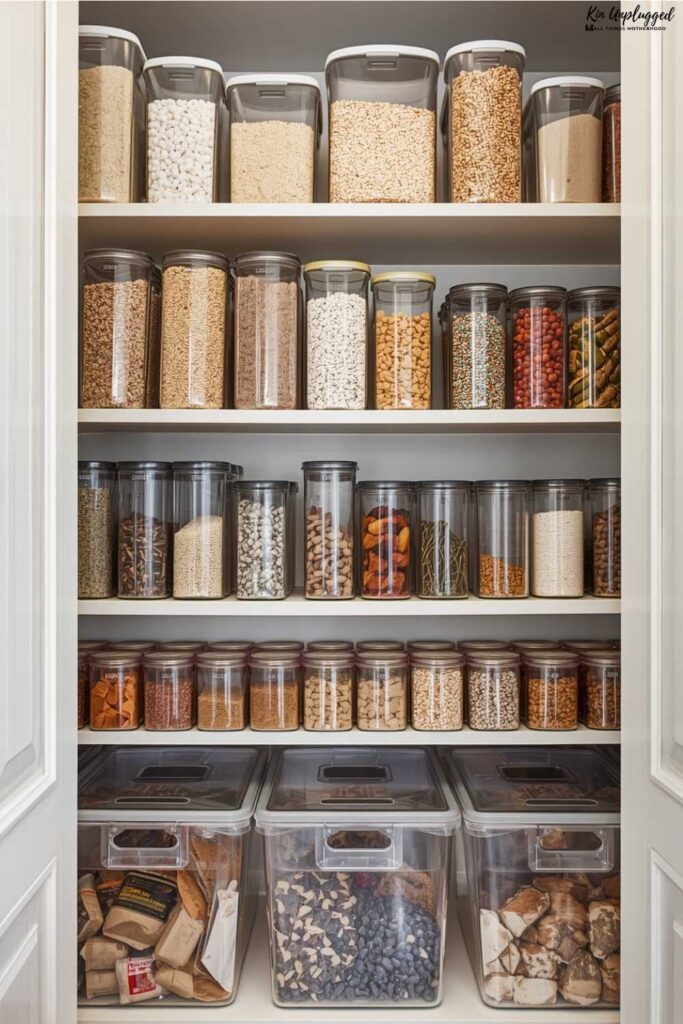
The smartest pantry does not need to be finished in one weekend. A staged purchase gives each product a job and prevents expensive organizers from becoming empty plastic monuments to good intentions.
| Budget level | Buy first | Add next | Result |
|---|---|---|---|
| Starter reset | 4 airtight containers, removable labels, 2 shelf risers | 2 clear bins | Protects core dry foods and opens shelf visibility |
| Family system | 8 to 12 mixed-size containers, label maker, 3 to 4 risers, 4 bins | 1 turntable and 1 pet-food container | Covers breakfast, baking, grains and snacks |
| Full pantry refit | Modular container set, durable label system, adjustable risers, pull-out drawers | Door storage and overflow zone | Supports stock rotation across a large household pantry |
Starter Reset
Begin with flour, cereal, rice and oats or pet food. Add one label format and two shelf risers for tins and jars.
This version handles the most important risks without turning the kitchen floor into a container distribution centre. It can be completed shelf by shelf.
Family System
Add medium containers for pasta, baking supplies, nuts and dried fruit. Clear bins can hold lunchbox food and unopened refills.
A label maker becomes worthwhile once more than six containers need regular date changes. Choose removable, water-resistant tape so the system can change with family habits.
Full Pantry Refit
A large pantry benefits from pull-out storage, a defined overflow section and one shelf left partially open. Empty space makes inspection and grocery unloading easier.
Do not fill every centimetre simply because a shelf exists. Food needs a visible route in and out, rather than a long-term tenancy agreement behind the pasta sauce.
Organize the Pantry in Family Decision Zones
Categories should follow the way food is used. Alphabetical organization sounds disciplined until breakfast cereal is living between bicarbonate of soda and birthday sprinkles.
Breakfast Zone
Keep cereal, oats, spreads and breakfast extras together. Frequently used containers should sit between waist and shoulder height.
Put refills behind or above the active container, with the oldest date at the front. A breakfast bin can hold small packets that would otherwise slide under cereal boxes.
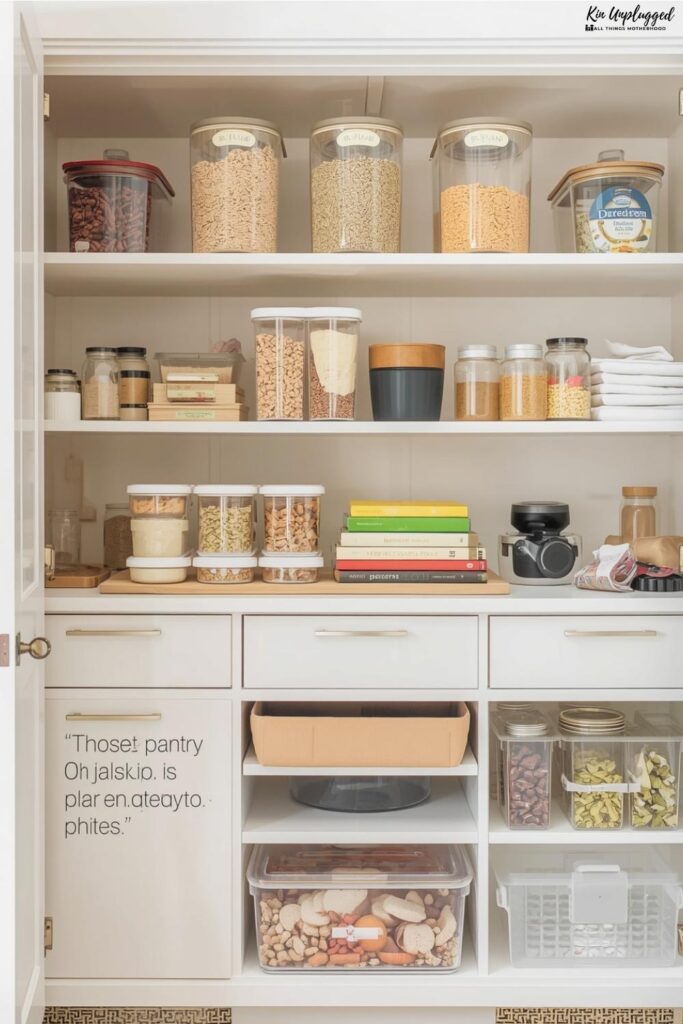
Lunchbox Zone
Use clear handled bins for packaged snacks, wraps and small lunch supplies. Separate everyday choices from occasional treats if that reflects the household routine.
Do not remove allergen labels from individually wrapped foods. The original packaging may be important for school policies and family safety.
Baking Zone
Store flour, sugar, raising agents, chocolate chips and decorations together. Wide openings make scooping easier and reduce spills around the rim.
Keep tiny packets in a shallow bin rather than a large deep container. Nobody should have to excavate three years of cupcake cases to find the yeast.
Dinner Zone
Group rice, pasta, grains, noodles and meal bases. Add cooking instructions to the back label when the original packaging is removed.
Shelf risers work well for tins and jars behind these containers. Face best-before dates forward during the weekly reset.
Snack Zone
Use a limited number of bins that children can return without rearranging the pantry. Labels such as fruit snacks, crackers and weekend treats are clearer than vague lifestyle categories.
Choose washable bins with smooth corners. Crumbs in woven baskets are surprisingly committed to staying there.
Overflow Zone
Keep unopened duplicate products in one clearly marked section. This prevents four open cereal boxes and the annual discovery of five jars of mustard.
The overflow shelf should be checked before shopping. A simple “use next” label can move older packages into the active zone.
The Weekly Five-Minute Pest Prevention Routine
The pantry does not need a dramatic monthly reinvention. A short routine catches the useful signs: crumbs, spills, open packets, damaged packaging and dates moving out of view.
Minute One: Scan the Shelves
Look for moths, beetles, larvae, webbing, holes, droppings or gnawing. Check shelf corners and the area beneath bins.
Any suspicious food should be isolated before the rest of the pantry is disturbed. Do not pour it into a clean container to investigate later.
Minute Two: Close Every Package
Check clips, zips, lids and container gaskets. Move vulnerable open food into a suitable sealed container.
A packet folded twice and held closed by optimism is not a storage system. It is an invitation printed in cereal dust.
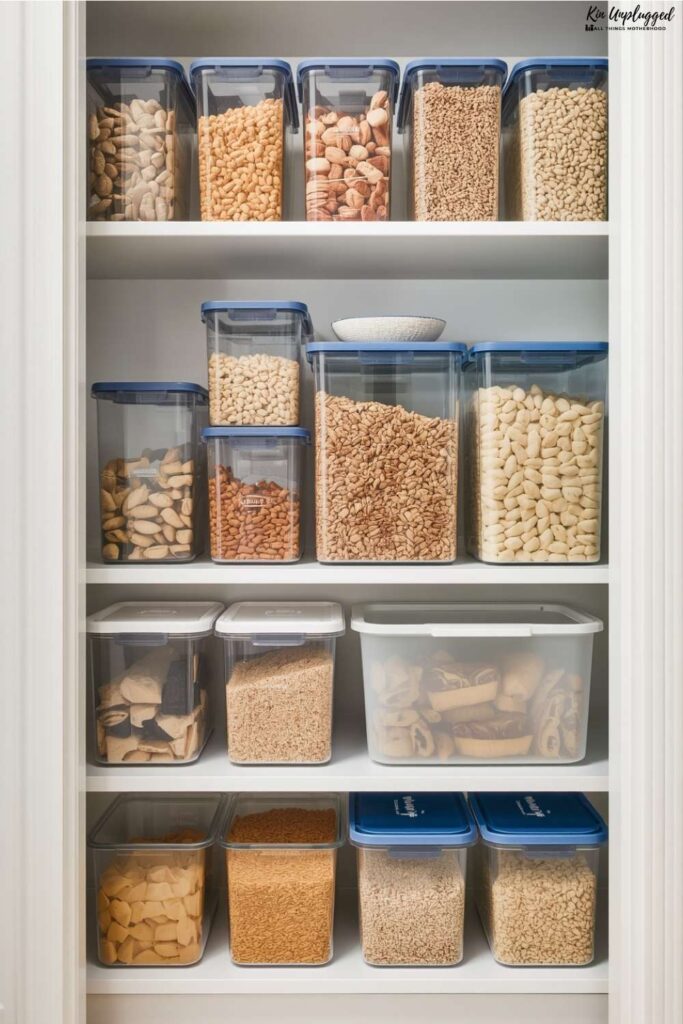
Minute Three: Wipe Crumbs and Spills
Lift the front bins and wipe the exposed shelf. Clean sticky jar bases and remove loose food from corners.
The University of Minnesota Extension advises cleaning spills promptly and vacuuming cupboard cracks and corners during pest clean-up. Regular access to those areas is one reason shelving visibility matters.
Minute Four: Rotate the Dates
Move older products forward and newer products behind them. Put any soon-to-expire ingredient into the next meal plan.
This is where labels earn their shelf space. A date seen every week is more useful than a perfect script label hiding behind a container.
Minute Five: Check the Floor and Pet Zone
Sweep loose food and inspect animal-food containers. Pet food and birdseed need the same level of protection as family staples.
Water bowls and feeding areas should remain separate from dry pantry storage. Damp crumbs can turn a small oversight into a highly attended insect event.
What Not to Buy for a Pest-Resistant Pantry
Product-led organization works best when it also identifies the purchases that solve nothing.
Huge Matching Sets Before Measuring
A large set may contain several sizes that do not match the food or shelves. Measure first, list the high-risk foods and buy around those needs.
A bargain is less impressive when nine containers are living empty in a garage because they are too short for spaghetti and too tall for everything else.
Decorative Baskets for Loose Dry Food
Baskets can group sealed packets, but they do not replace airtight containers. Woven materials also hold crumbs and obscure shelf corners.
Use washable clear bins for vulnerable family food. Decorative baskets can hold napkins, unopened paper goods or items that do not shed edible dust.
Containers With Complicated Lids
A seal that requires six separate pieces may not survive daily use. Every part should be easy to remove, clean, dry and reassemble.
Read the product care instructions before purchase. Moisture trapped inside a lid is not an organizational achievement.
Labels That Cannot Be Updated
Permanent labels look finished until the container changes from rice to oats. Removable tape or wipeable date sections keep the system useful.
The food name can be permanent only when the container has one permanent job. Dates should always be easy to replace.
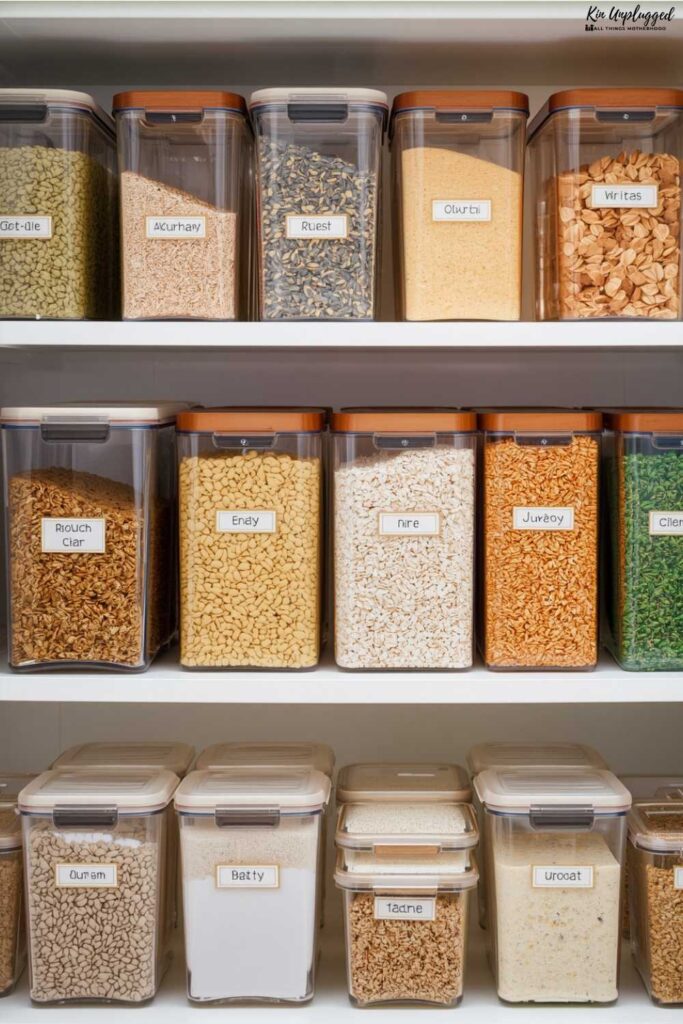
Shelving That Blocks Cleaning
Heavy fixed organizers can make corners impossible to reach. Choose products that lift, slide or pull out for inspection.
Pest prevention depends on access. A shelf that cannot be cleaned without three tools and a family meeting is not helping.
What to Do When Pantry Pests Are Already Present
Organization prevents many problems and limits spread, but it does not rescue infested food. The source has to be found and removed.
Isolate the Suspicious Product
Seal the affected package inside another bag or container before moving it. Inspect nearby dry foods, including unopened paper and thin plastic packaging.
Pantry pests can affect flour, grains, cereal, pasta, nuts, dried fruit, spices, pet food and birdseed. Check every likely food source rather than stopping at the first packet.
Discard Infested Food
Do not keep visibly infested food for cooking. Follow local waste guidance and place discarded products in a sealed rubbish bag.
If rodent droppings or gnawing are present, pantry organization alone is not enough. The CDC advises storing food in thick plastic, glass or metal containers with tight lids and sealing access gaps around the home.
Empty and Clean the Area
Remove containers and shelf products. Vacuum cracks and corners, then dispose of the vacuum contents promptly according to local guidance.
Wash and dry shelves before restocking. Do not return food until every package has been inspected.
Use Traps Only for Their Proper Job
Penn State Extension notes that pheromone traps can help detect Indian meal moth activity but do not provide control. They are a monitoring tool, not a tiny cardboard extermination department.
Avoid spraying pesticides around food as a substitute for cleaning and removal. The EPA advises trying pest prevention first by removing sources of food, water and shelter and storing food in sealed containers.
A 30-Minute Pantry Reset That Can Be Finished Today
A full pantry makeover is not required before the system begins working. One shelf can be corrected in half an hour.
First Ten Minutes: Remove and Sort
Take out one category only, such as breakfast food or baking supplies. Discard empty packaging and isolate anything suspicious.
Group unopened refills separately from active food. Do not empty the entire pantry unless enough time exists to finish it.
Next Ten Minutes: Container and Label
Transfer the highest-risk open foods into clean, completely dry airtight containers. Add the food name and transfer date.
Preserve cooking, allergen and best-before information from the original packaging. Place the active containers at the front.
Final Ten Minutes: Add Visibility
Install one shelf riser or pull-out bin. Wipe the exposed shelf and return only the products that belong in that zone.
Leave a small gap at the side or back for quick inspection. The goal is not to make the shelf look full; the goal is to make every problem easy to see.
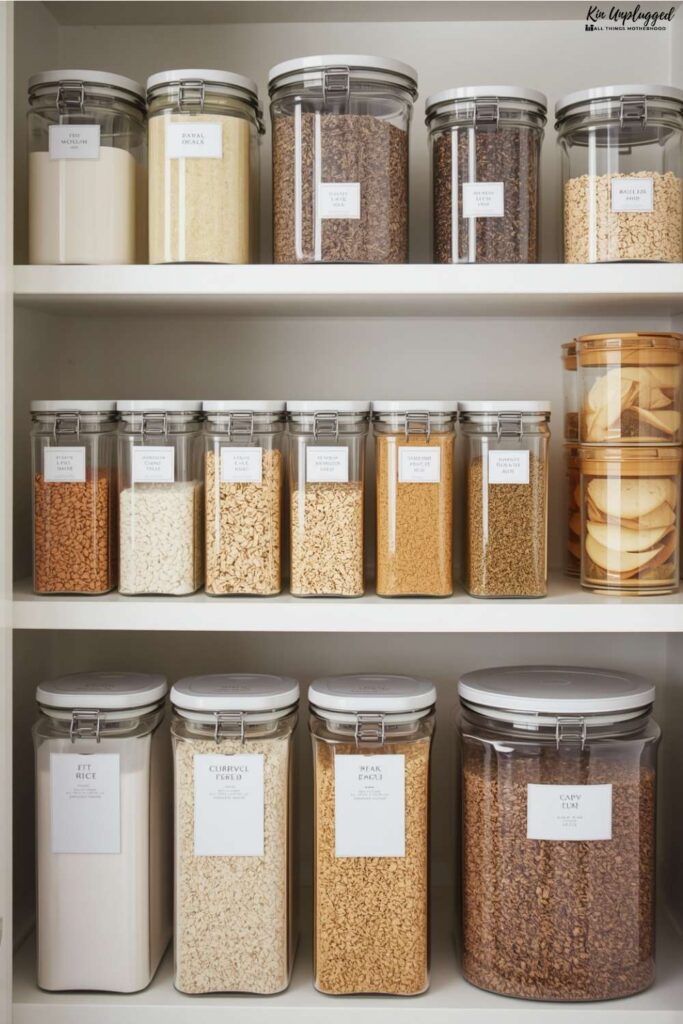
The Three Purchases With the Highest Payoff
First: medium and large airtight rectangular containers. They protect the foods most likely to remain open and make quantities visible.
Second: a removable label system that includes dates. It supports rotation, shopping decisions and safe identification after decanting.
Third: sturdy shelf risers or pull-out bins. They expose the back of the pantry and make crumbs, damaged packs and duplicate products harder to ignore.
Everything else can follow the way the family actually uses the space. A good pantry system grows from repeated daily actions, not from a single afternoon spent arranging pasta by emotional tone.
Stay Connected to Better Family Systems
The email list continues the conversation around practical family spaces, useful purchases and routines that hold up after the first tidy week. Stay close for ideas built around real cupboards, real grocery habits and the deeply unreasonable number of snacks required to leave the house with children.
Frequently Asked Questions About Family Pantry Organization to Prevent Pests
How Do I Organize My Pantry to Prevent Bugs?
Store vulnerable dry food in tightly sealed containers, label it with dates, rotate older products forward and keep shelf corners easy to inspect. Clean crumbs and spills promptly, including around pet food and birdseed.
What Containers Are Best for Keeping Pantry Pests Out?
Tightly closed glass, metal or heavy plastic containers are the strongest options for dry food. Look for locking lids, silicone gaskets or another seal that closes firmly and consistently.
Can Pantry Moths Get Into Airtight Containers?
A properly sealed container can isolate food and reduce spread, but food may already contain eggs or larvae before it is transferred. Inspect new packages, clean containers between batches and never mix new food into old food.
Can Pantry Pests Get Into Unopened Packages?
Some pantry pests may be present in food before purchase, and thin packaging can also become damaged. Check packages for holes, webbing, insects or broken seals before buying and again before pantry storage.
Which Foods Attract Pantry Pests?
Common problem foods include flour, cereal, grains, rice, pasta, oats, nuts, dried fruit, spices, chocolate, pet food and birdseed. Any forgotten dry food can become a source, including products used only for occasional baking.
Is Glass or Plastic Better for Pantry Storage?
Both can work when the container has a tight lid and suits the shelf. Glass is easy to inspect but heavy, while thick plastic is lighter and often safer for high shelves and family snack zones.
What Should Pantry Container Labels Include?
Use the product name, opening or transfer date and best-before information. Preserve allergen details, cooking directions and batch information from the original package when they may be needed.
How Often Should a Family Pantry Be Cleaned?
Spills and crumbs should be cleaned as soon as they appear, with a short shelf inspection each week. A deeper clean can follow the household’s use level, but corners, cracks and pet-food areas should never wait for a decorative pantry reset.
Do Bay Leaves Keep Pantry Bugs Away?
Bay leaves should not replace sealed storage, inspection and cleaning. The dependable system is removing infested food, using tight containers, cleaning spills and checking new dry goods.
Should Pantry Food Be Decanted Into Containers?
Open high-risk dry foods benefit most from decanting into airtight containers. Unopened tins, jars and sturdy sealed packages can remain in their original packaging until needed.
How Can a Deep Pantry Be Organized to Prevent Pests?
Use pull-out bins, shallow category groups and shelf risers so the back remains visible. Avoid deep opaque baskets that hide crumbs, open packets and expired food.
Do Pantry Moth Traps Get Rid of an Infestation?
Pheromone traps can help monitor Indian meal moth activity, but they do not remove infested food or clean the pantry. The food source still has to be found, discarded and followed by a full inspection.
How Should Pet Food Be Stored in a Pantry?
Keep pet food in a thick container with a tight lid and preserve the original product and batch information. Clean spilled pieces promptly and inspect the scoop, lid and surrounding floor during the weekly reset.
Finally…
A pest-resistant family pantry does not need to resemble a showroom. It needs containers that seal, labels that answer useful questions and shelving that refuses to let food disappear.
Start with the four most vulnerable foods, add dates and open the sightlines around them. The result is a pantry that protects groceries, shortens shopping decisions and makes the first warning sign much harder to miss.
 0
0

 278
278