


If your toddler is straining, crying, or avoiding the potty altogether, you’re not alone. Chronic constipation in toddlers is one of the most common issues parents face, especially during potty training or picky eating phases.
Constipation can happen for many reasons:
Busy toddlers refusing to sit still
Fear of painful poops
Low-fiber or low-fluid diets
Even stress or routine changes
Watching your child in pain, or wiping blood after a bowel movement, is heartbreaking. But the good news is: there are gentle, pediatrician-approved remedies that work. Here’s a parent-friendly guide to understanding toddler constipation and 11 proven ways to help your child poop comfortably again without endless stress or guesswork.
It is also an interruption for starting or continuing potty training**. You may find yourself racking your brains as to the cause. As with anything to do with infants and toddlers, a lot of it is a guessing game as they may not be able to communicate very well but here are eleven things you can try for your toddler with chronic constipation while consulting with your doctor.
Why do toddlers get constipated?
Constipation in toddlers can stem from:
Dietary factors: Too much dairy, not enough fiber, or insufficient water
Holding it in: Fear of pain leads to stool withholding, making it worse
Potty training stress: Pressure or accidents can create fear
Medical conditions: Rarely, issues like hypothyroidism or Hirschsprung’s disease
When to call a doctor: If your toddler hasn’t pooped in 5+ days, has severe abdominal pain, persistent vomiting or blood in stool, seek medical advice.
Tips for your kid’s chronic constipation
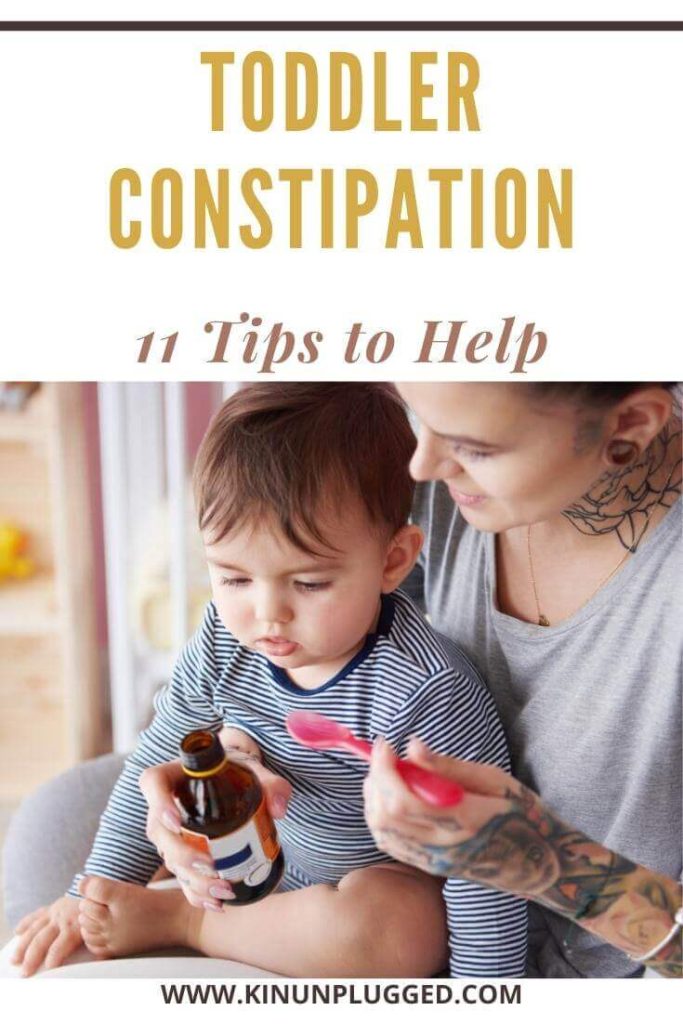
1. Lactulose* (Doctor-approved)
Always consult your pediatrician before using stool softeners.
Lactulose is a gentle stool softener that works only in the bowel, making poops easier and less painful. It’s available OTC in many regions (UK/Germany). Start with your doctor’s guidance, as dosage may need adjustment over time.
Ask your doctor if this pediatric stool softener on Amazon is appropriate.
2. Prune juice
This has a laxative effect for most. Don’t substitute it for water though. Always keep at the water. If your toddler does not seem to like the taste of prune juice, try mixing it with another juice that you know they like.
3. Glycerin suppositories
For stubborn cases, glycerin suppositories help soften stool at the rectum, making it easier to pass. Use sparingly and consult your doctor for proper use.
4. Fibre-rich foods
Offer lots of whole grain bread, fruits and vegetables. If you’ve got an especially fussy eater, try as many different kinds of fruits and vegetables as you can lay your hands on until you find one or two that you know they’ll at least take a bit of and persistently offer those once a day or more. Think of it as their medicine, if you must. Anything to help you remember. In some cases, fibre rich foods may aggravate the situation.
Some paediatricians may ask you to forget about fibre until a much later date as it may only lead to harder stools for your toddler to pass. Please be sure to consult with your doctor when it comes to ramping up your toddler’s fibre intake.
Fiber can help but introduce slowly.
Foods to try: pears, plums, oatmeal, peas, whole grain bread
Limit: cheese, bananas (unripe), processed snacks
| Fiber-Friendly Foods | Why It Helps | Foods To Limit |
|---|---|---|
| Pears, plums (ripe) | Natural laxative, high in sorbitol | Unripe bananas (binding) |
| Oatmeal, whole-grain bread | Adds bulk and gentle digestion | Cheese, ice cream (low-fiber) |
| Beans, peas, lentils | Soluble fiber promotes regularity | Processed snacks, white bread |
| Berries (raspberries, strawberries) | Rich in fiber and hydration | Bananas (if constipation-prone) |
| Water-rich fruits (watermelon, peaches) | Keeps stool soft and hydrated | Excess dairy products |
Try these toddler fiber gummies for picky eaters.
5. Keep a food diary
Document everything they eat for up to a month to see which days they do manage to poo easily – with or without other measures being taken – and what they are on the days that they did. Track meals, water intake, and poop patterns. Look for links (e.g., “poops after oatmeal days”).
You may also like:

6. Cut out dairy
Remove cheese, milk and yogurt for 2 – 4 weeks and track results in your diary. Some toddlers improve drastically after reducing dairy.
7. Tummy massages
A gentle clockwise motion stomach massage a couple of times a day can help to move things along. That’s if your toddler will sit still long enough for it but it doesn’t have to be longer than two minutes.
8. Increased frequency of going to the toilet or potty
If they’re potty trained or training, is to encourage them to at least try to go more often throughout the day. It’s also to remind them that as busy as they are, pooping should be a normal part of their day.
9. Loo distractions
Some toddlers may need something to keep them on the potty for a while. Consider reading them a story, giving them crayons and a sheet of paper or designate specific toys for the toilet. Not only will that keep them on for longer but it might also make going to the toilet a bit more of a fun experience. Watch closely though and make sure the distractions are not distracting them from actually doing what they’re there to do!
Try: P is for Potty! Board Book – great for toddlers.
10. Get them to use a footstool
If they’re potty training, their position on the toilet may not be helpful. A footstool might help to put them in a position which makes it easier for them to do a poo.
Get an adjustable potty stool – works for toilets & potties.
11. Occasional hospitalisation
Some children may need to be hospitalised for up to a month to get the perfect treatment program established and going. A hospital visit could include anything from enemas to diet reviews to, in especially serious cases, surgery.
If you think you’ve tried everything and your toddler is still suffering from chronic constipation, don’t be discouraged. It’s not uncommon for it to take years to resolve. Don’t beat yourself up about potty training, for example, until regular bowel movements are established.
Keep doing the right things and it will sort itself out!
*Only for use with the approval and guidance of your paediatrician
**Bear in mind that some paediatricians will discourage you from potty training before the child is 30 months or 2.5 years old anyway if regular pooping patterns have not been established by then.
FAQs about Toddler constipation
1. What helps a constipated toddler fast?
Prune juice, tummy massage and warm baths can provide quick relief. Always consult your doctor if constipation persists.
2. What foods make toddler constipation worse?
Dairy, bananas (if unripe), processed snacks and low-fiber diets are common culprits.
3. When should I see a doctor for toddler constipation?
If your child hasn’t pooped in 5+ days, has severe pain, vomiting or blood in stool, seek medical care.
Toddler constipation can take time to resolve. Don’t feel guilty if potty training is delayed. Regular bowel movements come first.
Keep routines gentle, track what works and celebrate small wins. With patience, the right foods and pediatric guidance, most toddlers outgrow constipation completely.
 0
0

 278
278


4 Comments
Constipation in kiddos is a big deal and needs to be addressed quickly. As a mom and a dietitian, I appreciate the post you’ve put together! Consulting your health care team is always a great idea.
This is great that you are putting this info out there. I have a mom friend with a 2 year old that is having bouts of constipation. Gonna pass this along to her and pin this for future reference if this comes up with my 2 year old or future baby.
I m trying a potty training with my son and this problem started to be more often. I ll try your tips thanks for sharing.
Helpfully and simply put together. Thank you.