

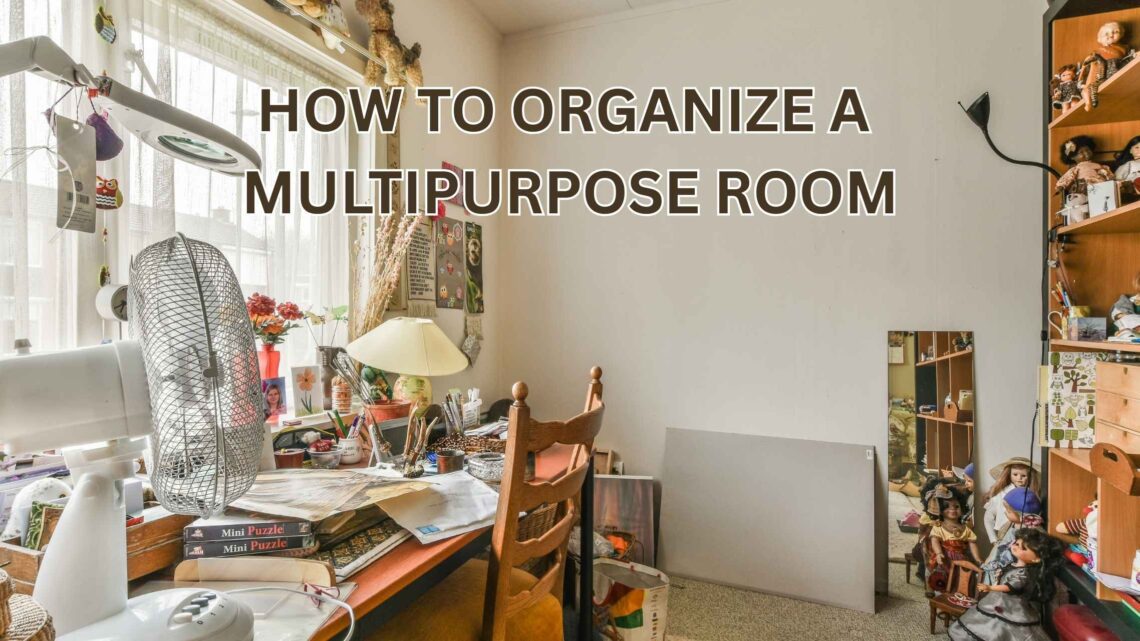
If your multipurpose room is a dumping ground for work gear, guest bedding and craft stuff, this guide shows you how to make it feel organized fast. Even in a small house with no storage. I’m sharing the exact steps I use in my own home. Define zones, choose furniture that over-performs, go vertical, rotate smart and lock it all in with tiny habits that take minutes. Every idea here is tested and doable.
Upgrade your storage in 5 minutes → My favorite stackable, label-ready bins
Slim, wall mounted desks I love → Flip down to work, flip up to chill
1) Map “12-minute zones” with what you already own
Grab painter’s tape or sticky notes and mark out Work, Rest, Make (or whatever your room needs). Slide a rug under the desk, pivot a bookcase as a divider, hang a curtain on a tension rod. In twelve minutes, you’ve drawn boundaries your brain can read at a glance.
Critical in organizing a small space with lots of stuff.
Don’t buy a single basket until the zones are real.
2) Create a two mode layout (day mode / night mode)
Put your desk and lighting on a power strip; place guest pillows and bedding in one lidded bin. Day mode = desk out, soft lighting off. Night Mode = desk folds away, guest kit comes out. The faster you can flip the room, the tidier it stays.
READ: Creative multifunctional furniture ideas to make small spaces work smarter
3) Use furniture that over performs
Wall-mounted desk that folds up behind a framed print.
Storage ottomans/benches for files, blankets or tech.
Murphy bed or sofa bed for instant guest mode.
Rolling cart (crafts, office or gym) that docks in a closet corner.
Nesting tables for quick pull-out surfaces without permanent bulk.
4) Build vertical storage columns
Treat your walls like skyscraper plots. Go from floor to ceiling with sturdy shelving; keep heavy items low and display items up high. Add hooks under shelves for headphones, mugs or bags.
You’ll gain storage without stealing floor space. When mounted properly, tall shelving is also safer and steadier for daily use.
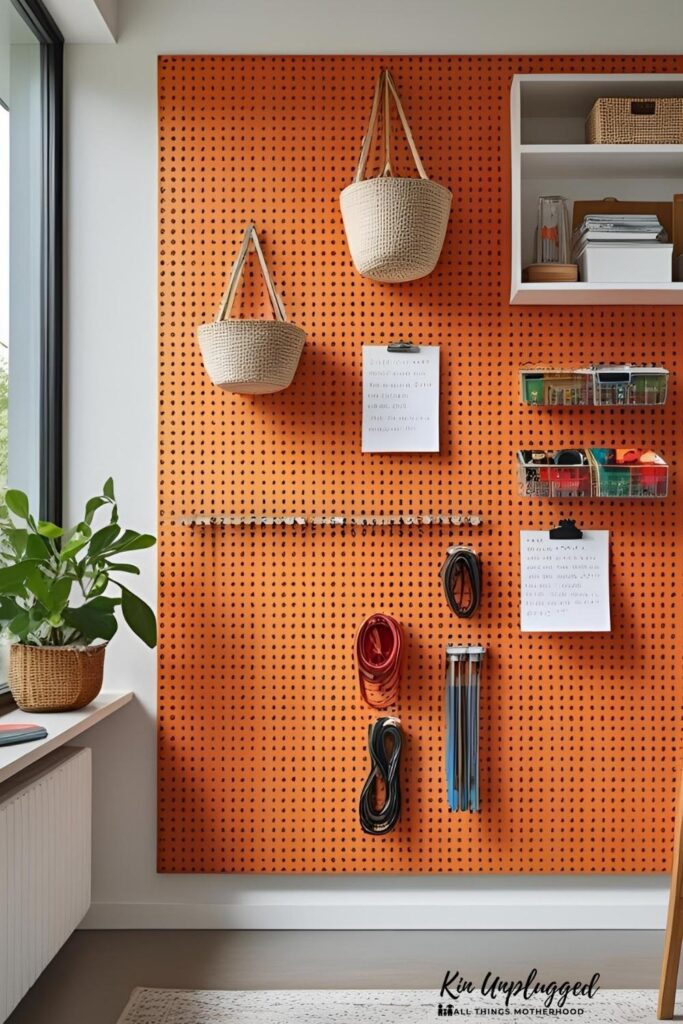
5) Install a pegboard that doubles as art
A full-height pegboard turns clutter into a graphic wall. Baskets for cables, pegs for tools, clips for notes. Arrange by color so it looks intentional, not utilitarian.
6) Ceiling space, carefully done
If your ceiling joists allow and the room’s height is comfortable, a shallow, joist-mounted rack can hold lightweight, off-season items in labeled boxes. Keep clearance generous so tall people aren’t dodging bins and anchor properly for safety.
7) The “zone bin” trick
Assign one lidded bin to each zone: Work, Guest, Hobby. Anything that wanders goes into its zone bin. Once a week, return items from bins to their exact spots.
It’s the simplest way I know to run a tidy room without policing every moment.
8) The 70-20-10 shelf formula
For any wall of storage, aim for 70% closed, 20% open, 10% display. Closed doors calm the view, a bit of open keeps things reachable and a sliver of display adds personality. This ratio stops visual noise from taking over.
9) A micro closet you can add in an hour
No built-in closet? Make one: narrow wardrobe and tension-rod curtain and two stacked drawer units. Label drawers by action (“Print,” “Wrap,” “Guests”) so family members put things back without asking.
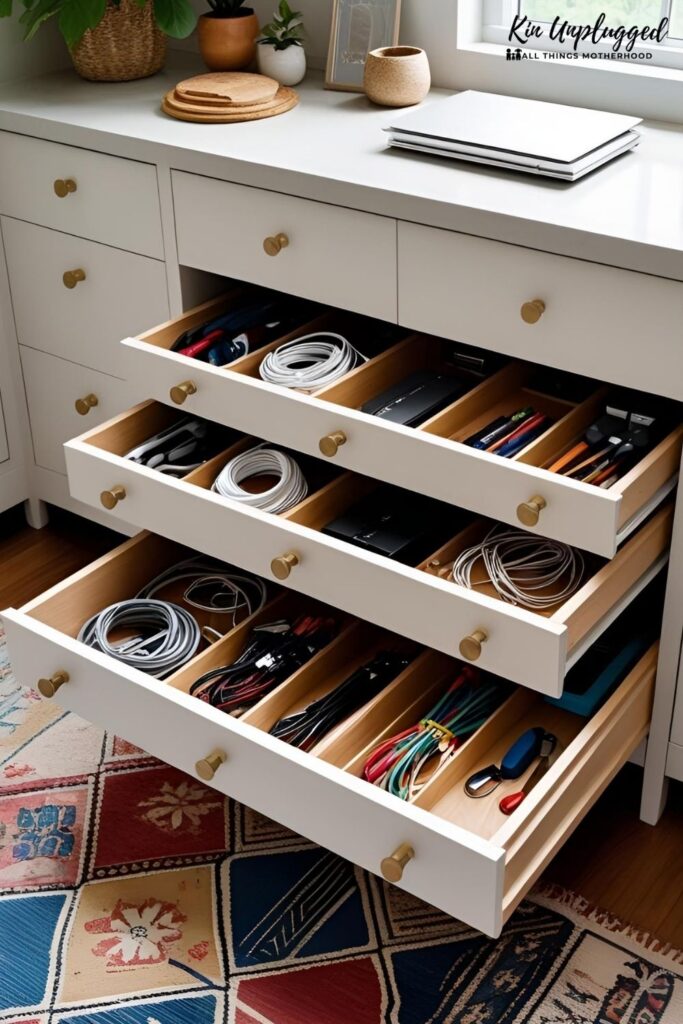
10) Drawer dividers everywhere
Shallow drawers become black holes fast. Add simple dividers for cables, stationery and craft bits. Give each category a tight “parking spot” so you can reset in seconds.
11) A single inbox and one “staging bin”
Paper, parcels or random gadgets go into one inbox on your desk. Overflow or in-progress projects live in a staging bin on a shelf. Clear both every Friday.
Piles disappear because they have a home.
12) Rotate seasonals like a shop owner
Treat your home like a boutique: winter blankets and holiday gear live up high from April to October; summer extras move up in winter. Rotation prevents overflow from stealing prime real estate year-round.
13) Label in plain language
Skip fancy names; use words your household actually uses: “Craft Blades,” “Trip Tech,” “Spare Bedding.” Labels reduce the “Where does this go?” conversation and make your system resilient.
14) Cable sanity in five steps
Mount a small cable box under the desk; tie excess length; label each plug; keep one spare multi-charger in the command center; take a photo of the setup for future you. Cables stop multiplying the moment you can see what you already own.
15) The 6 minute shutdown
Set a timer at the end of each day: toss strays into zone bins, clear the desk surface, quick sweep or vacuum, lights off. Six minutes beats a weekly hour, every time.
16) The 3 tote reset (Sunday best)
Once a week, do a fast reset with three totes: Trash, Donate, Relocate. Move quickly. No second guessing. You’ll keep momentum high and decision fatigue low.
17) A command center
Pick a wall sliver near the door for: hooks, mail slot, calendar and a “today” clipboard. Add a small tray for keys and earbuds. This single zone stops daily essentials from swimming across the room.
18) Habit based layout (design for friction)
Make good actions easier than messy ones. Place a hamper closer than the chair that attracts laundry. Keep recycling under the printer, not across the room.
Your layout should guide behavior without you thinking about it.
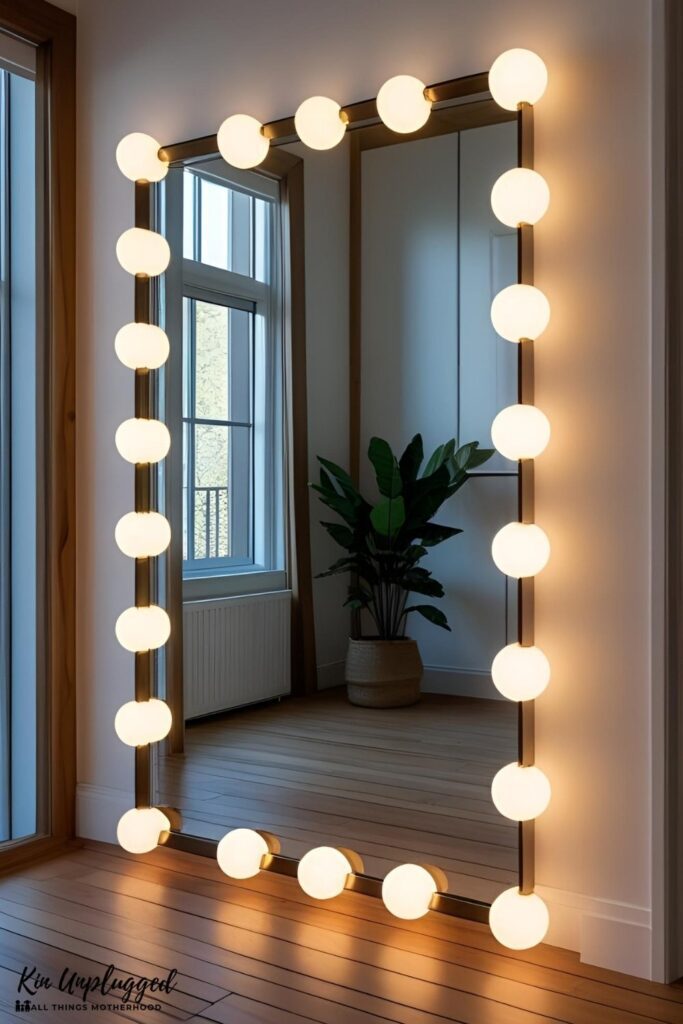
19) Mirrors + lighting = double impact
Mirrors multiply light and make tight rooms feel bigger. Pair with two lighting modes. A bright, cool-leaning bulb for work focus and a warmer tone for rest. Your brain will learn the cues and switch gears faster.
20) The guest mode backpack
Keep a zip bag or lidded box labeled Guest. Travel-size toiletries, two clean pillowcases, spare phone charger, nightlight. When guests arrive, you’re ready in seconds. No rummaging through work gear.
21) A slim utility ladder behind the door
Mount a vertical rail behind the door with a few hooks for yoga mat, scarves or the guest room robe. Dead space becomes useful space.
22) Windowsills that work
If your sill is deep, add low-profile bookends or a slim tray. Treat it like a mini shelf for remotes, a plant or a small speaker. Not a pile zone.
23) Micro gym that vanishes
Use a flat bin for bands and sliders under the sofa bed. Mount a fold-flat wall bar or keep adjustable dumbbells in a storage ottoman. Workout gear shouldn’t stare at you during meetings.
24) A “projects on deck” board
Hang a cork or magnetic board with only the 3 next actions for active projects. Everything else goes in a labeled folder. Your room stays calm, your brain stays focused.
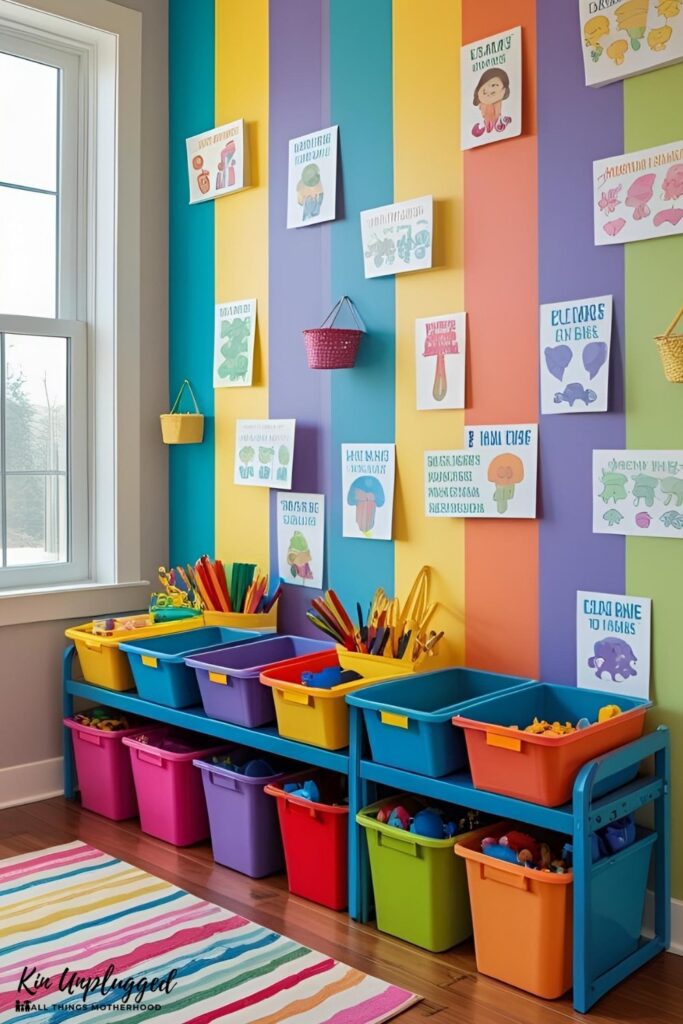
25) Kid friendly color coding
If kids use the room, assign each person a color for bins and labels. When cleanup time comes, everyone knows exactly what belongs to them.
26) Pet corner with rules
One lidded bin for toys, one hook for lead, one tray for bowls. Keep it corralled so pet life doesn’t sprawl into work gear.
27) Fail safe rules that save the day
One in, one out for categories that tend to explode (candles, notebooks, throw pillows).
Upgrade before you add replace, don’t multiply.
Quarterly audit. Pick one shelf, one drawer, one bin; clear it completely.
Why this works
Clutter competes for attention. When too many items crowd your view, your brain must work harder to filter what matters, which drains focus and energy. That’s why clear surfaces and closed storage feel so calm.
Cluttered home = higher stress markers. In a study of dual-income couples, homes described with more clutter language were linked to less healthy daily cortisol patterns, a stress signal. Translation: tidy cues can support steadier moods.
How to organize a small house with no storage
- Pick the three functions that truly matter in this room; ditch the rest.
- Zone it in twelve minutes: rug, bookcase divider, curtain.
- Choose one “big helper”: Murphy/sofa bed or wall desk or a tall cabinet.
- Run storage vertical: floor-to-ceiling shelf, hooks under shelves, pegboard.
- Rotate off-season stuff up high, working-season stuff at eye level.
- Add the daily 6-minute shutdown plus the weekly 3-tote reset.
- Label in plain language so the household cooperates without meetings.
This is the fastest path I know from “wall-to-wall piles” to “I can breathe in here.”
Add personality (so you want to keep it tidy)
Pick one bold color per zone on bins or labels.
Put one conversation piece on display per wall (not six).
Frame a tiny gallery above the desk and keep the desk surface nearly empty.
Use scent and sound cues: a citrus room spray or a soft playlist for work, a calming track for guest hours. Habit cues help your brain switch modes in seconds.
Design the room for your next chapter
Environment shapes identity. If you want a calmer schedule, a sharper morning, more creative evenings, build those cues into the room. Keep your calendar visible, stage your workout mat so it’s grab-and-go, pin one photo that reminds you who you’re becoming.
Small cues are loud to the brain.
Read next: Hacks That Keep Homes Tidy Without Trying
FAQs
How do I make a room serve multiple purposes without it looking messy?
Define zones with rugs or furniture, use closed storage for most items (70-20-10 shelf formula) and keep a single inbox plus one staging bin so piles don’t sprawl.
What furniture is best for a multipurpose room?
Wall-mounted or folding desks, Murphy/sofa beds, ottomans with storage, rolling carts that dock in a closet and tall cabinets that read like built-ins.
How to organize a small space with lots of stuff?
Contain by category, label in plain language, store vertically and use the 6-minute daily shutdown plus a weekly 3-tote reset. Add a single “projects on deck” bin so in-progress items don’t spread.
How to organize a small house with no storage?
Create storage instead of hunting for it: floor-to-ceiling shelves, pegboards, over-door racks and one tall cabinet. Rotate seasonals, choose one “big helper” piece of furniture and label everything.
How do I hide a bed in a living room or office?
Use a Murphy bed with a desk combo, a sofa bed with a tall cabinet for bedding or a daybed with deep drawers plus a curtain divider for guest mode.
What color choices help small rooms feel bigger?
Keep walls lighter and consistent, add contrast through a few bold accents and use mirrors to bounce light. Keep surfaces clear; the lack of visual noise does more than paint alone.
How do I divide a room without building a wall?
Freestanding bookcases, back-to-back rugs, curtain panels or a slim slatted screen. Align lighting to zones so the division feels natural.
What’s the fastest daily routine to keep a multipurpose room tidy?
The 6-minute shutdown: toss strays into zone bins, clear the desktop, quick sweep, power down. It prevents the need for weekend marathons.
Quick checklist for you to screenshot
Map 3 essential functions
Mark zones with rugs/furniture/curtain
Pick 1 big helper (Murphy/sofa bed, wall desk, tall cabinet)
Build vertical storage wall and pegboard
Add one inbox and one staging bin
Label everything in plain language
6 minute daily shutdown
Weekly 3 tote reset
Rotate seasonals twice a year
Ready to turn that multipurpose room into a calm, high-performing space?
 0
0

 278
278