
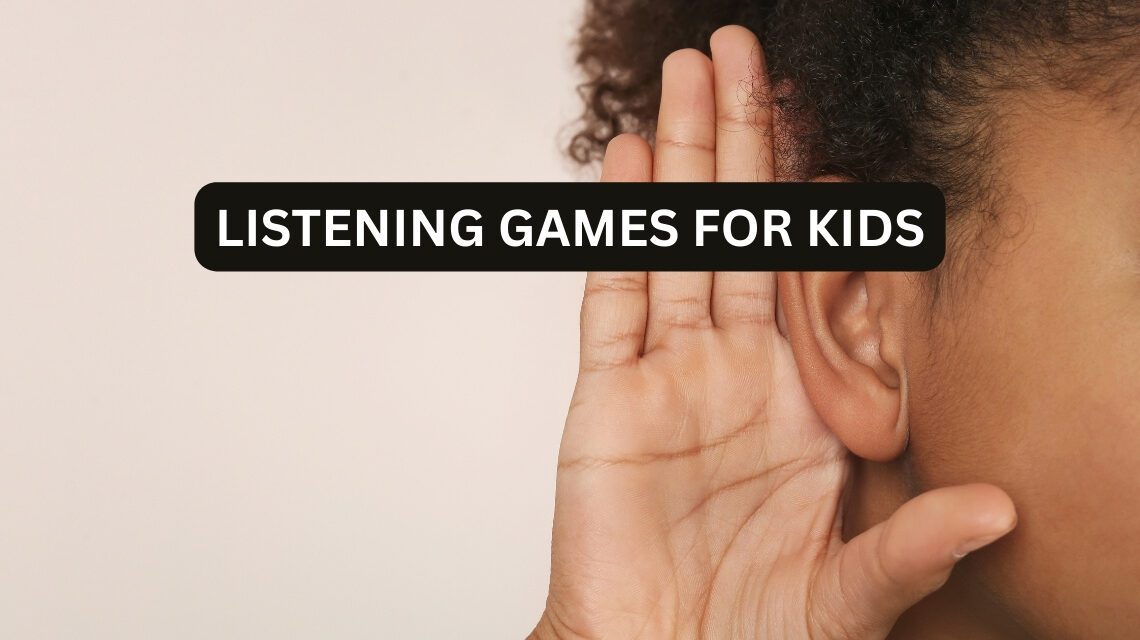
Listening games for preschoolers and kids can help children practise attention, following directions, memory and self-control in short, playful bursts. If your child isn’t listening, start with one simple game that takes 3–7 minutes, uses movement and ends before anyone gets frustrated.
Busy mom tip: you don’t need more time. You need the right kind of moment.
These two tools help a lot of families because they remove friction fast:
Grab a Screen free audio player
Add a Visual Timer kids can see
Keep reading, because the next section shows you exactly how to pick the right game for your child in under 30 seconds.
The 30 second fix: Why kids don’t listen
Most kids don’t struggle with hearing you. They struggle with attention, processing, memory or motivation and sometimes all four at once.
Here’s the shortcut that changes everything: listening is a skill, not a personality trait. Skills can be practised in low pressure ways, which is why games work so well.
Research backs this up in a simple way. Responsive back and forth interaction (think: your child does something, you respond, they respond back) supports early brain development and learning.
And for preschoolers, speech and language experts specifically recommend direction following games like Simon Says and Red Light, Green Light because they build attention and listening through play.
Who these listening games are best for
- preschoolers who struggle to follow simple directions
- kids who get distracted quickly
- children who need movement to pay attention
- siblings who need a quick reset
- tired after-school kids who cannot handle another lecture
- parents who want listening practice without nagging
Now let’s make it practical.
The Listening skills map
Different games train different parts of listening. When you match the game to the struggle, progress happens faster.
Attention: staying with the voice or the sound
Auditory memory: holding information long enough to act
Processing: understanding what the words mean
Self-control: stopping, waiting, then doing the right thing
Listening for meaning: retelling, predicting, explaining
You don’t need to train all of it today. You just need one small target.
Quick scan table: Pick a game in under a minute
| Game | Best for ages | Time | Setup | Builds |
| Freeze and Listen | 2–8 | 3–5 min | none | stop/start control |
| Copy My Clap | 3–10 | 4–6 min | none | auditory memory |
| Whisper Trail | 5–10 | 5–8 min | 2+ people | careful listening |
| Sound Chef | 3–9 | 5–7 min | kitchen items | sound discrimination |
| Backwards Instructions | 6–12 | 5–10 min | none | processing and focus |
| Story Detective | 4–10 | 6–10 min | book | listening for meaning |
| Mystery Messenger | 6–12 | 7–12 min | paper | memory and sequencing |
| Treasure Voice Notes | 5–12 | 8–15 min | phone | attention and motivation |
Don’t overthink it. Pick the shortest one that matches today’s mood.
The Golden Rules
Rule 1: Start easier than you think.
If they fail early, they’ll resist the next time.
Rule 2: Use a first win voice.
Lower, slower, fewer words.
Rule 3: Quit while it’s still working.
Stop at the high point, not the crash.
Rule 4: Praise the skill, not the kid.
Try: “You waited for the signal.” or “You listened for two steps.”
Now for the fun part. These are not the same ten games everyone lists.
25 Listening Games for Kids (Fresh Ideas and Easy Classics)
1) Freeze and listen (the fastest reset)
You say a silly word like “pancake” and everyone freezes.
Then you whisper one instruction: “Touch your nose, then sit.”
Start with one step, then add one more.
Best for: kids who bolt, bounce or “forget” instantly.
Why it works: This helps children practise stopping their body first, which makes it easier for them to hear and follow the next instruction.
2) Copy My Clap, Copy My Tap
Clap a pattern, they copy it.
Then switch to tapping knees, snapping or tapping the table.
Make it a “level up” game: 3 correct copies = new leader.
3) The Tiny Pause Game
Say: “When I touch my ear, you do it.”
Give a direction but pause before touching your ear.
This trains waiting without lecturing about patience.
4) Wrong Way Round (aka “Do the Opposite”)
You say “hands up,” they put hands down.
You say “walk,” they freeze.
Kids love the silliness and it secretly strengthens processing.
5) The Whisper Trail (better than Telephone)
You whisper a short message to your child.
They whisper it to another person and the last person says it out loud.
Keep it kind and simple: “blue socks,” “two hops,” “quiet cat.”
6) Sound Chef (kitchen listening without extra mess)
Hide your hands behind your back and make a sound: spoon on mug, crinkle foil, tap a bowl.
They guess the sound, then they get a turn.
This helps kids listen carefully without needing “sit still” energy.
7) The Doorbell Game (listening through real life noise)
Put on running water, a fan or background music quietly.
Say their name once, then give a short instruction.
Goal: not perfect performance.
Goal: they notice your voice without you repeating five times.
8) Secret Agent Numbers
Give a code like: “3 means jump, 5 means spin.”
Call out numbers, they do the action.
Add “7 means freeze” when they’re ready.
This is brilliant for after-school wiggles.
9) Story Detective (a calm listening game)
Read a short page of a book.
Ask one “detective” question: “What did the character want?” or “Where were they?”
Keep it light.
If they missed it, you reread one sentence and let them catch the win.
10) The Two second echo
Say a phrase, they repeat it back exactly.
Start with fun lines: “purple penguin,” “soggy toast,” “robot banana.”
Then move to useful lines: “Shoes by the door.”
It turns real life reminders into a game.
11) Musical Statues With a Twist
Play music, dance, freeze.
But when it stops, you give a direction: “Freeze like a tree,” “freeze on one knee.”
It’s movement plus listening, which is the sweet spot for a lot of kids.
12) The Almost Right Game
You describe something wrongly on purpose: “Your teddy is blue” (it’s brown).
They correct you.
This pulls listening forward because kids love catching mistakes.
13) Direction Sandwich (for kids who fight directions)
You give one direction between two choices:
“Do you want to hop or tiptoe to the bathroom, then wash hands?”
The direction stays.
They get ownership over how they do it.
14) Backwards Instructions (for older kids who tune out)
Say a short sequence they must do in reverse.
Example: “Touch head, clap, sit” becomes “sit, clap, touch head.”
This is surprisingly effective for focus and it feels like a brain challenge.
15) The compliment relay (listening and connection)
You say one true, specific compliment.
They repeat it back and pass a new one to someone else.
Example: “I liked how you put your plate away.”
This builds listening and softens the mood at the same time.
16) Treasure voice notes (phone free vibe, phone tool)
Record 4–6 short voice notes with clues.
Hide tiny treasures (a sticker, a funny drawing, a snack).
Play voice note #1 and let them hunt.
This feels special and it makes listening the path to the reward.
17) The “Stoplight” Walk (indoors or outdoors)
Green = move, yellow = slow, red = stop.
Then add “blue = whisper,” “purple = tiptoe.”
It’s simple but the layered rules strengthen attention fast.
18) Silly Sound Sorting
Make three sound categories: loud, soft, scratchy.
They find household items that match, then demonstrate the sound.
You’re training sound awareness without worksheets.
19) The One-Word Story Chain
You start a story with one word: “Yesterday…”
They add one word, you add one word and so on.
It forces listening because the story only makes sense if they track it.
20) The “I Heard You” Check (for the repeat-myself cycle)
You say one short instruction.
They reply: “I heard: ____.” then they do it.
This is not a power move.
It’s a memory support that stops the spiral of repeating.
21) Sound Postcards (a little unusual, very memorable)
On a walk, you pause and ask: “What three sounds can we hear?”
They name them, then you both copy one sound.
Later at home, you ask: “Remember the three sounds from the park?”
It turns listening into a shared memory, not a demand.
22) Guess My Rule
You do actions with a rule they must figure out.
Example: you only clap after you say a colour, not an animal.
Kids become detectives and listening turns into a puzzle.
23) The Dinner Table DJ
One child controls the “volume rule” with hand signals.
Hand up = quieter voices, hand down = normal voices.
You’re practising listening and self-control without scolding.
And yes, it works even with siblings.
24) Draw What I Say (low prep, high impact)
You describe a simple drawing in steps.
Example: “Draw a big circle. Add two dots. Add a line smile.”
For older kids, add detail: “Put the triangle on the left.”
This trains precision listening without feeling like school.
25) The Bedtime “Replay”
At bedtime, ask for a three-part replay:
“Tell me the best thing, the tricky thing and one thing you learned.”
This is listening practice in disguise because you model listening back.
It also builds connection, which makes daytime listening easier.
How to make these games work when you’re tired
Here’s the honest truth: the best listening game is the one you’ll actually do.
So use this busy mom format:
Daytime (3 minutes): Freeze and Listen
After school (5 minutes): Copy My Clap
Bedtime (2 minutes): Replay
That’s it. Consistency beats intensity every time.
What to do if your child still doesn’t listen
If you’re thinking, “We’ve tried games, they still ignore me,” read this carefully.
Step 1: Check the ask.
One instruction. One calm voice. One moment of eye contact.
Step 2: Lower the steps.
If they miss two-step directions, go back to one-step for a week.
Step 3: Look for patterns.
Listening often drops when kids are hungry, tired, overstimulated or transitioning.
If listening struggles are persistent and affecting school or daily life, it can help to speak with your GP, health visitor or a speech language professional.
You’re not overreacting and you’re not alone.
A simple weekly sequence
This is a gentle plan that builds skill without feeling intense.
Days 1–2: Attention games
Freeze and Listen, Stoplight Walk
Days 3–4: Memory games
Copy My Clap, Two-Second Echo
Days 5–6: Processing games
Wrong Way Round, Backwards Instructions
Day 7: Connection games
Compliment Relay, Bedtime Replay
Want this as a printable with “what to say” scripts?
That’s exactly what I send to my email list.
The one phrase that changes the mood
Try this once today:
“Let’s do a listening warm up.”
It signals that listening is practice, not a test.
And it lowers the pressure for both of you.
If you want the fastest results, follow this path:
- Start with the age match:
- Listening games for toddlers and preschoolers
- Listening games for primary-aged kids
- Then pick your setting:
- Listening games for the classroom
- If emotions are the real blocker:
- What to do when your child won’t listen (without yelling)
That flow saves time because you won’t waste energy on the wrong strategy.
FAQs
What are the best listening games for kids?
The best listening games are short, movement-based and have clear start and stop signals.
Great starters are Freeze and Listen, Simon Says, Copy My Clap and Stoplight Walk.
How do I improve my child’s listening skills at home?
Play one listening game daily for 3–7 minutes, then stop while it’s still going well.
Use one step directions first and add steps slowly.
Why does my child ignore me when I talk?
Often it’s attention or processing not defiance.
Try getting close, using fewer words and asking them to repeat back “I heard: ____” before they do the task.
What listening games help kids follow directions?
Games that practise waiting and two-step actions help most.
Simon Says, Red Light Green Light and Freeze and Listen are strong options.
How long should a listening activity be for young kids?
Three to seven minutes is plenty for most preschool and early primary kids.
Short games played often beat long sessions that end in frustration.
How do I make listening games work with siblings?
Give each child a role: leader, checker, timer or DJ.
Rotate roles every 60–90 seconds to keep buy-in high.
READ: Why your kid is so forgetful (and what to do about it!)
 0
0

 278
278