
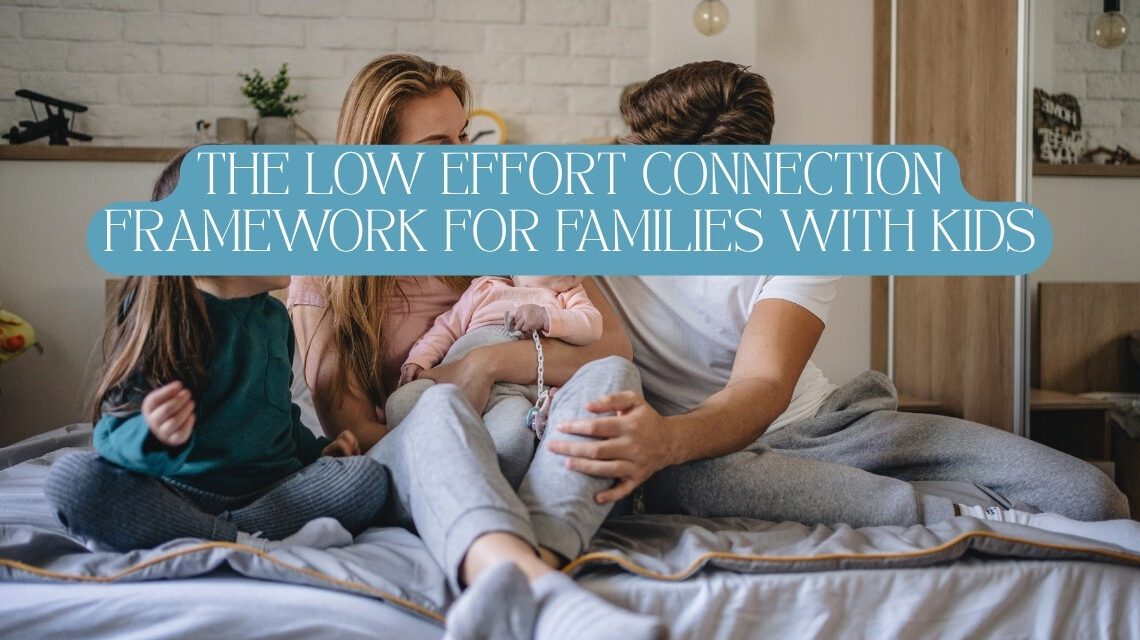
If you need family connection ideas for busy moms, start here: you do not need more time, you need better timing. The fastest way to feel closer to your kids is to use the tiny hinge moments that already exist in your day… the doorway, the car, the snack, the bedtime chair, the two minutes while folding a shirt the size of a postage stamp. Guidance from the AAP and CDC keeps pointing to the same boring but wildly useful truth: predictable routines, warmth, shared reading, play and simple face to face attention really do matter.
Most family advice acts like you have a free afternoon, matching baskets and the patience of a woodland saint. You do not. You have a real house, real kids and a life that keeps moving, so this framework is built for that.
READ: The Workings of Structural Family Therapy
Here is the whole framework in one line: reconnect first, talk side by side, hand over tiny ownership, repeat one small ritual, then close the day softly. That sequence works because routines help kids feel steady and shared moments like reading, play and predictable attention support healthy social and emotional development.
And yes… this is low effort on purpose. Nobody needs another color coded system that dies by Thursday.
What makes this framework different
A lot of connection advice is built around special occasions. This one is built around ordinary repetition.
That matters because kids do not usually feel closest to us during the big expensive day out. They feel closest when the same tiny signal lands again and again… I see you, I like being near you, you matter in this house.
This framework also leans on three things busy moms actually need.
Ownership. Kids cooperate more when they have a role, a tiny choice or a job that says you belong here.
Intimacy. Kids open up faster when the pressure is low, your body is calm and the moment feels safe instead of performative.
Urgency. Connection is not something you save for summer or a family retreat. It has to happen in the middle of Tuesday.
The Hinge Moments idea
Here is the part most people miss. Family connection is less about amount and more about placement.
The best moments are the transitions. Coming home. Getting in the car. Sitting down to eat. Going upstairs. Lights out. Research on routines keeps finding links with stronger social and emotional development, better emotion regulation and steadier family functioning, which is why transition points are such smart places to put your effort.
So instead of asking, How do I find an extra hour… ask this: Where are the five hinges in my day? That question changes everything.
If your pain point is mornings, go next to simple morning rhythm ideas. If after school is where everyone falls apart, keep after school reset ideas open in the next tab. If bedtime is your personal Olympic event, you will want bedtime routines that do not drag on.
The Low Effort Connection Framework, step by step
1. Reconnect before you request
When your child walks in the door, gets in the car or comes out of their room, do one tiny reunion move before any correction, question or instruction. That can be eye contact, a shoulder squeeze, a joke, a snack on the seat or a simple line like I’m glad you’re here.
This works especially well after school because kids are often socially fried and tired of answering questions. CDC guidance for younger kids points parents back to simple play, talking, reading, walks and predictable attention, not a rapid fire interview the second they reappear.
The order matters. Connection first. Logistics second.
Try this by age:
| Age | Best reunion move | What to say | Keep it to |
| Baby to preschool | Touch plus face | There you are | 10 to 20 seconds |
| School age | Snack plus side hug | Glad you’re back | 20 to 40 seconds |
| Tween | Quiet presence | You want a snack or silence first | 20 seconds |
| Teen | Respectful low pressure check in | Good to see you | 5 to 15 seconds |
Notice what is missing here. No twenty question game in the doorway. No Please tell me every detail of your emotional life before you take off your shoes.
2. Talk side by side, not face to face
If you want kids to talk, stop making the room feel like an interview set. Side by side is gold.
Talk in the car. Talk while cutting fruit. Talk while walking the dog. Talk while folding towels nobody folded correctly but fine, we move. Low pressure moments often work better because the body feels less watched and the mind gets room to wander.
This is especially useful with older kids. School age kids and teens often talk more when attention is shared across an activity instead of pinned directly on them and routines give them repeat chances to open up without feeling cornered.
A good side by side question sounds like this:
What felt long today
What made you laugh
What annoyed you for no good reason
Want advice or do you want me to just be nearby
Specific beats serious. Kids answer specific far more easily than How was your day.
If dinner is your easiest side by side window, pair this with family meal questions that do not feel forced. If your older kid talks most in the car, link them onward to teen connection ideas that actually feel normal.
3. Hand over tiny ownership
Connection gets stronger when a child feels useful, not managed. That does not mean a giant family system with clipboards and laminated badges.
It means tiny roles. The water pourer. The playlist picker. The blanket straightener. The one who chooses the bedtime chapter. The one who checks that everyone has a fork because somehow this keeps happening.
The point is not help for help’s sake. The point is identity. I belong here. I matter here. I affect the mood of this house.
This lines up with what we know about predictable routines and development. Kids benefit from clear expectations, repeated patterns, shared books, warmth and household rules they can understand and take part in.
A simple formula helps:
Give one role
Keep it visible
Let it repeat long enough to feel real
That is ownership without a power struggle. And honestly… it is also less work for you.
4. Repeat one tiny ritual until it becomes family language
Grand gestures are fun. Rituals are what stick.
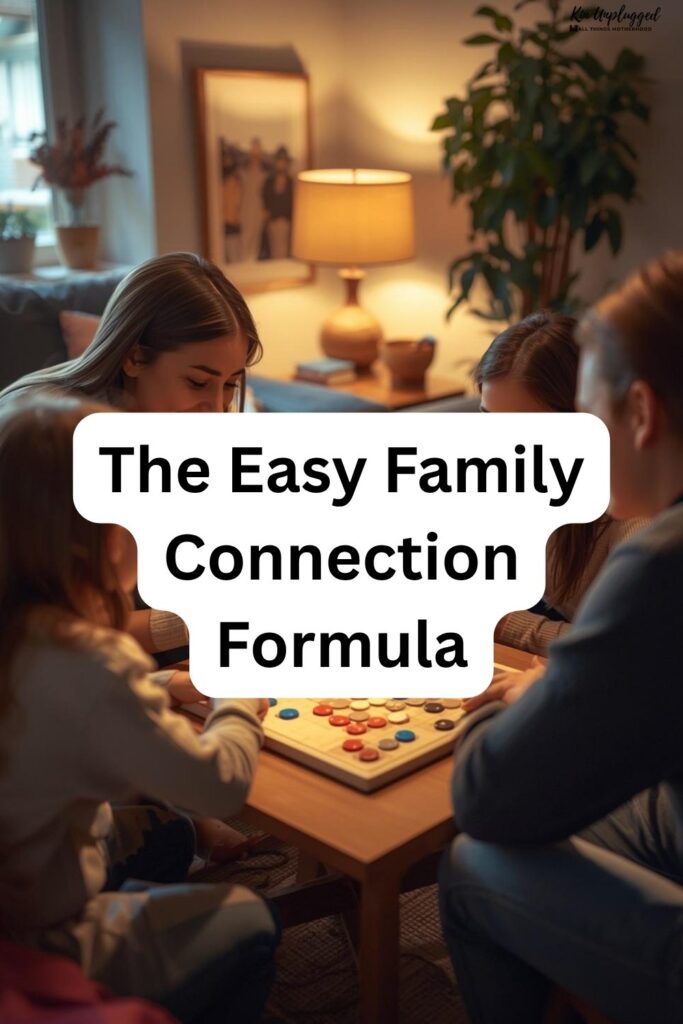
A ritual is just a small action your family does often enough that it starts carrying meaning all by itself. The bedtime forehead kiss. The Friday smoothie run. The weird handshake. The question you ask on the school run every Monday. The one song you play during kitchen clean up that tells everybody yes, this again.
Kids love repetition because repetition feels safe. AAP guidance highlights healthy family routines and regular time for play and connection and the CDC points to predictable responses, routines and shared books as part of healthy development.
Here are low effort rituals that work across ages:
One sentence at pickup
Tell me one thing you want me to know before we go home
One minute at dinner
Everyone says one high point and one low point
One shared reset after school
Shoes off, snack, ten quiet minutes, no questions
One bedtime loop
Rose, thorn and what you need tomorrow
One weekend marker
Saturday morning pancakes, a walk or library hour
Pick one and keep it alive. That is enough to shift the feel of a home.
5. Close the day softly
If the morning went badly, the afternoon got weird and dinner was basically performance art… bedtime can still save the emotional tone of the day. The last two minutes count a lot.
This is not about a dramatic speech. It is about repair, steadiness and a signal that says we are still us.
The close can be tiny:
I loved being your mom today
Tomorrow gets another shot
You do not have to have a perfect day to be deeply loved here
Want me to sit for one minute or two
Reading together is especially powerful here. The AAP notes that reading with young children strengthens relationships and the CDC also points parents toward shared books as part of healthy development.
If bedtime is your cleanest chance at closeness, go next to one on one time ideas that fit inside bedtime. If your evenings go off the rails because of screens, add screen rules that reduce the nightly argument to your queue.
A practical daily sequence for busy moms
Here is how this framework looks in a real house. Not an aspirational one. A real one.
Morning
Do not start with instructions shouted from another room. Start with contact.
Touch a shoulder. Open the curtain. Say one sentence that feels human. Then move into the list.
Best morning line: Good morning… first, come find me for a hug, then we do socks and teeth.
That first sentence changes the temperature. If mornings are your worst stretch, keep morning rhythm ideas nearby.
After school
Do not demand a recap. Offer decompression.
Snack first. Shoes off. Ten quiet minutes. Then talk side by side while unpacking bags, driving or cutting fruit. School transitions are a classic hinge moment and repeated routines help children know what comes next and steady themselves faster.
Best after school line: You do not need to talk yet… want crunchy snack, soft snack or silence first?
That question does two useful things. It lowers pressure and it gives ownership.
Dinner or the evening handoff
This is your best shot at group connection if mornings are rushed. Keep it tiny and repeatable.
Try one family question each night and stop there. You do not need to host a panel discussion.
Good ones include:
What felt easy today
What felt annoying
What should this house do more of this week
What is one thing you want help with tomorrow
If meal times are hard, build a decision path from here to family meeting questions that do not feel stiff or family meal questions.
Bedtime
This is the place for softness, not a second performance review. Kids do not need a nightly TED Talk.
Use the same closing shape most nights. Book, brief chat, touch, lights out. That predictability is part of the point.
Best bedtime line: Tell me one thing your heart needs tomorrow.
That line is intimate without being too much. It also gives you something concrete to carry into the next day.
The age by age version
Kids do not all connect the same way. Thank God, because that would be too convenient.
Babies and toddlers
Connection is body first. Tone of voice, face, touch, repetition.
Read, sing, narrate, walk and use the same small rituals over and over. CDC guidance for toddlers points parents toward special reading time, pretend play, walks, songs and simple talking all through the day.
Preschool and early school age
They still love ritual but now ownership matters more. Give them a role and a repeating phrase they can count on.
Let them pour, stir, carry, choose the song or pick the book. They feel close when they feel included.
Older school age kids
This is a sweet spot for side by side talking. Walks, errands and bedtime chats can be gold.
Keep questions specific and let them teach you something. A card game, a Roblox explanation, a weird animal fact… go with it.
Tweens and teens
Respect is the doorway. Pressure kills the moment fast.
Offer presence more than pursuit. Car chats, snack runs, late evening tea, shared shows and quick texts can work better than a formal sit down, especially when done regularly and without an agenda.
Do not panic if they seem half available. Half available is often how closeness starts at this age.
Mistakes that make connection harder
This section might save you a month.
Asking too much too soon
Kids just got out of school, an activity, a friend hang or their room. Give them a beat.
Questions land better after the nervous system settles. Start with regulation, then conversation.
Making every moment serious
Not every connected moment has to be deep. A joke counts. A wink counts. A shared snack absolutely counts.
In fact, play matters a lot. The AAP has long pointed to play as part of healthy development and relationship building.
Talking only when something is wrong
If the only time you get focused is during correction, your attention starts to feel expensive. Kids then avoid it.
You want lots of low stakes contact so that closeness is not linked only to trouble. That is one reason routines are so useful. They give connection a normal home in the day.
Thinking it has to be one on one every time
One on one time is lovely. It is not the only path.
A family wide ritual still counts. Shared dinner, shared reading, shared cleanup playlist, shared Sunday walk… all of that builds belonging.
The easiest way to start tonight
Do not overhaul your whole house. Pick one hinge moment.
I would start with after school or bedtime because they usually give the quickest return. Add one reunion move, one side by side question and one closing line.
That is the whole beginning. It is small enough to do tonight and strong enough to change the feel of the week.
FAQs
How can I connect with my child when I am busy
Use tiny daily routines instead of waiting for big blocks of time. The strongest place to start is a repeating moment like after school, dinner or bedtime, because predictable routines, warmth and shared books or play support children’s development and relationships.
What are simple family bonding activities for all ages
Reading together, walking, shared meals, quick games, child led play and one small ritual that repeats every weekare all solid options. The CDC points parents toward reading, play, songs and walks with younger kids and the AAP highlights routines and time for connection as meaningful parts of family life.
How do I bond with my teenager without forcing it
Go side by side and keep the pressure low. Car rides, snack runs, late evening tea, a shared show or a quick check in after an activity often work better than a direct sit down and regular routines still matter in adolescence too.
How much quality time do kids need with parents
There is no perfect universal number that fits every family and chasing a magic hour count usually makes parents feel worse. What matters most is regular, warm, predictable contact that your child can trust and recognise, especially through routines like meals, reading, play and bedtime.
Why are family routines important for children
Routines help kids feel secure, know what comes next and practise emotional regulation. Research has linked family routines with positive social and emotional development and both the AAP and CDC point to routines as a healthy part of family life.
Just so you know…
This framework is my own but it is grounded in a few consistent themes from trusted guidance and research: regular family routines matter, predictable attention matters and shared reading and play matter. The two strongest broad sources for this piece are the American Academy of Pediatrics and the CDC, with peer reviewed routines research backing the link between routines and emotional regulation.
Finally
You do not need to turn family life into a project. You need a handful of hinge moments used on purpose… a better hello, a softer after school landing, a side by side chat, one tiny role, one repeatable ritual, one good sentence before sleep.That is the Low Effort Connection Framework. Small enough to use tonight, personal enough to matter and steady enough to change the feel of your home over time.
 0
0

 278
278