
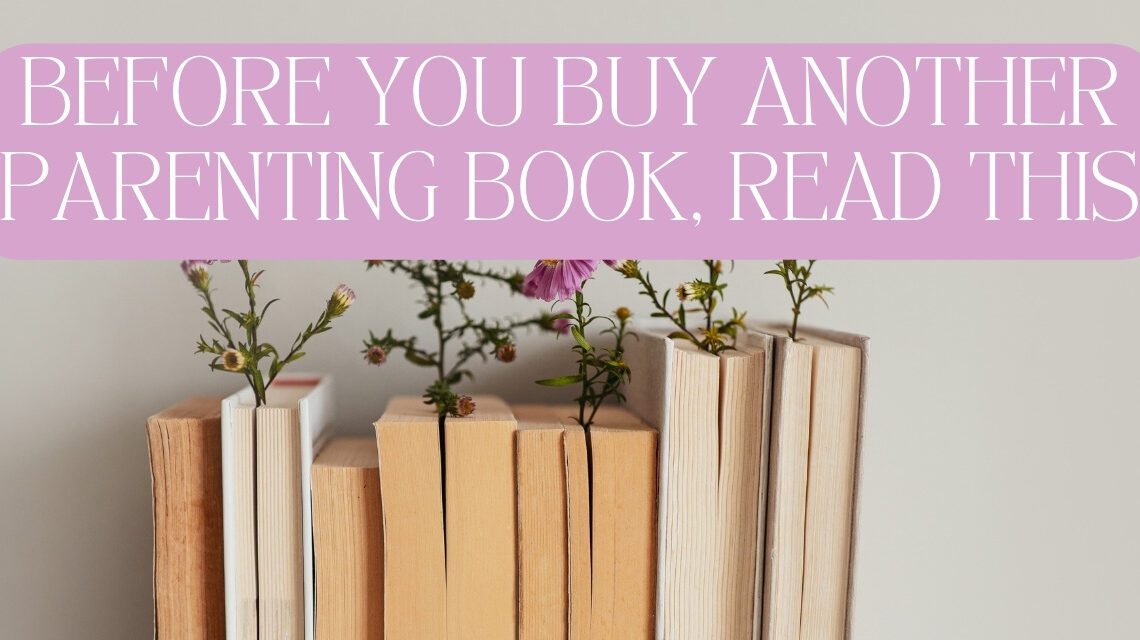
If you’re here because you’re about to hit “Add to basket” on yet another parenting book, pause for ten minutes. Before you buy another parenting book, you need one thing: a filter that tells you if this book will actually help your family this week, not just sound smart on page 37.
READ: Top 5 Parenting Books for Toddlers under $20 on Amazon
Most parents don’t need more information. They need one next step they can repeat on a Tuesday at 6:12pm.
The truth no one says out loud
A lot of parenting books are written for the best-case version of your day. You know the one. The day your child is well-rested, you’ve eaten lunch and no one is crying in the car.
Real life is different. Real life needs shorter instructions, fewer steps and a plan that still works when you’re tired.
So let’s fix the book problem properly.
READ: 18 Awesome & Compelling Books for Mothering as a Feminist
The answer you came for
If you keep buying parenting books and nothing changes, it’s usually because you’re collecting ideas instead of installing one system. The fix is simple: pick one problem, find one method and commit to 7 days of testing before you read anything else.
If a book can’t give you a testable plan in 7 days, it’s entertainment. Not support.
Now I’ll show you exactly how to choose the right book, fast.
Step 1: Stop shopping by vibe. Shop by problem.
Most people buy parenting books like they buy candles. “This feels like me.”
That’s how you end up with six books that all say different versions of “stay calm” and none of them tell you what to do when your toddler bites your arm.
Pick one problem from this list. Only one.
Choose your current problem:
Morning battles
Bedtime fights
Tantrums or meltdowns
Hitting / biting
Sibling drama
School refusal
Screen time
Picky eating
Backchat
Big feelings in public
You and your partner not on the same page
GET: The Ultimate Couples’ Baby Planning Workbook – Strengthen Your Bond & Prepare for Parenthood
Write it down. The book you buy needs to match that exact problem.
If it doesn’t, it goes back on the shelf.
Step 2: Use the 3 page test in the shop or on the preview
This is the fastest way to spot a book that’s going to waste your time.
Read:
- The introduction page where they say who it’s for.
- One middle page with an example.
- One page where they explain what to do next.
If you can’t find a clear action in those pages, you won’t magically find it later.
Your standard is this: “Can I try this tonight?”
If the answer is no, skip it.
Step 3: The Book to action Ratio that changes everything
Here’s the rule I use.
For every 20 minutes of reading, you need 5 minutes of action.
If you read for hours and never practise, the book becomes another thing that makes you feel behind.
The goal is not finishing the book. The goal is changing one tiny pattern in your home.
This is why “I’ve read all the books” often feels worse. You start measuring yourself against too many standards.
The table that makes choosing easier
| Type of parenting book | What it’s good for | What it’s bad for | Best time to buy it |
| Big theory books (brain, attachment, development) | understanding your child | urgent behaviour issues tonight | when you want perspective, not quick fixes |
| “Discipline” books | boundaries, behaviour plans, scripts | guilt if it’s too rigid | when you need a clear method |
| Age-stage books (toddlers, tweens) | what’s normal, what’s not | one-size advice | when you feel confused by changes |
| Parenting memoirs | feeling seen | practical steps | when you feel lonely and need comfort |
| “One technique” books | a repeatable tool | not enough if you have multiple issues | when you need one simple reset |
This table alone can save you money.
Most mums need one discipline method book and one age-stage guide, not a stack.
Step 4: The questions that tell you if a parenting book is safe to follow
Not safe in the scary sense. Safe in the “this won’t make my home worse” sense.
Ask these questions before you commit.
1) Does it respect child development?
Good advice matches what kids are capable of at their age.
If a book expects emotional regulation from a two-year-old like they’re thirty-two, it’s not grounded.
2) Does it give scripts, not speeches?
In real life you need language you can say in the moment.
Look for:
- sample phrases
- what to say during a tantrum
- how to hold a limit
- what to do after
If it’s mostly mindset talk with no scripts, you’ll struggle to apply it.
3) Does it allow for your child’s personality?
Some kids need more structure. Some kids need more choices. Some kids need both, depending on the day.
If the book talks like every child is the same child, that’s a red flag.
4) Does it include repair?
Every parent snaps sometimes. That’s not the issue.
The issue is what you do next.
A good book includes how to apologise, reconnect and reset without turning it into a long lecture.
Step 5: The 7 day install plan (use this with any decent book)
This is the part most parenting content skips. The installing part.
Day 1: Choose one behaviour to work on
Only one.
Not “be respectful.” That’s too big.
Pick something visible: “hitting,” “stalling at bedtime,” “refusing shoes,” “screaming at no.”
Day 2: Choose one response you will repeat
This is your line. Your script.
Keep it short.
Day 3: Practise it once when things are calm
This sounds silly but it matters.
Kids learn faster when they’re regulated.
Day 4: Run it in real life
Use the script. Hold the line.
Don’t add extra talking.
Day 5: Adjust one small part
Too wordy? Shorten it.
Too harsh? Softer tone, same boundary.
Day 6: Add one “connection” moment
Not a big one.
A two-minute reset, a hug, a shared snack, a quick game.
Harvard’s “serve and return” concept is basically this idea: responsive back-and-forth interactions build relationship and support development.
Day 7: Review what improved
Ask two questions:
What got easier?
What still triggers us?
Then repeat for another week or choose the next problem.
This is how books turn into change.
If you’re stuck in the I read but nothing works loop, it’s usually one of these
This is the part that feels personal, because it is.
You’re trying to change your child’s behaviour without changing the environment
Example: you want fewer meltdowns but your afternoons are packed, hungry and rushed.
A book can’t fix that. A snack and earlier shoes can.
You’re doing too many new techniques at once
Your child gets confused and pushes back harder.
Pick one response and repeat it. Let repetition do the work.
Only one parent is reading the book
Then you get inconsistent responses and kids spot it instantly.
If you’re partnered, your first goal is alignment, not perfection.
One shared script beats five solo strategies.
The Two column Method for reading parenting books like a busy mum
You don’t need to highlight 43 pages.
Use two columns on a note page.
Column A: “Say.”
Column B: “Do.”
As you read, only write down:
- the exact sentence you will say
- the exact action you will do
If it doesn’t fit in those columns, it’s not the priority for right now.
This keeps you focused on what changes your day.
The parenting book buying checklist (print this in your head)
If you only remember one section from this article, make it this one.
Buy the book if it has:
clear examples
short scripts you can use
age-appropriate expectations
a plan you can test in 7 days
a repair step
Skip the book if it:
- makes you feel panicky or “behind”
- speaks in vague generalities
- promises a total transformation in a weekend
- shames normal child behaviour
- ignores the parent’s limits and energy
You’re not a robot. Your child isn’t either.
The “good book, wrong season” problem
This one catches a lot of mums.
Some books are excellent. They’re just not for the season you’re in.
If your child is in a biting phase, a long theory book might still be true but it won’t help you at nursery pick-up.
So ask yourself:
What is my current season asking from me?
- less talking
- clearer limits
- calmer routines
- more sleep
- stronger follow-through
- help from school or GP
- support for you
That answer determines what kind of book fits.
If you want one parenting principle that covers almost everything
Here it is.
Make the next right step obvious.
For toddlers, that looks like:
- fewer words
- simple choices
- predictable routines
For older kids, that looks like:
- clear expectations
- short consequences
- lots of chances to try again
Scripts you can use today (no book required)
Pick the one that matches your problem and try it tonight.

For tantrums
“I won’t let you hurt me. I’m right here. When your body is ready, we’ll talk.”
For stalling at bedtime
“Two choices: walk to bed or I carry you. You pick.”
For hitting
“Stop. Hands are not for hitting. You can be mad. You cannot hit.”
For sibling fights
“I’m not choosing sides. I’m stopping the problem. Tell me what you need.”
For backchat
“Try that again in a respectful voice.”
Say it once. Repeat once. Then act.
Long explanations turn into power struggles fast.
The part no parenting book can replace
You.
Your relationship with your child. Your instincts. Your lived experience.
Harvard’s research-backed idea of “serve and return” highlights how responsive back-and-forth interaction supports development.
That means the relationship is not a bonus. It’s the foundation.
Books can support that foundation. They can’t substitute it.
FAQs
Are parenting books actually helpful?
They can be, especially when they give clear scripts and a method you can test consistently. They tend to help most when you focus on one problem at a time and practise instead of only reading.
How do I choose the right parenting book for my child’s age?
Start with age-stage guidance so expectations match development, then choose a book that targets your current issue. The CDC’s positive parenting tips by age is a helpful reference point for what’s realistic at each stage.
How many parenting books should I read at once?
One. Two if you have a partner and you’re reading the same one. More than that usually leads to mixed messages and zero follow-through.
What should I look for in an evidence-based parenting book?
Look for authors with relevant credentials, references to established research and advice that matches child development. Also look for practical examples and repair steps.
Why do parenting books make me feel worse sometimes?
It’s because many are written for ideal conditions and can trigger comparison. If a book increases guilt and gives you no clear next step, it’s not the right fit for your season.
 0
0

 278
278