
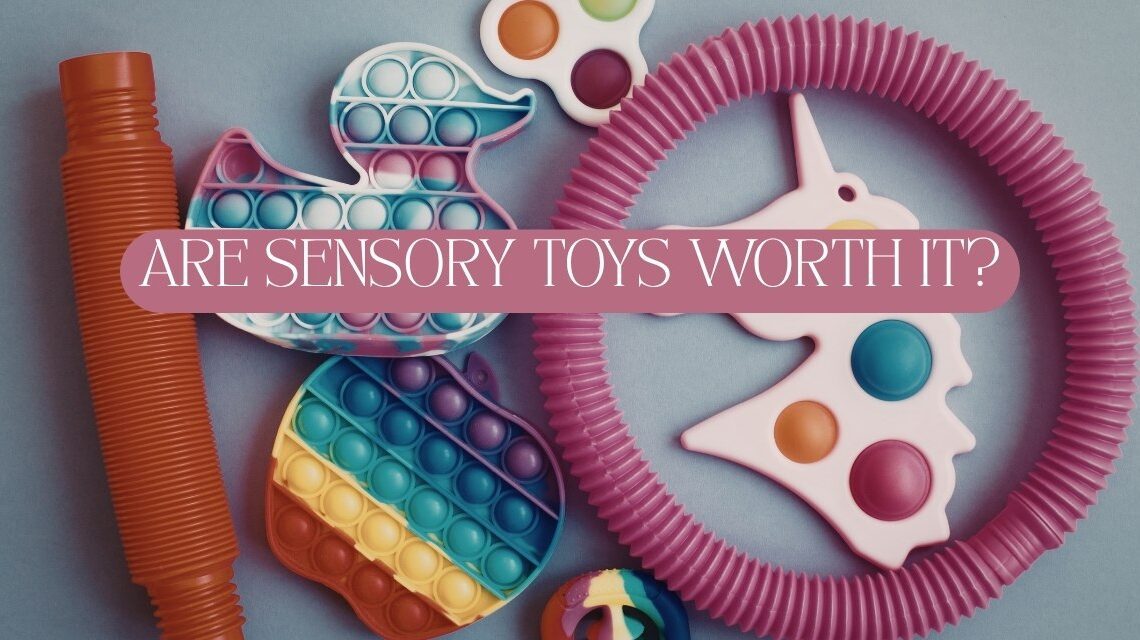
Are sensory toys worth it? Yes, sometimes. No, not always. The useful answer is this: a good sensory toy can help a child settle, focus or stay busy for a bit but a bad one is just more plastic nonsense rolling under the sofa. Play does support emotional regulation and development but the research on fidgets and sensory tools is mixed, which is exactly why this topic needs more honesty and less rainbow marketing.
And that’s the part people hate. They want one clean answer, like yes, buy the squishy octopus and your afternoons will suddenly look like a Scandinavian parenting advert. No. Some kids love sensory toys, some ignore them and some use them for twelve furious minutes before you find one in the dishwasher.
READ: 20+ Enticing Summer Sensory bin activities for toddlers
The smartest way to think about sensory toys is not as miracle products but as tools. Brown University Health describes fidgets as tools meant to help with self regulation or concentration by giving tactile, visual or auditory input and NHS sensory regulation guidance also points to calming sensory activities and deep pressure strategies as useful for some children before and after harder moments.
READ: 20 Cutest Cake smash Photoshoot ideas that are Fresh, Personal and Photograph well
The short answer for busy moms
If a sensory toy helps your child last longer in the car, settle before homework, stay at the table or get through a rough transition without the house turning feral, it is probably worth it. If it gets used twice, squeaks at you from a drawer for six months and somehow needs a special battery you cannot find anywhere, it was not worth it.
| Situation | Worth it? | Why |
| The toy helps with one real daily friction point | Usually yes | It earns its space |
| The toy is noisy, messy or overstimulating | Usually no | It adds work, not relief |
| Your child asks for it again and again | Yes | Repeated use matters |
| It only looked good in an ad | No | That is how junk enters the house |
| It is age safe and simple | Yes | Easier for busy homes |
| It has tiny parts, magnets or sketchy packaging | No | Safety first |
The U.S. Consumer Product Safety Commission says toys with small parts must carry age labels if they are a choking hazard for children under 3 and it also warns that high powered magnets can cause very serious injuries if swallowed.
That means the answer is not just about development. It is also about safety, storage, noise, durability and one very serious question: is this helping my actual house or just making my floor more exciting to step on barefoot?
First, what sensory toys are supposed to do
Sensory toys are meant to give the body and brain input through touch, movement, sound, sight, pressure or oral input. That can help some kids feel calmer, some kids feel more alert and some kids just feel pleasantly busy instead of launching themselves across the furniture because life has become too much by 4:12 p.m.
This is especially relevant for kids with sensory differences. Child Mind says sensory issues can happen in autistic kids and can also show up alongside ADHD or OCD and different kids can react to the same sensory input in very different ways.
That last part matters more than the packaging. The same squishy toy that calms one child can irritate another child into a brand new personality.
Here is where the internet gets annoying
The internet likes to talk about sensory toys like they are tiny silicone prophets. They are not.
A lot of the selling is built on the idea that a toy can do the work of timing, routine, adult support, sleep, movement, food and all the other boring bits that actually shape a child’s day. That is a lovely fantasy. It is also nonsense.
The American Academy of Pediatrics says play supports development, problem solving and emotional regulation. That is useful. But that does not mean every item labelled sensory is automatically helpful and a review of the classroom evidence found there is not enough support for universal use of fidget toys to improve attention, behavior or learning.
So yes, play matters. Marketing is still full of it.
The honest pros
Some sensory toys are genuinely helpful. Not life changing in a movie trailer way. Helpful in a small, real, Tuesday afternoon way.
A good fidget can keep hands busy during homework. A chewy necklace can stop shirt collars getting destroyed. Therapy putty can help a child settle before a transition. A textured strip on a desk can help a child keep their body in the chair long enough to finish one thing.
For some children, that is not minor. That is the difference between getting through the moment and setting fire to the mood of the whole house.
There is some support for this broader idea. Brown University Health says fidgets can support concentration and self regulation and NHS sensory regulation advice points to sensory based calming input as one useful strategy around hard moments.
And sometimes the biggest win is not the toy itself. It is the pause. It is the signal that your child can reach for something that helps instead of just white knuckling it until everything goes sideways.
The honest cons
Now for the less glamorous bit.
A lot of sensory toys are cheaply made, visually loud and weirdly overstimulating. Which is quite a trick for something allegedly meant to help calm people down.
Some are basically toys in a fake moustache, pretending to be therapeutic because the market knows tired parents are desperate. Some are sticky in a bad way. Some smell like regret. Some gather hair and crumbs with the efficiency of a crime scene sponge.
And some are just straight up distracting. One study on fidget spinners in children with ADHD found poorer attention while using them and the wider classroom review says the evidence base is still not strong enough to treat fidgets like a universal fix.
That is why not all sensory toys are worth it. Some are useful tools. Some are colourful clutter with a diagnosis on the sales page.
The question nobody asks enough
What exact problem is this toy meant to solve?
That is the question. Not is it cute, not is it trending, not did an influencer hold it next to a beige rug and say game changer. What is it for.
Here are better questions to ask before buying anything.
| Ask this first | Good sign | Bad sign |
| What moment is this for? | Car rides, homework, transitions, waiting rooms | Vague all day magic promises |
| What kind of input does my child actually like? | Touch, pressure, movement oral input | You have no idea and the toy is random |
| Can they use it safely on their own? | Yes, easily | Tiny parts, magnets, breakable pieces |
| Will I actually carry or store it? | Yes | It needs a basket, a charger and a prayer |
| Does it help after the novelty wears off? | Yes | It becomes drawer compost |
That table right there will save more money than any list of top twenty must have sensory toys.
Some children need sensory input. Some just need something to do with their hands
These are not always the same thing and that is where a lot of confusion starts.
A child who chews sleeves, crashes into furniture, covers their ears in busy places or falls apart in supermarket lighting may be dealing with sensory differences that deserve a more thoughtful response. Child Mind explains that sensory issues can affect how kids handle sound, touch, movement and body awareness and those differences can affect home and school life in very practical ways.
A child who just likes flipping a squishy ring during a boring moment may simply enjoy a little hand activity. That can still be fine. It just does not mean every fidget is therapy.
Both can be true. The trick is not confusing them.
Here is the bit people overspend on
They buy a giant sensory bundle before they know what kind of input their child even likes.
That is how you end up with glow balls, chew tubes, pop boards, slime, putty, textured worms, a wobble cushion and one screaming whistle thing that should frankly be tried at The Hague. Too much too soon.
Start smaller. One hand fidget. One movement based tool. One calming option for quiet times.
Then watch.
What gets reached for in real life is the answer. Not what looked most therapeutic in the product photos.
The types that tend to be worth it
The best sensory toys are usually simple, sturdy and easy to use without a big speech beforehand.
Hand fidgets
These can work well for waiting, car rides, quiet time and moments where a child needs something physical but small. Think putty, smooth worry stones, textured strips, simple fidget cubes or stretchy bands.
Oral tools
For kids who chew everything, safe chew tools can be more useful than telling them for the nine hundredth time to stop chewing their shirt. That is not a moral failing. That is data.
Deep pressure and heavy work style tools
These are often more useful than flashy desk toys for kids who need grounding. NHS and occupational therapy guidance often points to deep pressure and heavy work style input as calming for some children.
Simple sensory play items
Water, kinetic sand, play dough, dry rice bins, foam soap and old fashioned messy play still do a lot of work. They are less glamorous online but sometimes the least branded things are the most helpful.
For more next steps inside your site, point people toward sensory play ideas, calm corner ideas, after school routine ideas and screen free activities for kids. One solved problem usually leads to another and that is useful.
The ones that are often not worth it
Let’s be a bit mean for a second. Some sensory toys are absolutely giving expensive tat.
I would be very cautious with:
- anything noisy enough to rile up siblings
- anything with glitter gel that can burst
- anything with magnets
- anything with tiny beads, water beads or loose small parts around little kids
- anything that looks impossible to clean
- anything that only works if an adult sits there running the whole show
CPSC toy safety guidance is very clear on choking hazards from small parts and CPSC also warns that magnets can be life threatening if swallowed. HealthyChildren also warns that fidget spinners can have small pieces and batteries that pose choking risks and says to keep them away from children under 3.
That does not mean no fun. It means no foolishness.
Do they help with ADHD, autism or anxiety?
Sometimes, yes. Always, no.
Kids with ADHD or autism may be more likely to benefit from certain sensory tools because sensory processing differences and movement needs can play a bigger role in daily life. Child Mind notes that sensory issues can appear alongside ADHD or autism and parental research has found that parents of autistic children often perceive fidget toys as more beneficial, especially around anxiety and concentration, than parents of non autistic children do.
But mixed evidence still matters. Some tools help some children in some settings. That is not the same thing as saying every child with ADHD needs a spinner the size of a side plate.
This is why the smarter route is usually targeted use, not dumping a toy shop into the living room and hoping science sorts it out.
Also, a toy is not a substitute for co regulation
This matters a lot.
HealthyChildren says that when a child is stressed, adults should first regulate themselves and co-regulate the child, helping them feel safe and calm before moving into problem solving. NHS and other child development sources also describe co regulation as the process where adults help children calm and build self regulation over time.
So no, a sensory toy should not be handed over like a tiny plastic babysitter while the grown up disappears emotionally into another room. The toy can help. The relationship still matters more.
That is the part the packaging never says, because it is much easier to sell silicone than it is to sell showing up calm.
The sensory toy test I would use at home
If you want a brutally practical filter, use this.
| Test | Pass means | Fail means |
| It gets used more than twice | It may have real value | Novelty only |
| It helps in one repeat situation | Keep it | It has no clear job |
| It does not make the room louder or messier | Strong sign | Immediate irritation |
| It is easy to clean and store | Worth keeping | Future resentment |
| It is safe for your child’s age | Fine | Out it goes |
| Your child can use it without turning into a goblin | Good fit | Wrong fit |
That is more honest than most product roundups and certainly cheaper.
What to buy first if you are just starting
Do not buy a huge kit. That is my first piece of loving bad news.
Try this order instead:
- One simple hand fidget
- One calmer sensory play option
- One movement based or pressure based option
- Then stop and watch what actually gets used
That might look like therapy putty, a bin of dry sensory play and a resistance band on a chair or a weighted lap style option if appropriate for your child and discussed with a professional when needed. The Royal College of Occupational Therapists has guidance for OTs and families on weighted blankets and sensory approaches, which is a good reminder that heavier tools deserve more thought than a random impulse buy.
Again, the point is not more stuff. The point is the right stuff.
The least appealing truth of all
Sometimes the best sensory support is not a toy.
Sometimes it is:
- a quieter room
- less background noise
- a snack before the wheels come off
- a walk
- a bath
- a swing at the park
- time outside
- a darker bedroom
- a better transition routine
NHS sensory friendly guidance talks about reducing problematic sensory input and supporting self regulation with quiet spaces, choice, movement and preferred items, which is a very useful reminder that the environment matters as much as the objects in it.
And honestly, that is why some moms feel duped by sensory toy marketing. They bought a thing when what they really needed was a system.
For more sensible routes after that, fold in kids room organization ideas, home routines for kids, quiet time ideas for kids and toy storage ideas. That keeps the decision path moving instead of leaving everything stuck on one product question.
Are they worth it for toddlers?
Sometimes but toddlers are exactly where safety matters most.
CPSC toy guidance says small parts are a choking hazard for children under 3 and HealthyChildren warns that fidget spinners and their pieces should be kept away from children under 3. Magnets are a hard no around young kids.
For toddlers, I would lean far more toward supervised sensory play than tiny fidgets. Water play, play dough, foam, textured books, large safe chew options and movement based input are usually more sensible than a bowl of small silicone widgets pretending to be development.
Toddlers do not need a little productivity kit. They need safe, rich, hands on play and an adult with a decent snack plan.
Are they worth it for older kids?
This is often where they work best.
Older kids can tell you what feels good, what is annoying, what helps in the car, what helps during homework and what makes them want to throw the thing into traffic. That feedback matters.
This is also the age where social acceptability starts mattering. If a tool feels babyish or embarrassing, it may be technically useful and still never get used.
So with older kids, the better buys are often discreet. Putty, smooth stones, desk strips, subtle fidgets, chair bands, stress balls, simple chew items if needed and movement breaks that do not feel like a school assembly.
Join my email list if you like this level of honesty
If this kind of straight talking helps, join my email list. That is where I share smarter ideas for family life, products that actually earn their place and practical home help that makes ordinary days work better without turning you into the unpaid manager of nineteen tiny systems no one else notices.
It is for people who want sharper judgment, faster decisions and a home that functions better in real life, not just in shopping tabs.
FAQs
Are sensory toys worth buying?
Yes, if they solve one real daily problem and get used again. A toy that helps with waiting, homework, car rides or calming can be worth it. A toy that becomes clutter after two days is not.
Do sensory toys actually help kids calm down?
Sometimes. Fidgets and other sensory tools can help some children self regulate or concentrate by giving tactile, visual or auditory input but the evidence is mixed and not every child responds the same way.
Are sensory toys only for autism or ADHD?
No. Sensory issues can appear alongside autism or ADHD but lots of children enjoy or benefit from sensory play and sensory tools in everyday life too.
What age are sensory toys for?
It depends on the toy. Age labels matter because some toys have small parts, batteries or magnets that are unsafe for younger children, especially under age 3.
Are fidget toys good for school?
Sometimes but not as a blanket rule. Research reviews say there is not enough strong support for universal classroom use of fidget toys to improve attention, behavior or learning and some spinner studies have shown poorer attention.
What is better than buying lots of sensory toys?
A smaller, more targeted setup plus adult support. Health and child development guidance points to co-regulation, play and managing the environment as key parts of helping children regulate, not just handing over a toy.
The bottom line
Sensory toys are worth it when they are specific, safe and useful in your real day. In your real house, with your real child, at the exact point in the day where things usually start going a bit wrong.
That is the answer. Just enough honesty to keep you from buying a brightly coloured bag of disappointment and calling it support.
 0
0

 278
278