
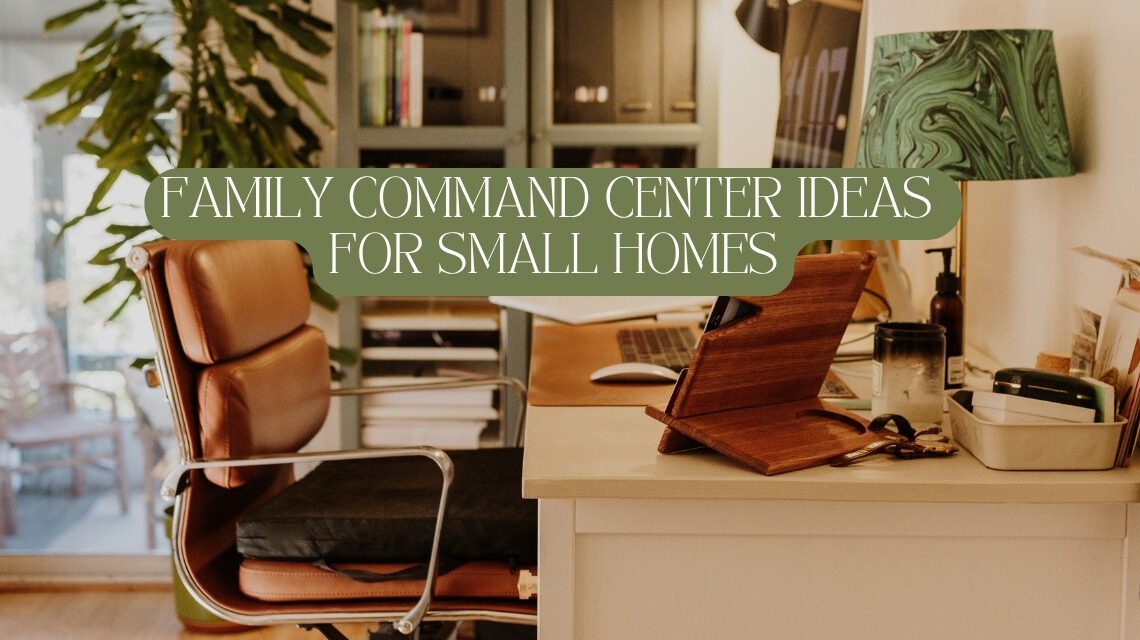
Family command center ideas for small homes work best when they stop copying a Pinterest mudroom that assumes four feet of spare wall nobody in a small house actually has. The fix is splitting one big station into two or three tiny zones, each placed exactly where that task already happens. A drop zone by the door, a calendar by the kitchen and a kid zone near the bedrooms does more real organizing than one crowded board ever will.
SHOP THE MAGNETIC WEEKLY CALENDAR
SHOP THE SLIM WALL BOARD
SHOP THE ENTRYWAY ORGANIZER
Most command center guides are written for a mudroom that doesn’t exist in a two-bedroom flat or a narrow terrace. Once the goal shifts from one impressive wall to a few small, well-placed drop points, a tiny hallway or the back of a door does the job a whole mudroom was supposed to do.
Why One Big Command Center Wall Fails in a Small Home
READ: 21 Completely Unique Indoor Games for Large Groups in …
A single command center needs real estate: a calendar, a board, hooks, a mail tray and a basket per family member. Most small homes have one narrow wall that can fit maybe two of those things well, so the fifth item ends up propped against a lamp within a week.
The Real Problem Isn’t Space. It’s the Layout Being Copied
The Pinterest version of a command center assumes a mudroom, a broad hallway or a home office wall most small houses don’t have spare. Trying to fit that exact layout into a smaller footprint usually produces a cramped, overloaded corner nobody wants to look at, let alone use daily.
Splitting the same functions across two or three small zones solves this without needing more square footage anywhere. Each zone only has to hold one or two jobs, which is the actual reason it gets used instead of ignored.
READ: Baby Shower at Home | Seating, Flow and Setup
Command Center Buying and Planning Table
| Zone | What Goes There | Space Needed | Best Spot in a Small Home |
|---|---|---|---|
| Drop zone | Keys, mail, bags, shoes | 12 to 18 inches of wall | Directly inside the front door |
| Calendar zone | Weekly schedule, meal plan | 18 to 24 inches of wall | Kitchen wall or inside a pantry door |
| Kid zone | Chores, backpacks, artwork | 12 to 18 inches of wall | Hallway near bedrooms |
| Paper zone | Bills, forms, permission slips | One shallow file box | Kitchen counter or drawer |
| Charging spot | Phones, tablets, headphones | One small tray | Kitchen counter or entryway shelf |
| 48-hour view | Today and tomorrow only | A single small board | Beside the main calendar |
| Digital calendar | Synced, changing schedules | One screen or tablet mount | Kitchen wall near an outlet |
| Weekly reset | Clearing all zones | 5 minutes, once a week | Wherever the family already gathers |
The Three-Zone Method for Small Homes
Three small zones, each doing one job well, replace the single overloaded wall almost every small-home command center guide assumes is possible.
Zone One: The Drop Zone
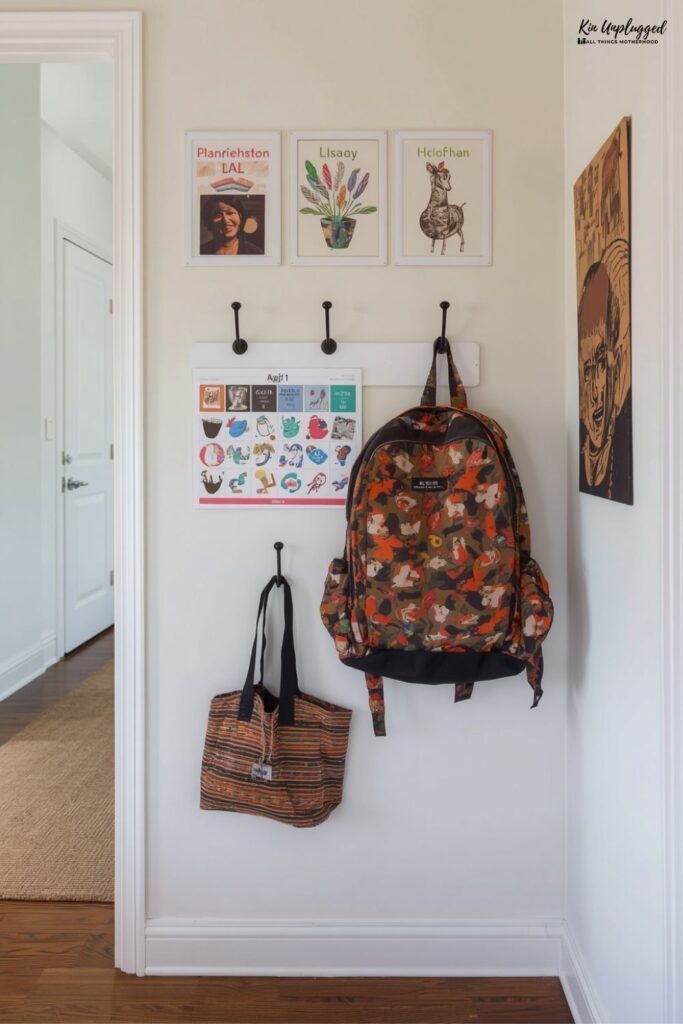
This is the only zone that has to sit right at the door, since its whole job is catching things before they scatter through the house. A single hook rail, a small mail tray and one shallow basket per person cover almost everything that usually ends up on the floor.
Keep this zone to three items maximum: hooks, a mail tray and one basket. Anything beyond that turns the drop zone into its own clutter problem within a month.
Zone Two: The Calendar Zone
This zone belongs wherever the family already stands still for a minute, which in most homes is the kitchen. A slim magnetic calendar or a small whiteboard on the fridge or an adjacent wall does more daily work than a large planner tucked in a drawer somewhere.
The back of a pantry door is one of the most underused spots for this. It puts the whole week at eye level without taking a single inch of wall the kitchen actually needs.
Zone Three: The Kid Zone
Placed near bedrooms rather than the main living area, this zone holds chore charts, backpack hooks and a small rotating spot for artwork. Keeping it away from the main command wall means kids interact with their own section without crowding the family calendar next to it.
A single strip of wall, even one as narrow as a foot, is enough for a chore chart and two hooks. Mount this zone low enough for a child to actually reach it without help, and let younger kids use a simple picture-based routine card instead of a written list.
Fourteen Command Center Setups That Fit Small Spaces
Each of these solves the space problem a different way, so the right one depends on which wall, door or corner is actually available.
The Back-of-Door Command Center
The inside of a pantry, closet or coat cupboard door holds a magnetic calendar, a small file pocket and a hook strip without touching a single wall. It stays completely out of sight until the door opens, which matters in an open-plan home where the wall itself is on display.
Command hooks and adhesive-backed organizers keep this option renter-friendly, since nothing needs to be drilled into the door itself.
The Fold-Flat Cabinet Command Center
A shallow, hinged cabinet mounted on the wall opens to reveal a calendar, cork board and file slots, then closes flush when not in use. This suits a small living room or hallway where a permanently visible board would otherwise clutter the look of the room.
Look for a depth of four inches or less so it doesn’t intrude into a narrow hallway even when closed.
The Inside-Cabinet-Door Command Center
Mounting a small calendar and a slim file pocket on the inside of a kitchen cabinet door turns unused vertical space into a genuine planning station. It stays entirely hidden until the cabinet opens, which works well in a kitchen too small to spare wall space for anything decorative.
Keep the contents light, since a heavy file box can strain a cabinet hinge over time.
The Narrow Hallway Column
A tall, narrow strip of wall, as little as ten inches wide, can hold a vertical calendar, a slim key rack and a small mail slot stacked one above the other. This suits homes where the only spare wall is a thin stretch beside a doorway rather than an open expanse.
Vertical stacking keeps the footprint small while still covering all three core command center functions.
The Under-Stairs Nook
The often-wasted triangle of space under a staircase can hold a small desk-height shelf, a cork board and a basket for outgoing mail. It puts a command center in a spot most small homes are already failing to use for anything else.
A battery-powered stick-on light makes this nook usable even without nearby wiring.
The Fridge-Side Runway
The exposed side of a fridge can hold a magnetic calendar, two labeled clips and a small pen cup. Keep the front of the fridge mostly clear so the whole system has one visual direction instead of two competing ones.
Best for: rentals, narrow kitchens and any family who already gathers near the fridge before school or work.
The 48-Hour Board
A full monthly calendar can feel too broad first thing in the morning. A small board showing only Today and Tomorrow, hung right beside the main calendar, gives a faster answer than scanning a crowded month.
This is especially useful for younger kids who follow a short sequence far more easily than a grid full of squares. The monthly calendar stays the planning tool; the 48-hour board becomes the action tool.
The Digital Calendar With an Analog Inbox
A digital wall calendar can combine synced schedules, meal plans and reminders on one screen, which suits a family already juggling more than one online calendar. It solves changing information well, but it does nothing for incoming paper.
Pair it with one slim physical inbox beside the screen so permission slips and invitations still have a home. Check the subscription cost, screen size and where the power cable will actually run before buying.
The Weekly Planning Drawer
A shallow kitchen or console drawer can work as a horizontal command center. Seven labeled envelopes or dividers, one for each day, hold forms, tickets and small items until they’re needed.
This suits a home where an open wall system feels too busy or too exposed. Refilling the seven sections becomes a five-minute Sunday habit rather than a daily scramble.
The Rolling Cart Command Center
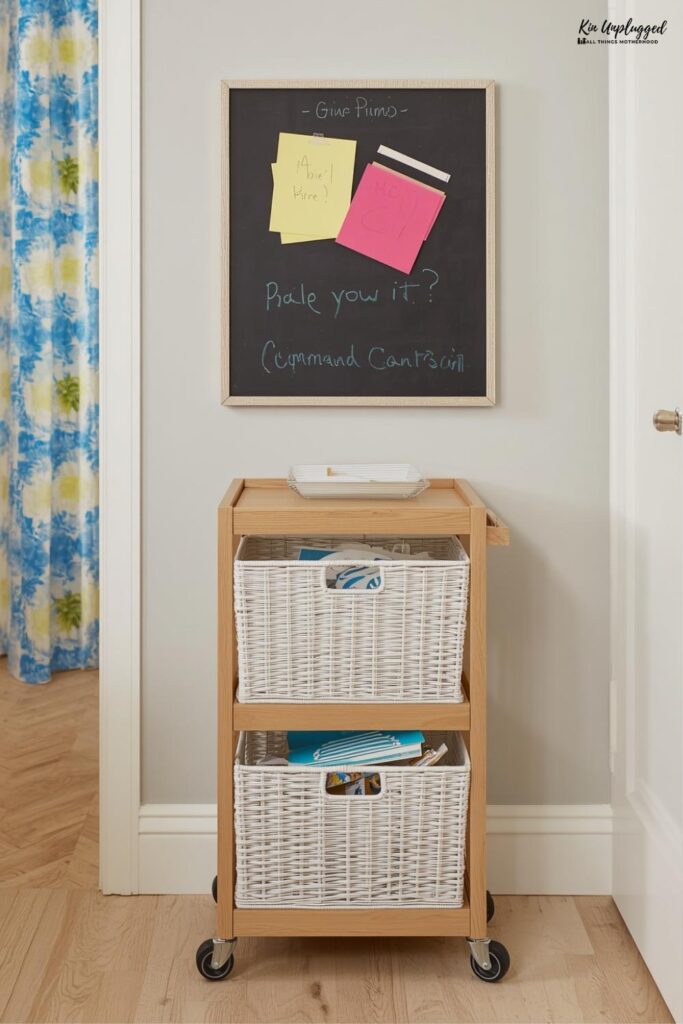
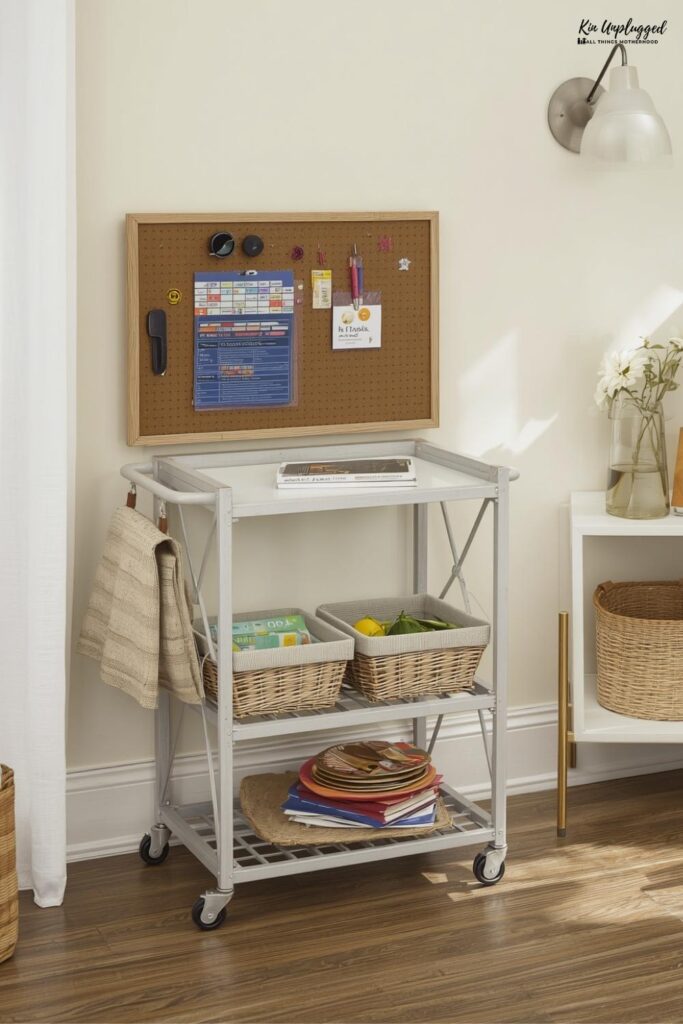
A slim rolling cart holds a magnetic board on top, files in the middle and baskets on the bottom, then tucks against a wall or into a closet when it’s not in active use. This suits a home where furniture regularly gets rearranged, or where no single wall is reliably free.
Locking wheels keep the cart from drifting every time it gets bumped, and lidded trays stop smaller items from sliding off mid-roll.
The Art-Front Paper Pocket
Two shallow wall pockets, mounted behind a rotating piece of a child’s artwork on a simple rail, turn a purely functional spot into something warmer to look at. Lift the artwork to reach the paperwork underneath.
This works well in a dining space where a bare file pocket would feel out of place. Photograph older pieces before rotating them out, so nothing gets lost between updates.
The Rental-Friendly Tension Rod System
A narrow tension rod fitted inside a cupboard, alcove or open shelving unit can hold lightweight clips, fabric pockets and a small calendar from removable hooks. Nothing gets drilled, and the whole setup can move the day the household does.
Check the weight limit on the rod and the surface instructions on any adhesive hooks before loading it up. This suits temporary seasons too, such as a new school year or a busy exam period.
The Magnetic Window Film Command Center
Magnetic dry-erase film applied to a window beside the kitchen or entryway creates a wipeable calendar surface without claiming any wall space at all. Natural light also makes handwriting easier to read than it usually is in a dim hallway corner.
This works best on a window that isn’t the room’s main source of daylight, since the film reduces some light coming through.
The Laundry Closet Door Command Center
The inside or outside of a laundry closet door is one of the most overlooked flat surfaces in a small home. A small calendar, a chore chart and a hook for reusable bags turn a purely functional door into a working command center.
This spot works particularly well for chore charts, since laundry is already a visible, recurring family task.
How to Choose the Right Spot for Each Zone
The right spot for any zone is the one the family already passes through during a real transition, not the prettiest available wall. A calendar in a quiet spare room gets ignored; the same calendar on a kitchen wall gets checked without anyone deciding to check it.
Watch the household for a couple of days before mounting anything. Notice where keys actually land, where school papers get opened and where someone asks “what time are we leaving” out loud.
The One-Step Test
Each item should be reachable in a single step from the action it supports. Keys belong by the exit, meal planning belongs by the kitchen, and school forms belong wherever they actually get signed.
If a form has to travel through three rooms to reach its proper home, it will stop on a counter halfway there instead. That counter then becomes an accidental fourth zone nobody planned for.
Choosing a Calendar That Actually Gets Used
The best calendar is the one the whole household can read and update without asking where the pen went. A magnetic calendar suits a fridge or metal board, is inexpensive and usually leaves space for meal notes. A slim acrylic calendar suits an open kitchen or dining wall, since the wall color shows through and it reads as decor rather than an office fixture.
A paper calendar still works well for households that like keeping past months for reference, such as school dates or appointment records. A synced digital calendar earns its place only in a household that already juggles more than one online schedule; a screen displaying an empty week is just an expensive light fixture.
Why a Visible Family Schedule Actually Matters
A shared calendar isn’t just tidiness for its own sake. Predictable family routines are linked to better emotional regulation, attention and school performance in children, and a visible weekly schedule is one of the simplest ways to make a routine actually predictable to a child who can’t yet read a phone calendar.
The CDC’s guidance on structure and routines for young children points to the same idea: knowing what happens next helps kids feel secure, and a shared, visible schedule does that job for the whole household at once rather than relying on a parent to announce every transition out loud.
Materials That Survive Real Small-Home Life
A command center in a small home gets touched, bumped and walked past constantly, so the materials matter more than they would in a spare room nobody uses daily. Wipeable surfaces, magnetic boards and laminated cards hold up far better than paper pinned directly to a wall.
Choose a magnetic or dry-erase surface over cork wherever the zone sits near a doorway. Cork holds up fine in a quiet corner, but a high-traffic spot needs something that survives a sleeve brushing past it daily.
Handling Paper Without Letting It Take Over the Wall
Paper needs one clear next step, not a decorative home. Three simple labels cover almost everything: Act for anything an adult still needs to do, Return for anything leaving the house again, and File for anything worth keeping once it’s done.
For a school-heavy household, one slim archive box elsewhere in the home can hold the schoolwork worth saving. That keeps the command center itself handling only current, active paper rather than slowly turning into a filing cabinet.
Common Mistakes That Make a Small-Space Command Center Fail
Buying the System Before Watching the Routine
A wall setup should answer a real, recurring problem, not just look satisfying in a photo. Start with whatever already goes missing, such as keys, permission slips or library books, and build the zone around that specific gap.
Giving Every Single Item Its Own Category
More labels mean more decisions every time something needs putting away. A broad label like Return covers library books, forms and borrowed clothing just as well as three separate pockets would, with far less daily friction.

Letting One Person Maintain the Whole System
A shared system needs shared habits, not one parent quietly resetting it every night. Children can return markers and hang their own bags, and a partner can add an appointment directly instead of announcing it across the kitchen and hoping it gets written down later.
Keeping It From Becoming Another Cluttered Surface
Every command center eventually fills up with expired forms and out-of-date reminders unless something clears it on a schedule. A five-minute reset, done at the same time each week, is what separates a command center that works from one that quietly becomes clutter with a calendar stapled to it.
Pick one recurring moment, such as Sunday evening or the school run on Monday morning, and clear all zones at once rather than piecemeal through the week. A reset that happens on a fixed day gets done; one that waits for a free moment usually doesn’t.
Frequently Asked Questions
What is a family command center? A family command center is a small, dedicated spot, or a few small spots, where a household keeps its shared calendar, mail, keys and paperwork in one visible place. In a small home, this usually works better split across two or three tiny zones than combined into one large station.
Where should a command center go in a small house? The drop zone belongs right at the entry, the calendar works best in the kitchen or on a pantry door, and a kid zone fits well in the hallway near bedrooms. Splitting these across the home uses far less wall space than one combined station.
Does a command center need a big wall? No. A back-of-door setup, an inside cabinet door, a narrow hallway column or a rolling cart can each cover the same functions in twelve inches of space or less.
Can a command center go in the kitchen? Yes, the kitchen is usually the strongest location because families already gather there. The fridge side, the inside of a pantry door or a slim strip of counter can each hold a calendar or a small file pocket without taking over the room.
How often should a command center be cleared out? Once a week, at a fixed time, keeps a command center from slowly filling with expired paperwork. A recurring slot, rather than an open-ended “when there’s time,” is what actually gets it done.
What should go on a family calendar? The essentials are each family member’s fixed weekly commitments, upcoming appointments and one meal-plan or errand line so the week’s shape is visible at a glance. Adding more than that tends to make the board harder to read in passing rather than more useful.
Can a command center work in a rented home? Yes. Command hooks, adhesive organizers, tension rods and door-mounted setups avoid drilling into walls, which makes almost every idea here workable in a rental.
Bringing It Together
A family command center doesn’t need a mudroom or a spare wall to actually work. Splitting the same handful of jobs, mail, calendar, keys and kid paperwork, across two or three small zones placed exactly where each one is used gets more done than a single crowded board ever manages.
Start with the drop zone by the door, add a calendar wherever the family already stands still, and give kids their own small strip near their rooms. Keep the materials wipeable, reset it on the same day every week, and the whole system stays useful instead of becoming one more thing to tidy. For more small-space systems that actually hold up to real family life, the newsletter is where they show up first.
 0
0

 278
278